Michael the Brave was not recognized as ruler of Transylvania. How the German Emperor saw him and how his fame became deadly


In 1599, on November 1, Michael the Brave entered Alba Iulia in triumph, marking the entry of Transylvania under the rule of the prince of Wallachia. From a historical point of view, the unification of the territories inhabited by Romanians was ephemeral and was considered rather a conquest.
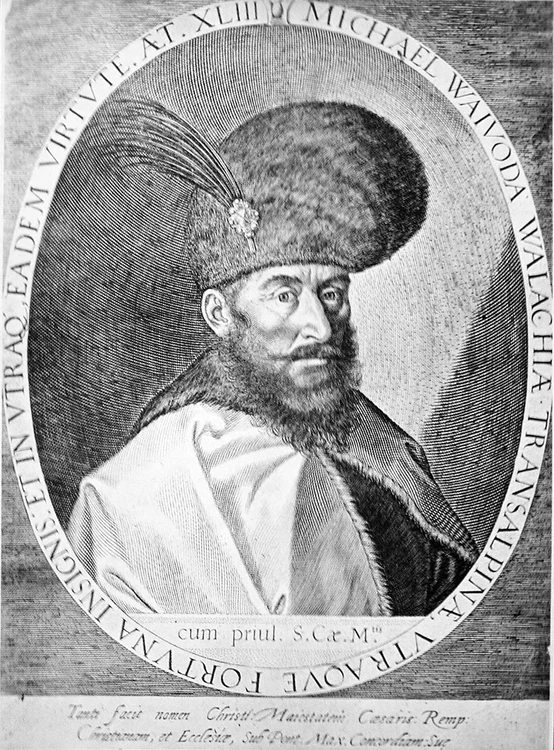
Michael the Brave. PHOTO: profimedia
On November 1, 1599, Mihai the Brave made his triumphal entry into Alba Iulia, the seat of the Transylvanian Diet, and in this way crowned himself as ruler of Transylvania. This moment comes after Mihai defeated the voivode of Transylvania, Andrei Bathory, in the battle of Șelimbăr. A few months later, on May 27, 1600, Michael the Brave was proclaimed “Lord of the Romanian Land and Transylvania and of the whole Moldavian Land”.
He was the first medieval Romanian leader to rule all three territories with a majority Romanian population. It is a moment of special significance in the history of Romanians, mythologized and glorified especially with the exacerbation of Romanian nationalism, from the mid-19th century and with a peak during the communist period. From the historical point of view, of specialists and contemporaries, Mihai Viteazul was not aware of the moment from the national and ethnic point of view. In addition, he was never recognized as such ruler of Transylvania.
A conquest with political goals
After securing peace on the Danube with the Turks and after concluding a treaty with Rudolf II, emperor of the Romano-German Empire, Michael the Brave casts his eyes over the Carpathians. He wanted to conquer Transylvania, first of all, and then Moldova. It was about political reasons and less about national, patriotic reasons. Besides, in the era of Michael the Brave, nationalism was an unknown idea, and ethnic principles paled in front of feudal ties.
More precisely, the status of vassal or suzerain was more important than ethnicity in the political economy of a region or the relations between kingdoms. The reason for the conquest of Transylvania was clear. Cardinal Andrei Bathory, the new voivode of Transylvania, had allied himself with the Poles and wanted to get along with the Turks. This meant a real danger for Mihai Viteazul, who saw himself caught as in a pincer. For his part, Rudolf II did not see the cardinal's reorientation with good eyes. In addition, he was glad that he did not have to send armies and relied on his vassal, Michael the Brave, to get rid of the Turks.
Michael the Brave receives the green light from Rudolf II and rushes to Transylvania. Following the Battle of Șelimbăr in the fall of 1599, Mihai the Brave destroyed Cardinal Bathory's army and conquered Transylvania. On November 1, 1599, Mihai Viteazul triumphantly entered Alba Iulia. Having become the master of Transylvania, he proves to be concerned about the rights of the Romanians and begins to put his people in key positions, arousing the discontent of the Transylvanian nobility. Transylvania was not enough. Mihai Viteazul made plans to conquer Moldavia. Ieremia Movilă, the man of the Poles and implicitly of the Turks, could no longer remain on the throne of the neighboring country. It was a matter of security. In May 1600, Mihai Viteazul entered Moldova with his troops and expelled Ieremia Movilă. On May 27, 1600, as I mentioned before, Mihai Viteazul calls himself ruler of Wallachia, Moldavia and Transylvania. If for nationalist historiography, especially from the communist period, it was a symbol of ethnic unification, the centuries-long dream of the Romanians, for specialists it was a politically motivated, not ethnically motivated conquest.
“Mihai conquered Transylvania and Moldova, not because of their Romanian character, but because they had moved away from the union concluded between them to fight the Turks. He restored this unity of the League concluded in 1594, the political idea that guided him was that of unity on the basis of the crusade(…).Michael the Brave conquered Transylvania for a political reason, the Transylvanian prince's agreement with the Moldavians and the Poles to replace him in the seat, a plan that had been shown to him. But along with this fact that decided him definitively, the idea of conquering Transylvania had made its way into his mind for a long time. As early as 1597, the Transylvanian chancellor Iojica had negotiated a bold plan with Mihai, Sigismund Bathory to abdicate in favor of the Romanian lord and for him to unite under his scepter Transylvania, Wallachia and even Bulgaria, which would rise up under his leadership”PP Panaitescu wrote in the work “Mihai Viteazul”. His contemporaries, the chroniclers, noted the same thing. “Some Turks, some Moldavians, some Hungarians submitted to his rule, even though he treated them all like donkeys”wrote the mountain chronicler Radu Popescu.
Michael the Brave was not recognized as ruler of Transylvania
In addition, he took the title of prince Mihai Viteazul himself. For example, he was not recognized by Emperor Rudolf II as ruler of Transylvania. For the emperor, Michael the Brave was a kind of tolerated governor of Transylvania. More precisely, as the documents of the time show, for the Romano-German Emperor Michael it was “adviser and deputy of the emperor for Transylvania and captain-general of the armies of Parthium”. For his part, Samuil Micu reflected the same reality in his work “Brief knowledge of Romanian history”, in the 18th century. “This (Mihai Viteazul) was a very great soldier and the Turks beat them and the Transylvanians defeated them and they took Transylvania and gave it to Emperor Rudolf”wrote Samuil Micu. Mihai the Brave, however, called himself: “Io Mihail voivode, by God's mercy, lord of the whole Land of Transylvania”.
That is precisely why, after seeing that Mihai is overstepping his role as governor and starting to show tendencies as a great ruler of Transylvania, Rudolph II decides his fate. After using him to conquer Transylvania, he eliminates him with the help of General Basta. “The Imperial Court had not determined in advance the fate of Transylvania after the reconquest, nor the role of Mihai. He had once been recognized, at least by Pezzen, as the governor of Transylvania, so he understood to rule this country again, with the emperor's consent. (…) That is why Basta worked for his masters, who wanted to have Transylvania directly under their rule, removing Mihai. Basta was a general in the service them and would not have done this deed, if they did not know that it would be approved”stated PP Panaitescu in “Mihai Viteazul”.
An ephemeral dominion without effective unity
Last but not least, when talking about the first union of the Romanian principalities under Mihai Viteazul, anyone would think of a unification in the modern sense, with common institutions, the reconfiguration of borders and a capital. In the case of Michael the Brave's rule, there could be no such thing.
Effective, administrative and institutional unification never took place. Basically, Michael the Brave conquered all those countries and managed to control them through his men for only four months. During all this time, he did not have time to organize much administratively the occupied areas. “That's why he didn't care about political unity, he was lord over three countries, with their borders, with their special governments”. also specified PP Panaitescu. The most, among the conquered regions, he ruled Transylvania for 11 months. Even here, Mihai encountered a totally different reality compared to the one in Wallachia, and he didn't even bother to change it.
“Mihai the Brave's rule in Transylvania lasted 11 months and, as was natural in these unique circumstances in our history, he ran into very difficult problems. Transylvania stood before the new ruler with a noble organization and a diet, with free cities, with its laws and regulations, different from those of Wallachia, foreign to Mihai. There was therefore a mountain boyar super-administration above and alongside of the one old transylvania left. intact. (..)He governed Transylvania with his people, but considering it as a special country, he did not combine his governance with the other countries he ruled”added PP Panaitescu in the same work. However, Michael the Brave did not have the financial and military power, nor the support of the great powers to maintain this rule. On the contrary, the number of enemies was great, and his boldness had alerted all the stronger neighbors. And the coup d'état will be given by his sovereign, Rudolf II.
“Michael's reign falls in a period of economic decay in our history, due, as we have seen, to the relocation of trade routes, the impoverishment of the peasantry, and Turkish exploitation. Mihai did not have the material means to support his great ideas. The foundation on which he built his political work was mainly the mountain nobility. It is true that this class was rich for the defense of its threatened fortunes rose up against the Turks, then sought to move to Transylvania. But her wealth was the land and its fruits, it was based on a natural economy, not a money economy. And those times demanded money. I saw that throughout Europe mercenary armies had replaced country armies, and Mihai also had to fight with mercenaries, with an army that cost almost 100,000 thalers a month, a huge sum. As long as the Romanian gentleman had the money paid by the emperor (not Emperor Rudolf of Habsburg), but when he no longer received the usual pension, disaster was near”states PP Panaitescu in his book “Mihai Viteazul”.