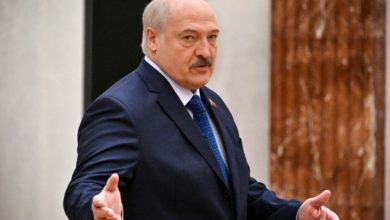
Japan's new prime minister faces his first challenge. Will she be able to avoid Donald Trump's wrath? He's walking a thin line


Sanae Takaichi's rise to become the country's first female prime minister is partly due to her tough nature and promise of a “Japan first” policy.
How the two countries' leaders fare during their first meeting could determine the nature of U.S.-Japan relations over the next three years. Japan does have some good news for Trump. However, there are some sensitive issues that could make Tuesday's meeting unpleasant.
“Takaichi doesn't want to give Trump the opportunity to publicly press her on issues like trade and defense,” says Yuki Tatsumi, a former special assistant for policy affairs at the Japanese embassy in Washington and now senior director at the Indo-Pacific Security Institute. — If Takaichi manages to engage Trump in the agenda he wants to talk about, namely: “we will take up the challenge, together we will make the Indo-Pacific region safer, more prosperous and stable,” it will be a success for her, he says.
Japan is the sixth largest trading partner of the United States and constitutes foundation of US geostrategy in the Indo-Pacific region thanks to a mutual defense pact that includes American bases on Japanese territory and protection under the American nuclear umbrella.
A promising start
The first week since Takaichi took office was a good start for both leaders. Trump, in a post on Truth Social this month, praised her as “a person of great wisdom and strength.” Takaichi's mentor, former Prime Minister Shinzo Abe, who was assassinated in 2022, was Trump's confidant and golfing partner.
— I think they will get along well – says a Trump adviser who asked to remain anonymous to discuss sensitive issues. — Both sides realize that the strength of the relationship between Trump and Abe came from their personal bond, which made economic and strategic cooperation much smoother.
It will also help that Japan is preparing a shopping package for Trump's arrivalincluding the purchase of American liquefied natural gas, pickup trucks and soybeans, Reuters reported on Tuesday. Japan's corporate sector is also taking action. Tokyo Gas has signed an agreement to potentially purchase LNG from Trump's Alaska LNG project worth $44 billion. (approx. PLN 161 billion), Nikkei Asia reported on Friday. The deal is likely intended to support Trump's pledge in February that Tokyo “will soon begin importing historic new supplies” of LNG from Alaska.
The article continues below the video
Takaichi and Trump will also sign an agreement on U.S.-Japan cooperation in areas such as the development of next-generation wireless standards and artificial intelligence.
Trump was especially pleased to hear that Takaichi planned to purchase Ford F-150 cars. “He has good taste,” Trump said Saturday aboard Air Force One. – It's a great car.
It is also looking for ways to help American soybean farmers who have been hurt by China's decision to stop importing the grain from the U.S. as part of its trade war with that country.
“There was a lot of effort put into making some high-profile announcements to give the whole thing some momentum,” explains Kurt Tong, deputy chief of mission and chargé d'affaires at the U.S. Embassy in Tokyo during the Obama administration. — The Takaichi government wants to show progress on the issue to assure the United States of its sincerity with concrete results that could be announced in the billions of dollars.
Points of contention
However, there are still many areas where the two leaders may disagree.
Last month, Takaichi said she would consider renegotiating a deal negotiated by her immediate predecessor to allocate $550 billion. (over PLN 2 trillion) of Japanese investments in American projects if it considers it unfair to Japan. These funds constitute over 10%. Japan's GDP.
She later withdrew this threat. But Trump, who has compared the money to a “signing bonus” for a professional baseball player and said in an interview with CNBC in August that it is “our money that we can invest however we like,” may press her to immediately start funneling those funds to the US.
The plan for how the administration will spend the money “is still being finalized,” said a White House official who asked not to be identified because of the sensitive nature of the discussions.
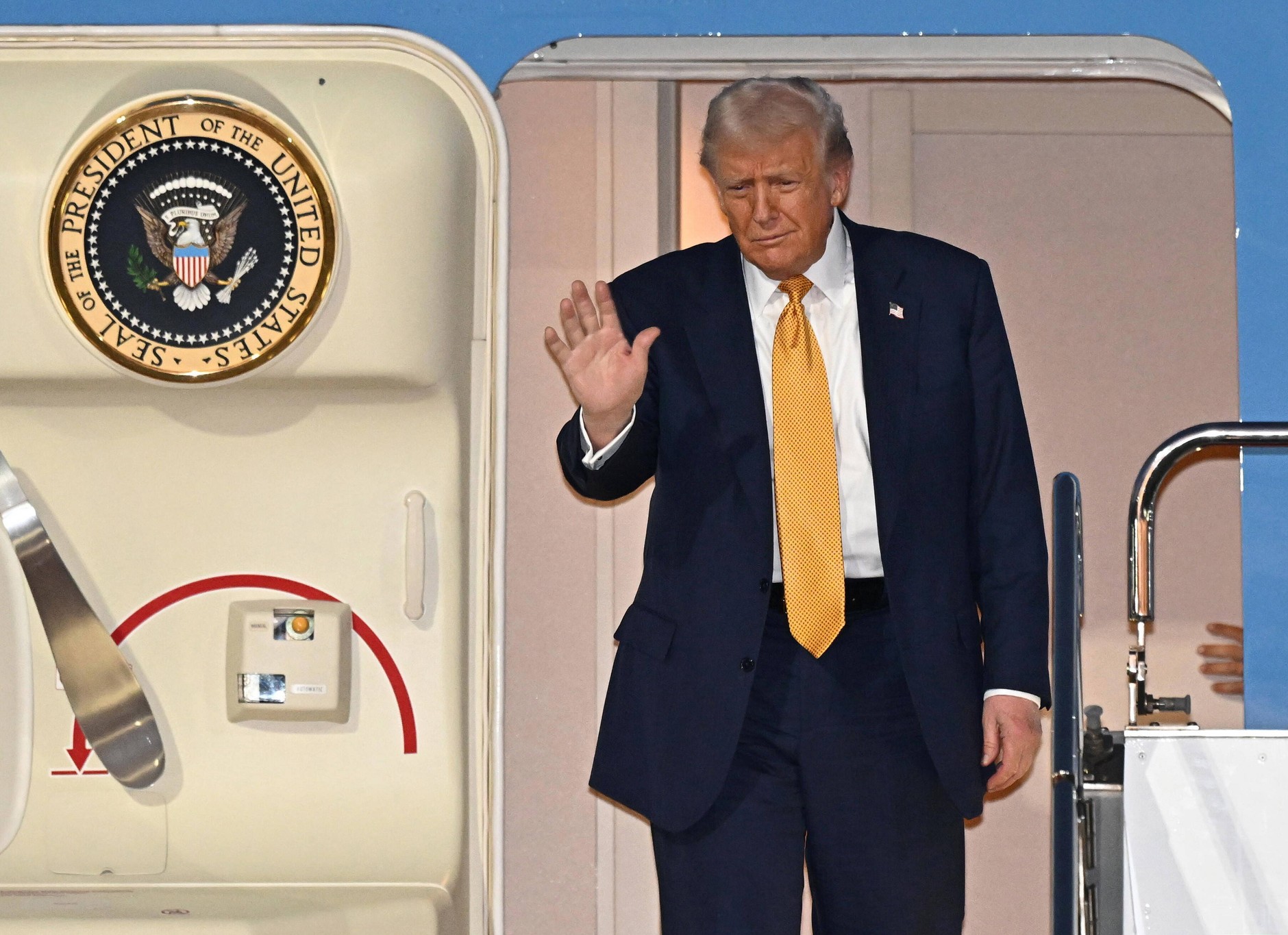
U.S. President Donald Trump disembarks from Air Force One after arriving at Haneda International Airport in Tokyo, Japan, October 27, 2025.JIJI PRESS / PAP
However, Takaichi cannot afford to be perceived in the country as submissive to Trump. She and her Liberal Democratic Party (LDP) are politically weaker than when she emerged as the favorite to replace Shigeru Ishiba. The right-wing Japan Innovation Party, which forms the core of the LDP political coalition, is fiscally conservative and will be cautious about contributing to this investment fund as Japan grapples with high inflation and falling wages.
That leaves it to the new prime minister little room for political maneuver. He cannot afford to upset his fragile government coalition by giving in to Trump or alienate the US president by standing up to him.
Takaichi must balance between Trump's view of the investment deal as an unconditional source of cash for the White House and Tokyo's view that it is more a combination of Japanese government-backed loan guarantees and select forms of corporate financing.
The Japanese embassy declined to comment on the matter.
Another potential factor that could spoil Trump's meeting with Takaichi is Japan's defense spending. The Trump administration has suggested that Tokyo's commitment to increase defense spending to 2%. GDP from the current level of approximately 1.8 percent. by 2027 is insufficient. The Trump administration called on Japan in June to increase that spending to 3.5%. GDP.
“Japan has long been undervalued in spending on its own defense,” John Noh, nominee for deputy secretary of defense for Indo-Pacific security, noted during a Senate hearing this month.
Takaichi is not against armaments. He has long advocated for closer defense ties between the United States and Japan to offset Beijing's increasingly aggressive actions in the region. She advocated a rethinking of Japan's defense strategy through initiatives including amending the Japanese constitution to ease restrictions on the deployment of military forces and suggesting that the United States station nuclear weapons on Japanese territory to deter potential attacks by China or North Korea.
But relative political weakness limits its ability to push for higher military spending at the expense of programs such as government support for Japan's growing elderly population.
Takaichi tried to pre-empt Trump's possible criticism of Tokyo's defense spending by announcing on Friday that her administration would push back the deadline for reaching the 2 percent defense spending level to March 2026.
On Tuesday, she also pledged that her administration would “create a system that allows Japan to defend itself.” This is a reference to 55 thousand. American soldiers stationed in Japan.
The meeting could turn ugly if Trump deems this spending target too low and decides to use the same tough tactics he used against NATO members to get them to agree to increasing defense spending to 5 percent. GDP. 31 of the 32 alliance members agreed to this spending increase in June. Trump accused Spain, the only NATO member that refused to increase its defense budget to this level, of free-riding the alliance.
According to Ken Weinstein, who served as U.S. ambassador to Japan in the first Trump administration, Takaichi will have to convince her voters that higher military spending is necessary to avoid the potential wrath of the American president.
— This will require an open and honest conversation with the Japanese public about security in the Indo-Pacific region. It must focus on the threats posed by China and North Korea to convince them that there is a real need for such reinforcement, he says.