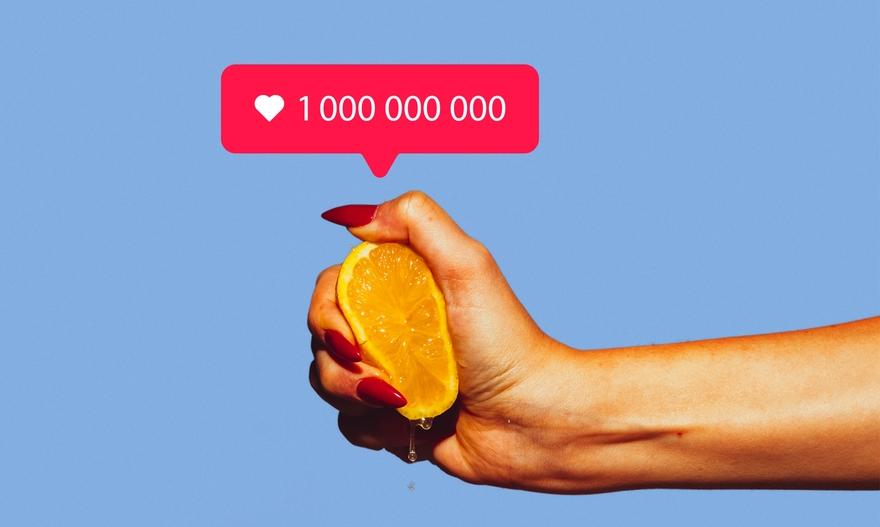
In the era of social media and the constant flow of information, it is increasingly difficult to distinguish knowledge from opinions, and authority from popularity. As a result, the importance of authorities is decreasing, which can be seen, among others, in science. As a result, societies lose common points of reference – people and institutions that have served as guideposts and inspiration for development for years. The initiators of the “Master and Disciple” competition want to remind how important this intergenerational relationship is for the future of science, but also of art.
Popularity more important than knowledge?
– We lack authorities. As a society, we attach less and less importance to them, which is a pity, because for many years they have been a guide for people in difficult situations or in purely professional aspects, such as medicine, art, culture and other fields – emphasizes Prof. Ph.D. n. med. Piotr Suwalski, director of the State Medical Institute of the Ministry of Internal Affairs and Administration.
The Edelman Trust Barometer 2025 report shows that trust in traditional institutions – governments, media and opinion leaders – is systematically decreasing. As much as 70 percent respondents around the world believe that representatives of government, business and journalists “intentionally mislead public opinion.” Over the last four years, the global trust index in governments has fallen by 12 percentage points and in the media by 8 points. As a result, the importance of the so-called network authorities and people who gain influence thanks to their activity on the Internet.
Popularity and recognition are increasingly becoming more important than knowledge or experience. This phenomenon particularly affects the scientific and medical communities. The COVID-19 pandemic has shown how easily false information can replace scientific facts, and rebuilding the credibility of experts requires consistent communication and long-term work.
– In science, authority is essential. We seek objective truth, whether it is difficult or easy. This Enlightenment ideal should guide true science, and the concept of authority fits very well into this. It is this type of trust and guidance that, on the one hand, allows us to stick to the scientific truth, and on the other – through the attitude of a human being and a scientist – shows that the ideals of science, the message, the search for truth should be greatly honored and cared for. So, on the one hand, we have the scientific result itself, and on the other, the attitude to life and the cultivation of basic values - says Prof. Piotr Suwalski.
Eurobarometer research shows that although 83 percent Europeans have a positive opinion about the impact of science on everyday life, and the number of people who have difficulty assessing the credibility of sources is growing. Wellcome Global Monitor indicates that trust in scientists remains high – 72%. respondents around the world declare that they trust science and people representing it. At the same time, researchers emphasize that communication style is becoming more and more important – respondents are more likely to trust scientists who can explain research results in an understandable and accessible way. Authority no longer results solely from a title or institution, but depends more and more on the ability to dialogue with the recipient.
– I know many people whom I consider absolute authorities in their fields, but also as role models of behavior and life attitude, and I think this is perhaps even more important. During my professional career, I met prof. Friedrich Mohr in Leipzig – an outstanding heart surgeon and a man who was able to inspire, build a team and support others, also in personal matters. For me, he was a role model not only in medicine, but also in life, says the director of the State Medical Institute of the Ministry of Interior and Administration.
Master-disciple relationship
In this context, the importance of the master-disciple relationship returns, which for centuries has been the foundation of the development of science and art. Today its form is changing, there is more dialogue and cooperation and less hierarchy. However, the meaning is still the same, i.e. transferring knowledge, attitudes and values.
– On the one hand, the very concept of master and disciple is probably changing and evolving. On the other hand, we want to emphasize how many universal values there are, which remain unchanged for centuries or millennia, how great a value it is to create such a relationship, to be able to become a master and pass on one's knowledge and attitude to life to students, but also how great a challenge, but also a life opportunity, becoming a student is – explains Prof. Piotr Suwalski.
The national “Master and Student” competition, organized by the State Medical Institute of the Ministry of Interior and Administration, reminds us of the need to cultivate such relationships. It includes several categories that will reward both individual achievements and joint projects showing how cooperation between generations translates into the development of science, culture and education. The awards are intended to go to people and teams who combine passion with responsibility and readiness to inspire others in their fields. The competition will end with the final gala on October 29, 2025 at the Royal Castle in Warsaw. The project partner is PZU.
– The “Master and Disciple” gala was created out of the need to emphasize the universal role of relationships, to emphasize universal values, and a certain similarity that connects various areas of our lives. Because we want to talk not only about universal values not only in medicine, but also in art, music and other fields – explains one of the originators of the competition.
The master-disciple relationship also has significance outside the world of science. In culture, sports or education, it is mutual trust and the transfer of experiences that create space for development. A modern master does not dominate, but accompanies, helping the student discover his own path.
– Each of our wonderful artists, athletes and friends working in other fields immediately recognized how important the master-disciple relationship, the ability to create teams, interpersonal cooperation was at a certain period of his life, and how much it connects all areas of our lives – emphasizes Prof. Piotr Suwalski.
Intergenerational exchange of experiences allows you to combine knowledge and intuition with a new perspective. Younger researchers bring freshness and courage in questioning patterns, while older ones bring stability and the ability to assess risk. In many laboratories and scientific institutes, it is cooperation between generations that becomes the source of innovation.
– This relationship can unleash something completely new and inspiring. From my experience, I can say that I have often been extremely inspired to take action and change my perspective by my young students, who opened my eyes to many issues that later became a starting point for further interesting research – adds the director of PIM MSWiA.