Fast fashion, or express fashion, is flooding European markets with cheap and non-durable clothing products. Companies such as Shein, Temu and AliExpress offer a huge selection of clothes, often much larger than traditional stores (often stealing designs from other clothing companies), and use very aggressive advertising. This model is based on the rapid turnover of very low-quality goods, which has serious ecological consequences. The textile industry is responsible for approximately 10 percent. global greenhouse gas emissions and uses huge amounts of water.
Moreover, working conditions in fast fashion producing countries are unacceptable – there is talk of forced and child labor. Express fashion is also weakening the French (and European) clothing industry: the number of jobs there has fallen threefold since 1990, and another 20,000 are currently at risk. jobs, and in the future even 50 thousand.
France has already introduced countermeasures, including: bonus for repairing clothes and the obligation to mark products with the so-called eco-scores (a system for assessing the impact of products on the environment). The new regulations will go even further.
Meanwhile, in Poland in June this year Poczta Polska signed a contract with Temu, the Chinese e-commerce giant, and despite numerous criticisms, this decision is still justified by neoliberals, according to the principle that every provocateur or madman who dares to raise his hand to the free market should be sure that his hand will be chopped off by the free market.
The article continues below the video
What countermeasures has France introduced in response to the flood of products from China?
What are the effects of fast fashion on the French clothing industry?
What do the French think about boycotting fast fashion?
What actions are young French taking to reduce consumption?
Social awareness and pressures
Legal changes are very often the result of social pressure. The restrictions on Chinese clothing giants were no different. In addition to having a huge impact on environmental degradation, these companies also engage in practices that border on systemic crime, in this case forced labor and child abuse.
Little is said about the drama of local entrepreneurswho, even if they would like to produce in their own countries, face many problems because their production costs will always be higher than the costs of goods imported from China. That is why cheap, unstable and harmful to health clothes have become a real plague of modern times.
Fortunately, this problem is very noticeable in France, where the young generation in particular is making efforts to limit their own consumption. The topic is widely publicized through the activities of influencers talking about the climate catastrophe, inviting reliable experts dealing with this topic to television and various social campaigns, and people regularly mobilize for ecological activities.
Economic patriotism is also important in this context. Grassroots initiatives, such as boycotting unethical producers, bring tangible results. In a survey by the Max Havelaar organization 60 percent The French are in favor of a readiness to boycott fast fashion. This especially applies to large fashion chains (22%) and large distribution brands (16%).
For the French, it is very important to support local producers and factories – this allows them to step by step free themselves from the global expansion of brands such as Zara, H&M, Topshop, Forever 21, etc., which took place in the first decade of this century. According to research presented by Statkraft and OnePoll, 80 percent The French are concerned about the consequences of climate change, which favors the already mentioned reduction of consumption and puts pressure on those in power to intensify their efforts, e.g. to inhibit the development of companies that pollute the most.
The legislative route
In Poland, the proposal to impose fines on Chinese companies is met not only with opposition, but even with outrage from liberal politicians who invoke the argument of “restricting the free market”. Due to such a dogmatic way of thinking about the capitalist system, any inter-party consultations in this area become impossible.
Meanwhile, in France, a proposal for a law limiting the so-called fast fashion was submitted not by a left-wing politician, but by Republican MP Antoine Vermorel-Marques, who notes the growing problem of marginalization of French producers in the face of the flood of Chinese products.
As he stated in an interview with Franceinfo, the bonus-malus system has one main goal: so that “products made in France are cheaper and products made in China are more expensive.” The MP is in favor of introducing a tax of EUR 5 per item to punish producers of “cheap Chinese food” and thus mitigate the negative effects of disposable fashion on the environment and public health. This idea appeared in the second bill of Anne-Cécile Violland from the ruling camp (and therefore also a liberal politician), which eventually became the official version.
The project was adopted on March 14, 2024 in the first reading: 146 deputies voted in favor, no one voted against and no one abstained. The Senate showed the same enthusiasm and on June 10 this year. the votes were distributed as follows: 337 senators for, one person against, three abstentions.
Shein in a major department store in Paris
Shein, a leader among fast fashion giants known for aggressive expansion and criticized for environmental damage and undermining the French clothing industry, plans to open six permanent stores in France, including the prestigious Paris department store BHV Marais. This decision caused outrageamong others from MP Anne-Cécile Violland, who recalled the PLN 40 million fine imposed on the company for unfair commercial practices. At the same time, the parliament has basically finished work on the law against fast fashion – but it has not yet entered into force.
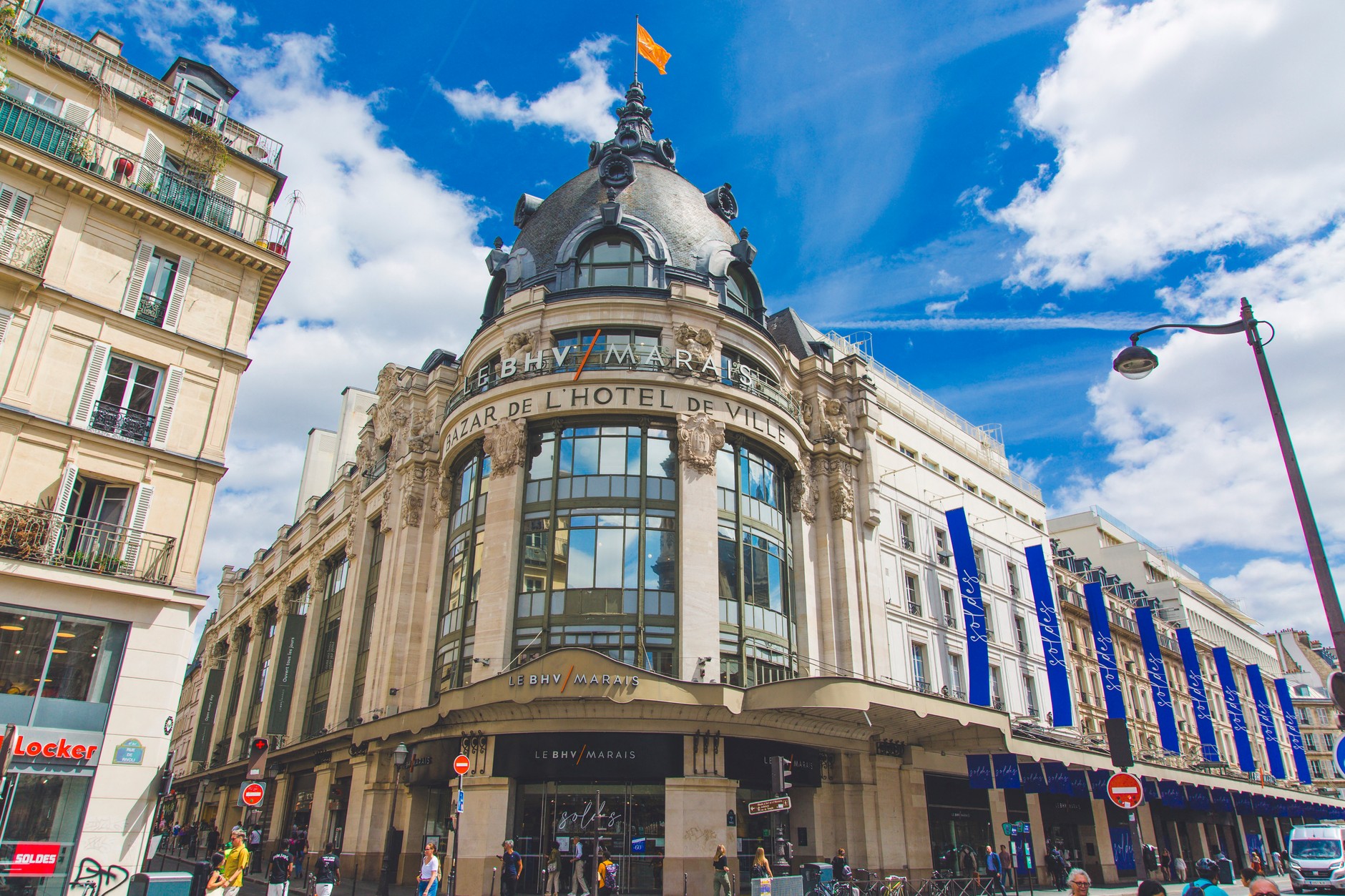
Parisian department store BHV MaraisPhilippe Turpin/Photononstop/AFP
It is worth mentioning here that between 2010 and 2023, the number of clothes placed on the market in France increased from 2.3 to 3.2 billion, which means over 48 new items of clothing per capita per year and 35 items introduced to the market every second. That is why politicians are demanding that the legislative procedure be accelerated to stop the expansion of brands such as Shein and force a more responsible production model.
French parliamentarians appealed to the government to appoint a commission as soon as possible to finalize the law against fast fashion. Although the project has already been approved by both the National Assembly and the Senate, its finalization requires passing through subsequent legislative stages. And the act is very necessary – although it will not completely block the expansion plans of the Chinese Shein platform, it will provide tools to limit the destructive effects of the clothing industry's activities on the natural environment, which is the first step in the fight against this phenomenon.
What is most surprising is the location of the new Shein stands – after all, the BHV Marais in Paris is home to truly luxury brands. Some, mainly representatives of companies that have recently appeared on the market and are based on ethical production, announced its intention to withdraw from BHV. These include Aime Skincare, Odaj, Maison Pechavy and Culture Vintage. Galeries Lafayette also issued a statement in which they condemn BHV's decision to accept Shein stands and declare that they will not enter into any cooperation with the Chinese giant.
In recent years the European market has been literally flooded with cheap clothes with a very short life cycle. Therefore, quick and effective actions are needed. In the opinion of Senator Sylvie Valente-Le Hir, who is responsible for presenting the bill in the Senate, the situation requires very efficient regulatory actions, because the current control mechanisms have proven to be insufficient, the best example of which is the spread of Chinese companies throughout the French market. In her opinion, the time has come to introduce clear and strict rules of the game that will limit not only environmental degradation, but also the negative social consequences of the dynamic development of the fast fashion sector.
Weekly Review
Consumer education needed
The vision of Shein's stand in a Parisian department store outraged public opinion, as did Poczta Polska's cooperation with Temu. But politicians in Poland were relatively inactive in this matter. We can mention Jacek Tomczak here, who sent an interpellation to the Minister of State Assets regarding the cooperation of Poczta Polska SA with the Chinese e-commerce platform. The response he received emphasized that “cooperation is only of an operational nature.” Wojciech Balczun, Minister of State Assets, stated that parcels from Temu generate additional revenues for Poczta Polska, and cooperation allows for better use of the company's logistics infrastructure.
This is an absurd and outrageous argument – it reduces all trade to pure profit, disregarding the well-being of citizens and environmental consequences. In fact, all attempts to limit the expansion of economic giants are met with great criticism in Poland, even though the monopolization of capital by foreign tycoons leads to the destruction of smaller, especially local, entrepreneurs.
Although the percentage of buyers on Shein or Temu platforms in France and Poland is similar (officially, approximately 30 percent in both countries admit to such purchases), in Poland there is much greater social acceptance for this type of practice. The perception of this phenomenon in Poland is completely different due to cultural and social differences.
In France, there is more and more talk about the ethical and ecological consequences of mass purchases from Chinese e-commerce giants, and public opinion and politicians are putting pressure on the authorities to introduce regulations limiting ultrafast fashion as soon as possible. In Poland, however, consumer pragmatism dominateswhich means that lower prices, a wide selection and availability of products still outweigh ecological considerations. While in France the use of platforms such as Temu is sometimes perceived as an act of environmental irresponsibility, in Poland it is considered a sign of economic sense.
In Poland, it should be increasingly important to educate society about the broadly understood consequences of fast fashion – both ecological, economic and social. Consumer awareness allows citizens to understand how the import of huge amounts of cheap clothes not only contributes to environmental degradation, but also weakens local producers, distorts the principles of fair competition and leads to job losses in the textile sector, which has long been marginalized.
The costs of producing clothes in Poland are many times higher, so free access to ultrafast fashion significantly hinders the development of domestic enterprises. Unfortunately, initiatives aimed at increasing awareness and educating consumers in this area are still limited; in practice, only activists of the Razem party undertake systematic educational activities, e.g. in social media.
Public debate focuses primarily on price benefits for consumers, ignoring the long-term social and environmental impacts. It is therefore worth, following the example of France, strengthening information campaigns, conducting awareness-raising campaigns and considering appropriate legislative regulations that will not only protect the environment and support local producers, but also shape more conscious choices, promoting responsible consumption and a sustainable clothing economy.