Was Elena Ceaușescu worse than her husband? The myths that destroyed the image idealized by communist propaganda

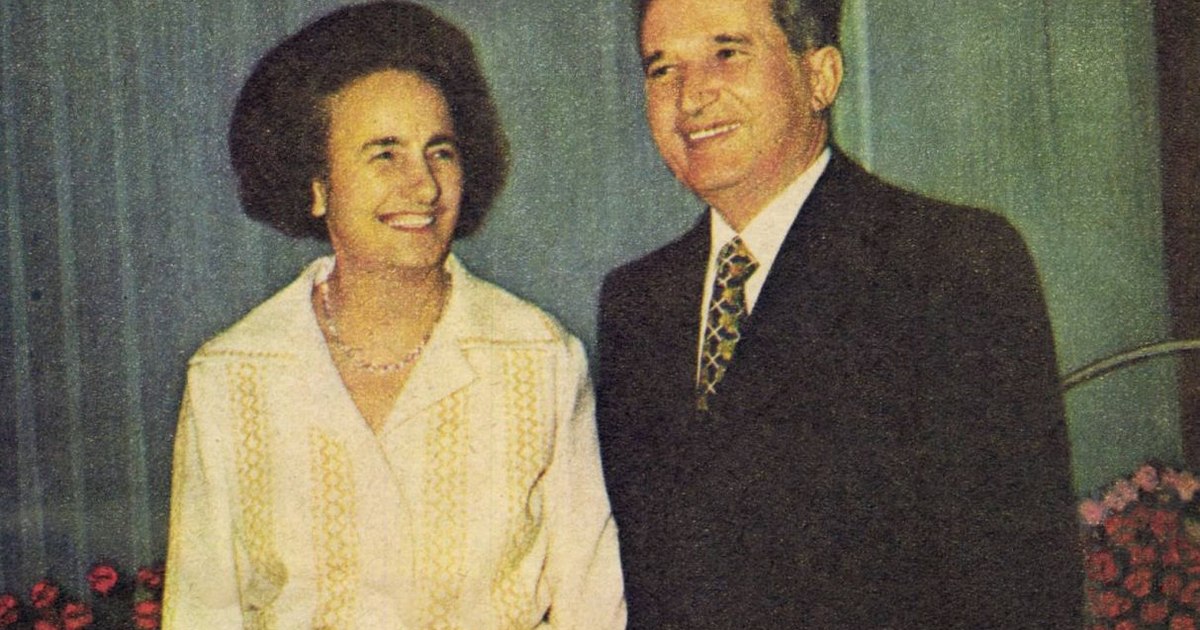
35 years after the death of the Ceaușescu couple, it has become popular again for many nostalgic Romanians, and Elena's “sins”, complained about over time, seem to have been forgotten. In the 90s, Romania had just emerged from the communist dictatorship, things were completely different.
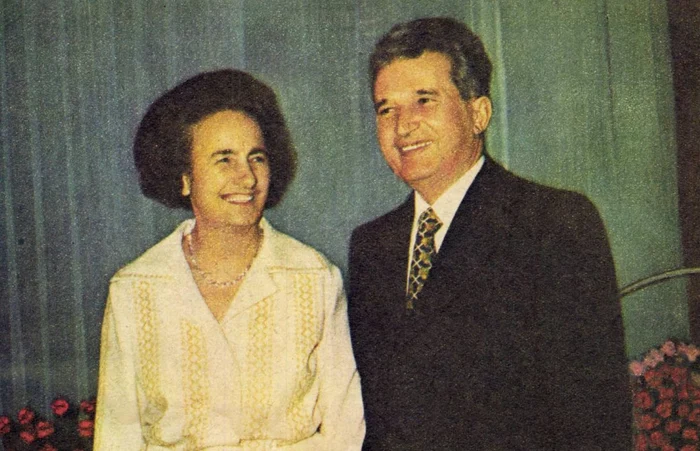
Elena Ceaușescu and Nicolae Ceaușescu. Source: Cinema. 1980
Shortly after the death of the Ceaușescus, horrifying stories about the wife of the communist president Nicolae Ceaușescu took off, and local folklore attributed the most heinous deeds to her.
Number 2 man in Romania
Nicolae Ceauşescu (1918–1989) met his future wife, Elena (Lenuţa) Petrescu, around 1939, and the two got married in 1947. In their half-century marriage, they had three children: Valentin (b. 1947), Zoia (b. 1949, d. 2006) and Nicu (b. 1951, d. 1996).
The ambitions of Elena Ceaușescu (1916–1989) went beyond being just the wife of the communist dictator.
In the 1980s, she held important positions in the party and was seen as a possible successor to her husband in the leadership of the country. She benefited from a “cult of personality” to the same extent as Nicolae Ceaușescu and was called by the newspapers of the time “the torch of the party”, “hero woman”, “the perfect personification of the traditional values of national history”, “the man and scholar endowed with a planetary aura” or “the model woman”. Numerous artists dedicated paintings and poems to her and felt obliged to eulogize her, along with her husband.
In 1987, two years before the removal of Nicolae Ceaușescu from the leadership of the country, Romania had reached a deep economic crisis.
While the former communist president continued to hold the economy in his grip and promote his family and wife, tightening the circle of influential officials around power, Elena Ceaușescu was trying to build her own base of influence, secret reports from the United States Central Intelligence Agency (CIA) showed.
“Although she seeks to position herself as Ceaușescu's successor, his wife is so unpopular and so lacking in political skill that other potential successors will quickly thwart her plans once her husband is removed. To be successful, she would have to remove her husband quickly, but it would be very difficult for her to do so.” mentioned a July 9, 1987 CIA report preserved in the agency's digitized archives.
“Worse than Ceaușescu”
Its image was brutally overturned since the first days of 1990, and the foreign press discovered it, in the reports of the time, through the voice of the Romanians, in a gloomy and, at the same time, ironic pose.
Many Romanians saw Elena as the embodiment of evil, the only man more diabolical than Ceaușescu, and the one who would have been behind the most catastrophic decisions of the communist regime.
“During a visit I made to Romania, the only good thing anyone could say about former dictator Nicolae Ceaușescu, who froze and starved his people, was that he was better than his wife. Some in Romania are rewriting history by saying that, of the two Ceaușescus executed on Christmas Day 1989, Elena was the diabolical force behind the throne”wrote Jack Anderson and Dale Van Atta in a report published on October 15, 1991 in The Washington Post.
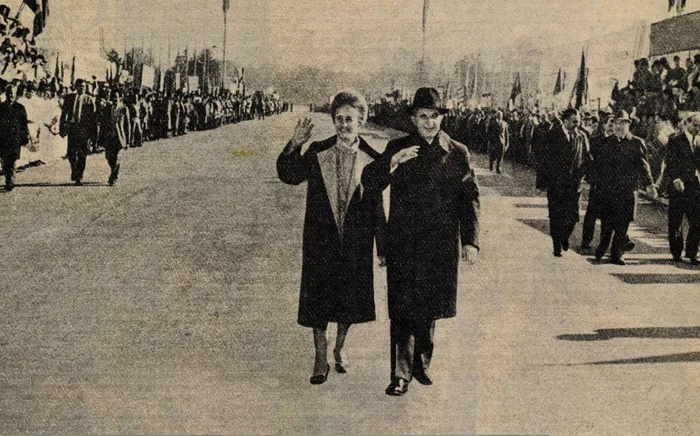
Elena Ceaușescu and Nicolae Ceaușescu. Source: Woman, 80s
Journalists claimed that Elena Ceaușescu had urged her husband to kill or mutilate some of his closest collaborators and friends, often after inventing insults that they, the faces, would have said about Nicolae.
“Elena pestered Nicolae until he convinced her to make him first deputy prime minister and then appointed herself head of counterintelligence in the Romanian secret service so she could listen to wiretapping. Elena poured insults on her subordinates, but she expected everyone to praise her for her beauty and intelligence, both of which are questionable. Mother Nature had not been kind to Elena, so she sought solace in clothes and jewelry“, reported The Washington Post in 1991.
Elena's obsession with diamonds
The publication noted that diamonds were Elena Ceaușescu's great passion, recalling the controversial story of the Romanian forced by the communist regime to become the wife of the dictator of the Central African Republic, Jean-Bédel Bokassa, in the mid-1970s — so that Elena could have access to his diamond mines.
The story was originally told by the fugitive spy Ion Mihai Pacepa, former head of the Department of Foreign Intelligence (DIE), in his memoirs published in the 80s, after defecting in 1978 to the United States of America.
Jean-Bédel Bokassa (1921–1996) came to power in 1965 after the coup d'état that ousted his cousin. In 1977, he was crowned emperor in a lavish ceremony, but two years later he was overthrown and sentenced to death in absentia for atrocities committed during his regime.
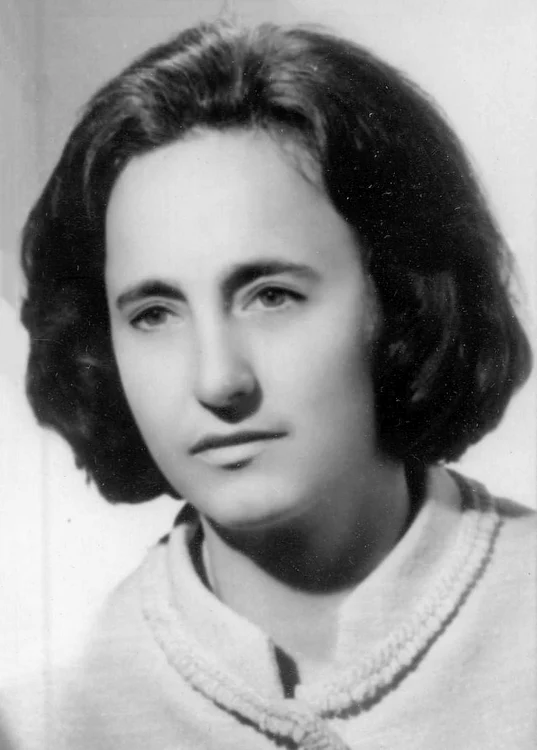
Elena Ceaușescu. Wikipedia
Pacepa recounted that the DIE had spent months probing the African dictator's vulnerabilities—and his unbridled desire for women was one of them. Thus, during a visit by Bokassa to Romania, the spy service managed to infiltrate a young woman in his entourage, with the aim of seducing him, so that the Ceaușescu regime could profit from the diamond mines in his country.
“During his visit to Bucharest, Bokassa fell madly in love with an attractive Romanian female doctor, a security guard, who offered him the first tissue when he appeared to have a cold. After Bokassa's repeated requests to Ceaușescu, the female doctor was sent to Africa on a special presidential plane to treat the cold that Bokassa claimed to have contracted in Romania. The female doctor was overwhelmed with jewels, she was given a personal villa full of servants, and soon a modern vegetable farm was producing for Bokassa and the doctor. The farm manager, an agricultural engineer, was actually a DIE officer who became the doctor's liaison officer,” recounted Pacepa.
Bokassa was influenced by his Romanian wife to accept Romania as a business partner in his diamond mines. Later, however, the doctor managed to flee to France. Meanwhile, a coup in 1979 would overthrow the African dictator, famous for his 18 wives.
American journalists wrote in 1991 that, when the imported diamonds were no longer enough for Elena, she pestered Nicolae Ceaușescu until he convinced him to produce synthetic diamonds for her.
“Agents of the Romanian secret services stole synthetic diamond technology from the United States and built a factory near Bucharest to supply Ceauşești”, noted The Washington Post in 1991.
Scholar with four classes
Elena Ceaușescu had only four primary grades, but she decided to pretend to be a talented scholar and convinced Nicolae to appoint her director of the Chemical Research Institute in Bucharest.
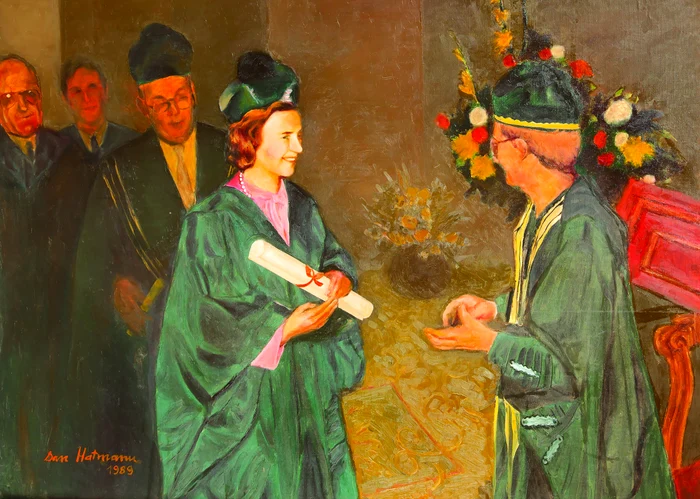
Elena Ceaușescu. SOURCE: Dan Hatmanu, National History Museum of Romania.
A school report from 1928, published as early as December 1989, showed that Elena Ceaușescu left school at the age of 10
“Elena, who had received a doctorate in chemistry from the University of Bucharest, despite her obvious shortcomings, was proud of her status as an intellectual and maintained this fantasy even during her trial for genocide and other crimes, before she was executed on Christmas Day. As honorary president of the Academy of Sciences and Arts, she was overwhelmed with honorary titles during her visits abroad, and numerous “scientific” works were published under her name”, reported The Washington Post in a 1989 article.
But the report from the school in Petrești showed that he had to repeat the fourth grade because of poor grades. According to the document, Elena Petrescu, a peasant's daughter, never returned to school after that. She told the school authorities that she was going to work in a tailor shop.
“Her favorite subjects were needlework and sewing, in which she scored 7.33 out of 10. She had 6.66 in music and sports, but between four and five in reading, writing, maths, religion, history and behavior. Nicolae Ceaușescu also left school at the age of 14 to join the Communist Party.”informs the publication.
Real Romanian scientists were forced to write articles and books and put her name on them, noted the Western press.
“Elena, who had dropped out of school at the age of 10, wrote so much that there was a noticeable decline in the published scientific output of Romania's top researchers for a decade, at least under their own names. As the author of the research, Elena was ignorant of basic chemistry. When she refused to approve purchases for the Chemical Research Institute, the scientists tricked her into listing the chemicals of which they needed under their technical names. Rather than admit she didn't know what they were buying, Elena was approving the purchases.” wrote The Washington Post.
When she went on state visits, the journalists continued, she pressured foreign universities to grant her honorary doctorates. She was even honored at the White House during the Carter presidency for her scientific “performances.”
“She was unhappy, though. Elena wanted the Nobel Prize in Chemistry,” concluded the authors of the report.
Elena Ceaușescu and the anti-abortion decree
Elena Ceaușescu was often accused of being behind the catastrophic decisions made by her husband. One of them was the elimination of contraceptive pills from the health system, a measure that, in the 70s, led to countless cases of abandoned children in orphanages.
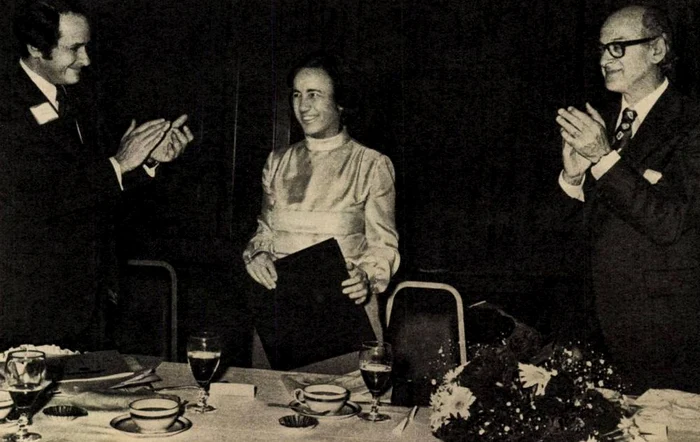
Elena Ceaușescu. Source: Cinema. The 70s
At the same time, Elena would have convinced the former communist president to tighten the anti-abortion legislation, intended to severely punish women who gave up pregnancy for various reasons.
Decree 770 from 1966, which prohibited abortion and penalized women who terminated the pregnancy, would not have been enough for Elena Ceaușescu, argued the former head of Romanian espionage, Ion Mihai Pacepa.
In his book “Red Horizons”, Pacepa reproduces a conversation that the Ceaușescus allegedly had on this topic, after a visit to the American city of New Orleans, in 1978, where the church and local authorities opposed abortions:
“I have told you many times, Nicule, that you should sign a presidential decree banning abortions in Romania and forcing every family to have at least four children. Everyone agrees that you are the greatest statesman and contemporary economist. Even the mayor, who met you for the first time tonight, said that you are a visionary, a personality that will last for centuries. A man like you, Nicholas is born once at 500 years”Pacepa recalled.
Ceaușescu would have been excited by his wife's praises, but would have told her to stop, smiling, recounted the former head of Romanian espionage.
“How does it feel to be so great, so important, and yet to be the head of such a small country? Only Albania is smaller than our country. If we give such a decree, in less than ten years, Romania will grow to almost 40 million people. It will be completely different then”Elena would have concluded.
The former Securitate general, then close to the Ceaușescu couple, claimed that on other occasions Elena Ceaușescu had tried to convince her husband to pass such a law against abortions.
“Her greatest sin was not plagiarism, hypocrisy, or excessive spending. It was a lack of humanity. Many think she only loved Nicolae and her dogs. When people complained that they were dying of hunger and cold, she taunted them: Worms! They never have enough!”stated the authors of the report from 1991.