Rare archaeological piece, discovered on the route of the A8 highway. Specialist: “Confirms the existing links between the free Dacian population and the Roman world”

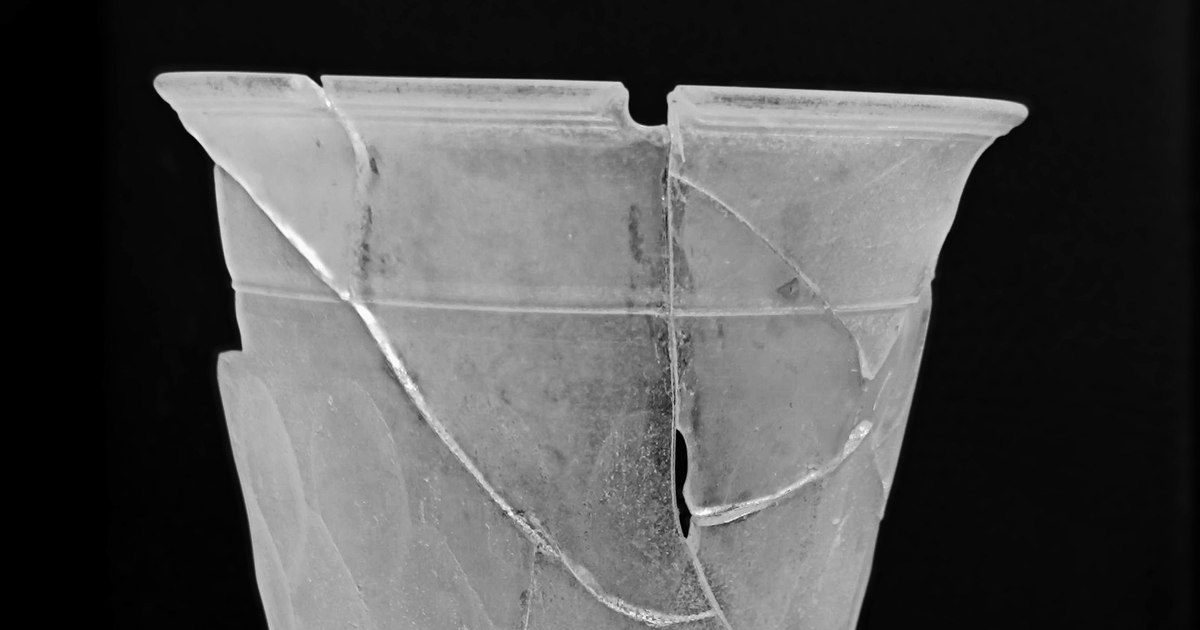
The archaeological research carried out along the route of the future A8 highway allowed the investigation of several archaeological sites in the vicinity of the city of Târgu Neamţ.
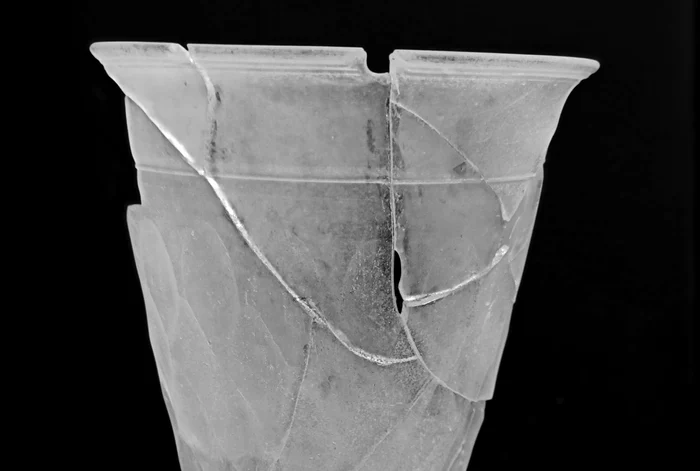
The glass cup discovered on the Autostrazii 8 construction site PHOTO: Facebook
During the archaeological excavations on the A8 highway, on the segment near Târgu Neamț, the archaeologists involved in the archaeological excavations discovered several graves from the II-III BC
In the inventory of a grave, this very special piece was discovered, namely a glass cup, which, according to the experts who deal with these artifacts, would come from the Roman world, from a workshop in the area of Egypt.
The director of the Târgu Neamţ Museum of History and Ethnography, Vasile Diaconu, explained to Agerpres that, at that time, the most common funeral ritual was cremation, which is why the burnt human remains were placed in clay pots and then buried in the ground.
Often, objects belonging to the cremated person were also placed in this vessel.
A rare find
In such an archaeological complex, along with the osteological remains, some beads and glass fragments from a small vessel were identified.
At a first analysis, the archaeologists found that it is a rarer piece, namely a glass cup, originating from the Roman world.
“Such pieces are rarely found during the 2nd-3rd centuries after Christ and confirm the existing links between the free Dacian population and the Roman world”declared Vasile Diaconu.
The extremely fragmented state of the object required its careful restoration by Dumitru Bostan, an expert in the field within the Neamţ National Museum Complex.
A unique piece for the Moldova area
Vasile Diaconu emphasized that in the east of Romania only one similar piece is known, at Poiana, in Galati County.
“Thanks to the archaeological research carried out on the route of the A8 highway by the specialists from the Oltenia Museum in Craiova and the young team of archaeologists from SC Vanderlay Arheo SRL, some interesting discoveries were made in the vicinity of the city of Târgu Neamţ, including this rare piece of glass. Because there is a close collaboration between the previously mentioned collective and the archaeologists from within the Neamţ National Museum Complex, which takes shape in the research and exploitation of the vestiges discovered in this area, some of the most special pieces have already entered the stage of scientific processing, but also of restoration. Here, the efforts of our young colleagues who stayed for months on the archaeological sites also offered very interesting results, including this unique glass for the Neamt area and the second known in Moldova”stated the director of the Museum of History and Ethnography Târgu-Neamţ.
The value of archaeological research on the A8
All these archaeological research carried out along the route of the A8 highway have the great merit of having succeeded in enriching the archaeological heritage of the area with valuable discoveries, which come to complete the historical data known until recently.
Very rare pieces, such as this glass cup, were transported over very long distances, as a result of an intense trade within the Roman world, but also with the barbarian world.