
President Nicușor Dan. Photo: Presidency.ro
President Nicușor Dan signed several decrees on Wednesday, including the one regarding the promulgation of the law on health reform, for which the Government led by Ilie Bolojan assumed responsibility in Parliament.
“We have enacted legislation that brings new health care regulations that will increase protections for patients and healthcare professionals alike,” Dan announced on X.
The head of state specified what changes the new legislation will bring, which also helps vulnerable people.
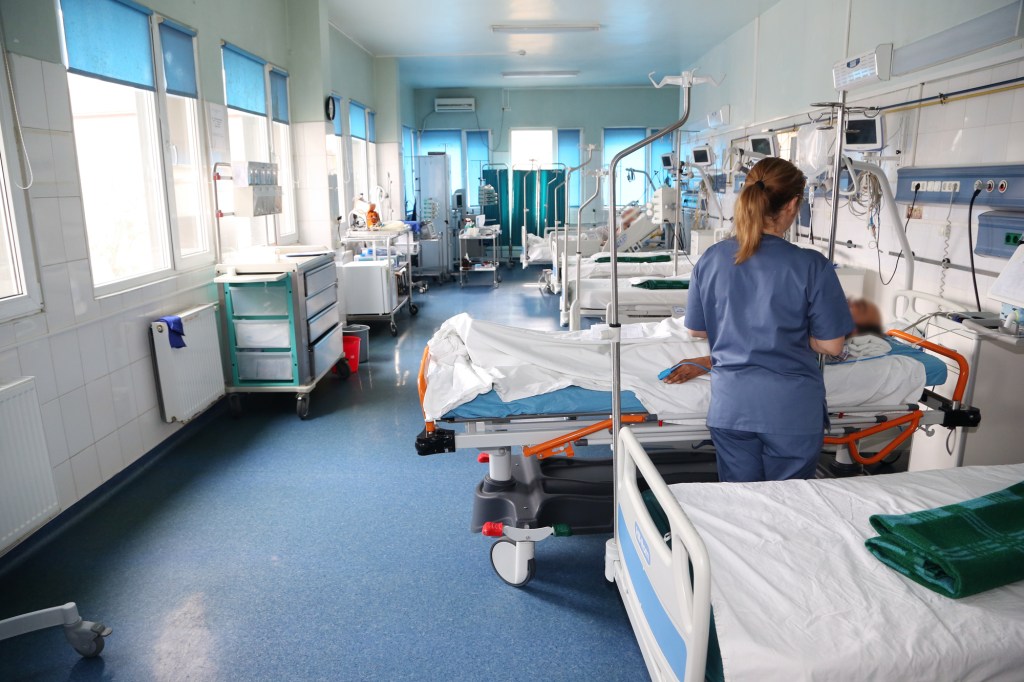
“In all public and private health facilities, panic buttons will have to be introduced in every room intended for the hospitalization of patients. These systems will trigger an alert in case of medical emergencies or situations of imminent danger, which is especially useful for immobilized patients or patients with reduced autonomy”, emphasized Dan.
The president indicated that both patients and medical staff will benefit from a more extensive surveillance system for their safety.
“Through this law, the installation of video surveillance systems will also become mandatory in ATI wards, in emergency rooms and in those intended for critical cardiac patients. The goal is to ensure compliance with medical protocols and procedures so that patients can receive appropriate care at the highest medical standards. At the same time, this system provides an increased degree of safety for medical personnel by deterring potential assaults in hospitals”, said Dan.
Health reform, undertaken by the Bolojan Government
Prime Minister Ilie Bolojan declared on September 1, when the Government assumed responsibility in Parliament regarding health reform, that the new measures will bring more order and fairness to the medical system, more care for patients and make services more accessible.
“A fair state, with respect for Romanians, cannot exist in the absence of an accessible, efficient health system, with decent medical services for every patient. Although health budgets have increased year by year, although there have been large salary increases in the past years and investments have been made in the system, this has not been sufficiently reflected in the improvement of the quality of medical services, and during this time the problems have accumulated. The time has come to do what should have been done a long time ago,” he said the Prime Minister in Parliament.
 Hospitals that allocate more money to salaries than to treating patients will be penalized. All health measures adopted by the Government
Bolojan explained in early September that the changes will bring more fairness to the system and reduce waste.
“First of all, the reform we are proposing today starts from the principle of reorienting patients from the hospital area to family medicine and specialist medicine. By eliminating unnecessary admissions and treating patients at the family or specialist doctor, over 3 billion lei can be saved, which can also be redirected to medical services”, said Bolojan.
The health measures are:
- Fines for doctors who do not also consult in the hospital polyclinic: Doctors who work in hospitals will be obliged to grant, during working hours, consultations in the integrated outpatient clinic, where patients can be consulted in the polyclinic regime, for a minimum of one hour/day on average per month, based on a schedule of 35 hours/week;
- Hospitals that allocate more money to salaries than to treating patients will have to perform more services in order to cover that budget;
- Family doctors will be financially incentivized to provide more medical services;
- Paid medical services offered by mobile caravans that will go to isolated areas: Hospitals will be able to organize mobile medical caravans for isolated communities, and the services will be paid by the Health Insurance House;
- Strategic hospitals and medical consortia: A number of hospitals in Romania will be able to be declared hospitals of “strategic importance”. The criteria for inclusion in this category, the list of hospitals of strategic importance will be approved by Government Decision;
- Increases the clawback fee for drug manufacturers: The clawback fee is a quarterly payment obligation on the holders of marketing authorizations, manufacturers or distributors of drugs;
- Private residents will be paid by the private hospital: They will no longer be paid by the Ministry of Health, as is currently the case.
The law was contested at the CCR by the opposition parties, AUR, SOS and POT, but the referral was rejected two weeks ago by the constitutional judges.