Bad in economics. Trump fell into a trap. It condemns its farmers to poverty


When a photographer recently captured US Treasury Secretary Scott Bessent reading a text message at the UN General Assembly, the photo also revealed the scale of the deepening agricultural crisis in America.
“We saved Argentina yesterday,” reads the message, apparently sent by Secretary of Agriculture Brooke Rollins. “In return, the Argentines abolish export duties on grains, reduce their price and… they sell a lot of soybeans to China at a time when we would normally be selling to China“.
Within 48 hours of Argentina's decision to abolish export taxes on grain products Chinese buyers purchased approximately 1.3 million tons of Argentine soybeans — as U.S. farmers entered the harvest season without Chinese orders. A surge in Argentine exports has pushed soybean prices down, giving China an even greater advantage over the United States.
This is not just a story about trade disputes or goods flows. This is a case study showing how US President Donald Trump's tariff policy is fundamentally the result of a misunderstanding of 21st century supply chain economics. and how temporary shocks can trigger lasting structural changes.
The conventional narrative presents soy as a bargaining chip between the United States and China, but it is not the ultimate consumer good. Soybeans are an intermediate product in a closely integrated agro-industrial supply chain. Processing plants obtain animal feed and oil from soybeans, which in turn sustain animal production and food security. Disruption of one node causes a reorganization of the entire system, which never returns to its previous form.
A Chinese lesson from two decades ago
China learned this the hard way in 2004, when global traders manipulated soybean prices, pushing them from $540 to more than $750. per ton. They then announced massive harvests which caused prices to drop to $500. and trapped Chinese processors with expensive contracts. Researchers estimate that approximately 3,000 soy processors went bankrupt, while foreign traders took control of 70-85 percent. Chinese production capacity.
The article continues below the video
China didn't just lose money; have lost control of a critical link in their food supply chain. In response, they built huge strategic reserves through the state grain corporation Sinograin, secured the rest of the state-owned processing plants, and began investing heavily in South American agricultural infrastructure.
Trump's 2018 tariffs accelerated these diversification efforts. Chinese investment has already funded the ports, rail lines and logistics networks that now effectively move South American soybeans to Asian markets, ensuring that by the time tariffs disrupted U.S.-China trade, the necessary infrastructure was already in place.
As a result what once might have taken two decades unraveled in just seven years. In the years 2011-2018, approximately 60 percent of all US soybean exports went to China. However, by 2024, Brazil's share of China's soybean imports increased to 71%, from just 2%. in the 1990s.
Today's trade war, which ends the realignment that began in 2018, demonstrates the long-term performance of global supply chains. Brazilian and Argentine farmers increased production, and their production capacity did not evaporate after the tariffs were removed. Chinese processing plants have established lasting relationships with South American suppliers, and ports and logistics networks have been optimized for Brazil-China routes. Global soybean prices, once driven by North American harvests, now follow the South American agricultural calendar.
The USA has become dependent on one buyer. Now American farmers are paying the price for this mistake
The economic logic behind this shift is simple: focused buyers like Chinait is much easier to diversify your supply sources than to find equivalent markets for dispersed sellerssuch as American farmers. China imports 100-105 million tons of soybeans annually, surpassing all other importers.
Because China is responsible for 60 percent global soybean trade, U.S. farmers are unable to replicate this demand elsewhere. China was once overly dependent on a single supplier, however American farmers are now paying the price for relying on a single buyer. No mix of smaller markets can compensate for the loss of the largest customer who has invested in viable alternatives.
All of this speaks to the inconsistency of America's current trade posture. The United States provided Argentina with approximately $20 billion. [ok. 73 mld zł] financial assistance to stop it from drifting further into China's orbit. Argentina responded by abolishing export taxesimmediately increasing the competitiveness of its soybeans before selling to China.
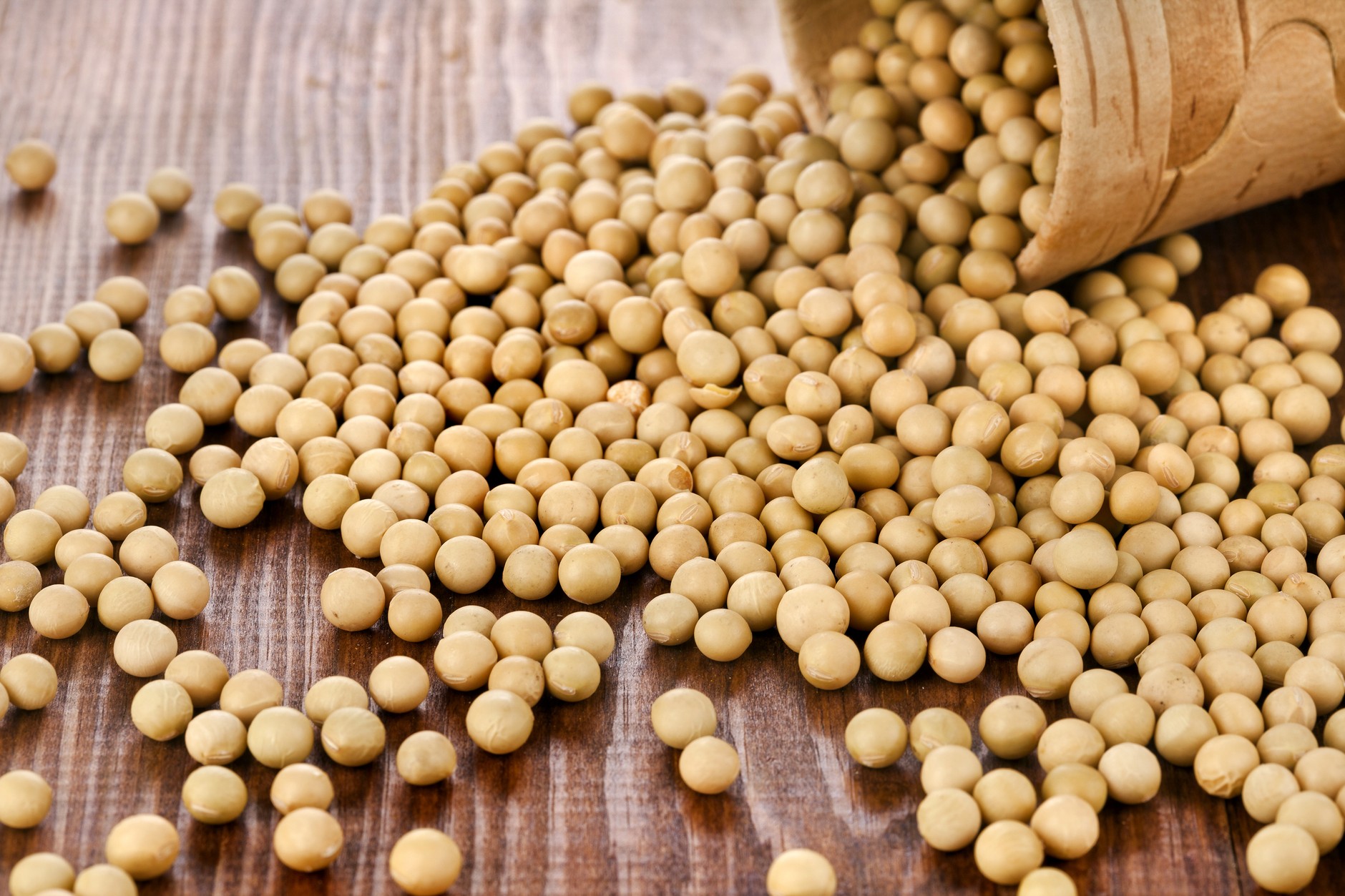
Soybeans. Illustrative photosMadlen / Shutterstock
In the meantime, American farmers, who received approximately USD 28 billion. [obecnie ok. 102 mld zł] subsidies in 2018-2019, they watched their market share evaporate, and now they can expect rescue again. As a spokesman for the Illinois Soybean Association recently stated: “What we really want is good relationships with our trading partners. We want markets. We don't want bailouts.”. Yet the United States continues to subsidize its farmers and finance its competitors.
These dynamics expose a deeper flaw in the U.S. approach to global, interconnected markets. Tariffs can protect consumer goods industries when it costs a lot to find an alternative, but are disastrous for intermediates in flexible supply chains where buyers can easily replace cells. Apparently, US trade policy does not recognize this fundamental distinction.
Americans missed the bitter lesson of Brexit
The parallels with post-Brexit UK trade policy are striking. The strategies of both countries reflect significant rhetoric about sovereignty and superiority, while ignoring how complex supply chains adapt to disruptions. They treat trade as bilateral when it is multilateral in nature. They overestimate their necessity and underestimate the costs associated with adaptation.
My own research on post-Brexit trade shows that disruptions tend to worsen rather than improve over time. 2023 showed more pronounced trade declines than previous years, pointing to deeper structural changes rather than temporary adjustments. The UK has been decoupled from EU value chains for consumer goods, while remaining dependent on the EU for intermediate and capital goods.
Like American farmers losing access to the Chinese market, the party initiating the disruption faces asymmetric vulnerability. Buyers with options (EU and China) find it easier to reorganize their supply sources than sellers (UK and US) find equivalent alternative markets. The soybean saga offers another, more general lesson. In modern trade, control over supply chain nodes is more important than control over raw materials. China lost control of its processing capacity in 2004 and has spent two decades ensuring it will never be so vulnerable again.
The United States is currently losing access to its largest export market because it has failed to understand that once supply chains are reorganized, they cannot be restored just because tariffs change. When Bessent read that text message, the outcome was already decided. He was reading properly an obituary of trade relations that were systematically dismantled through years of erroneous policy. The question now is not whether it can be rebuilt, but whether American policymakers understand why it cannot.