We no longer believe that Friday the 13th brings bad luck, but we fear 5G. What happened to traditional superstitions


In 2025, Romania moved from classic superstitions to conspiracy theories. This is what the results of the barometer “Romania between magic and esotericism” carried out by INSCOP show. If only 13% of respondents believe that Friday the 13th or Tuesday are unlucky days, over 55% believe that the population is manipulated by modern technologies, such as artificial intelligence or 5G. Moreover, almost 60% believe that there are secret power groups that cause pandemics and economic crises.

The fear of 5G, greater than that of Friday the 13th
What are the conspiracies in which Romanians believe
The most popular conspiracy theory is that “Romania is a country where external powers secretly control important decisions”. 61.4% of those who responded to the INSCOP survey agreed with the statement. And only 30.6% said the opposite.
At the same time, 58.4% of those surveyed agreed with the statement that “Pandemics or economic crises are the result of the plans of secret power groups”7.3% abstained, while 34.1% were of the opposite opinion.
Another popular conspiracy is that “modern technologies (5G, artificial intelligence) are being used to manipulate the population”. No less than 55.6% of respondents believe in this hypothesis.
A large percentage also has those who believe that vaccines are used to control the population, 40.1%.
Belief in horoscopes is also popular among young people.
Present at the launch event of the barometer, Vasile Bănescu, theologian and member of the National Audiovisual Council (CNA), commented:
,,36% of young people believe in horoscopes. Who would have thought that young people could be attached to this? In the new CNA code, we wanted to introduce as an obligation for all television and radio stations that have a horoscope column this message that the respective program presents information that has no scientific basis. Astrologers were scandalized, who believe they have a scientific basis, but they are in the minority”.
Darie Cristea, sociologist and INSCOP research director, however, came up with a different perspective, based on a research from a few years ago:
“I had a very simple hypothesis, that people follow the horoscope in the media, because in general the horoscope gives positive information. And it came true. It was a content analysis based study. And it turned out that most of them gave positive information. It's also a comfort of this superstition after all”.
At the same time, 42.6% of the participants in the current research agreed with the statement “There are invisible energies (aura, chakras, bioenergy) that influence health.” Most of them are AUR voters, people aged between 45 and 59 or residents of Bucharest.
What happens to traditional superstitions?
Traditional superstitions are no longer very popular among Romanians. Only 15.8% still believe that if a black cat crosses their path it will bring them bad luck and 3.7% believe that if they pass under a ladder it will bring them bad luck. Even Tuesday and Friday the 13th are no longer considered unlucky, only 13% of the respondents considered this. Conversely, more than 20% believe that if they turn back from the road they will have bad luck.
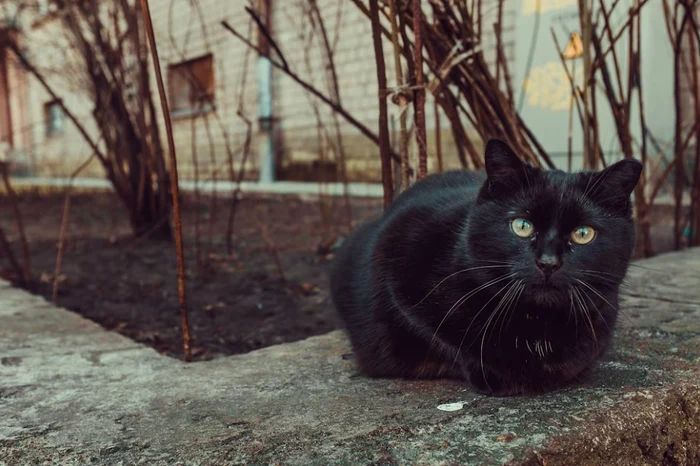
Romanians are no longer afraid of the black cat
Luck, considered very important
Romanians believe very much in the importance of luck, shows the INSCOP barometer. 75.3% of respondents said that luck is important in life, while 21.4% were of the opposite opinion.
“The public doesn't go so much on a particular superstition. The real star of the survey is luck. But luck is not something that can be solved with a single amulet or avoiding the cat. It's a slightly more complicated formula. It is a matter in which we believe and which – sociologically speaking – has not been very studied until now and has not been very explained. Luck is a way of life” sociologist Darie Cristea commented.
The danger behind the answers
Some of the participants in the research-based debate raised questions about the danger behind percentages.
,,It seems to me that there are two large categories, old rite superstitions and new rite superstitions. Old Rite superstitions (salt, black cat, ladder) are benign. Let the one who never knocked on wood cast the first stone. They do not in any way attack social cohesion, the way society is organized. It doesn't matter if I think I'm unlucky on Friday the 13th. I can believe that in a democracy as well as in a dictatorship.
The problem is with the others, which are themes that seem designed precisely to destroy social cohesion, trust in the government system, trust in scientific/health authorities”commented the journalist Vlad Petreanu.
He was also surprised by the wide differences in the survey.
“Between these two large categories there are differences in prevalence. Staircases/ladders have a low prevalence. Secret Powers/Vaccines are 60%. I wonder how they got to such high numbers? By chance or as a result of some premeditated campaigns that aimed precisely at the popularization of these latter themes, which have the effect of eroding confidence in the Western orientation?”
Vasile Bănescu declared himself worried about a series of “new rite” superstitions.
“I was marked by a few percentages among young people. This indicates, in my view, an unprecedented educational crisis. The educational crisis in which Romania was also caught at the end of last year, when, as we know, the great polarization, the great social schism in which we still live today, began. A sect has simply arisen in our midst, consisting of a few million people, I called it the “tour 2 sect,'' which believes in someone with special powers, a guru-type person, a person who cultivates a return to things unrelated to the age we live in, a person who flatters easily, who seduces easily.
Superstition related to health is very worrying. We know that in eccentric cases in the medical area – although there were also unfortunate cases – these superstitions are fueled and end up becoming obstacles to vaccination. An enormous percentage of Romanians ended up refusing vaccination. Obviously, education has its role, but I would say that harmful influencers have determined the distance of man from this absolutely rational source of the importance of the vaccine in our lives”.
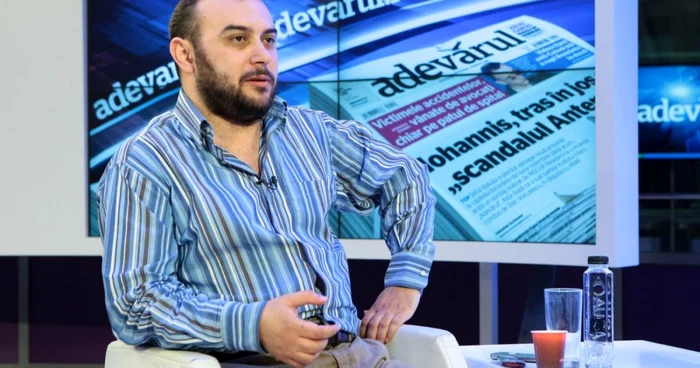
Darie Cristea, sociologist and research director INSCOP PHOTO Eduard Enea
According to sociologist Darie Cristea, distrust in vaccines appeared after the pandemic. It points to a survey from 2019, when the data stood quite differently.
“That poll a year before the pandemic started showed us that there was no anti-vaccination culture in Romania. On the contrary, we were doing very well compared to other European countries. All this collapse happens after the pandemic with all that it meant. Maybe the authorities' communication wasn't the happiest either, but it's clear that there was a vortex of fake news, influences and interventions that collapsed this figure, which was not a problem for us”.
Instead, the sociologist emphasized, the phenomenon of conspiracy theories in the lives of Romanians is not a recent one.
,,In 2018, also with INSCOP, we had a barometer of the security culture, an attitude scale that divided the public into some attitudinal moods. And one of them was: rationalism versus conspiracy. And since then we have noticed that two thirds of the public in Romania are more conspiratorial than rationalist. Later came the pandemic and all the things happened that confirmed this”.
Behind these things, said the sociologist, there are two phenomena: mistrust (in institutions, but also in other people) and uncertainty.
“We are a society marked by uncertainty. At least in public perception. And the presence of these little rituals – as they are, that they are taken over from our grandparents, that they are brought with us to the city from the country, that the material form of superstitions has changed – all these are what sociologists call uncertainty absorption mechanisms”the sociologist believes.