Is Donald Trump changing course towards Ukraine? The political scientist has no illusions. “Uncertainty is his political tool” [OPINIA]

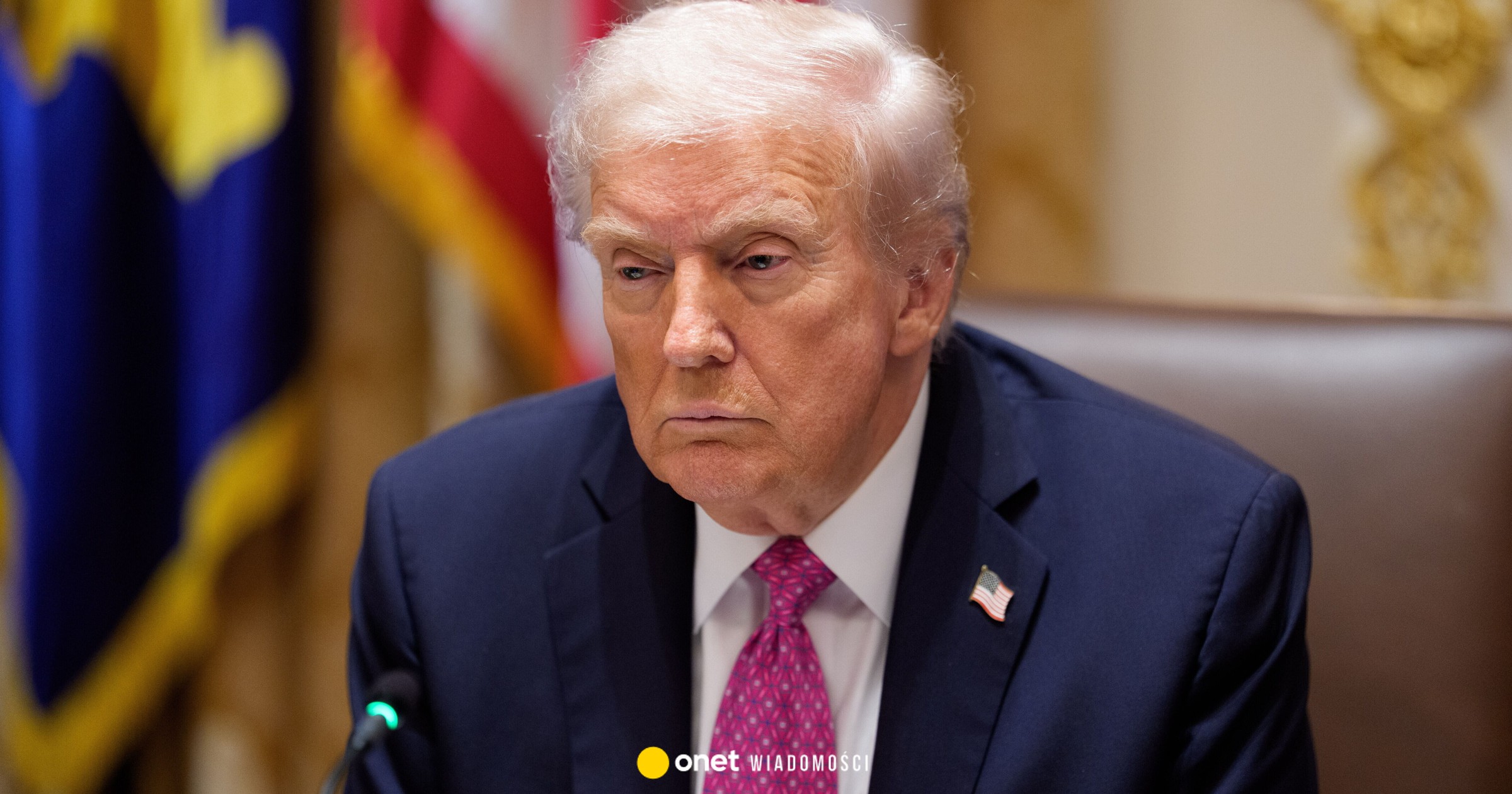
Donald Trump has never tried to end the conflict in the interests of Russia or Ukraine. His main priority is to stop the violence, without delving into the details of the conflict. He considered his main task to be organizing a platform for negotiations: it seems to him that the warring parties under his patronage simply cannot help but reach a consensus.
Drawing on his own experience in the real estate industry, Trump has sometimes proposed unexpected solutions.
In particular, he allowed for the possibility of “exchanging territories”, treating this step as a pragmatic way to achieve peace without an ideological element. The issue of guarantees was also interpreted by Trump in an unconventional way. Although he recognized the need for external control of the situation after the ceasefire, he categorically excluded any participation of American armed forces in ensuring security.
His priority was economic mechanisms: large contracts involving Ukraine and Russia were to become a guarantee of the irreversibility of peace.
Ukraine, after some hesitation, signed a contract for the supply of rare earth metals. Russia also apparently made its own generous offers during the meetings between [biznesmenem i osobistym wysłannikiem Putina] Kirill Dmitriev and [specjalnym wysłannikiem USA] Steve Witkoff. Trump changed the role of European partners. From the status of an unambiguous ally of Ukraine, they moved to the format of a commercial sponsor: the United States agreed to sell them its weapons with the aim of later transferring them to Kiev.
Trump sharply criticized Joe Biden's policy of unconditional support for Ukraine “at all costs.” Before the Republican returned to the White House, he provided assistance to Kiev both with and without Congress's consent, in close cooperation with European allies. From Trump's point of view, this strategy prolonged the conflict and involved the United States in someone else's war without a clear exit plan.
From the first days of his new presidential term, Trump made it clear that he had no intention of continuing Biden's line. He tried to change the format of U.S. engagement from an active ally to an independent intermediary, as much as possible. This phrase meant clear distancing itself from Ukraine. Washington stopped regularly publicly supporting Kiev, and Trump's personal meeting with Volodymyr Zelensky at the White House in the spring ended in a public scandal.
However, the position of an independent intermediary also assumed rapprochement with Moscow.
Several “productive” phone calls and a meeting in Alaska led to ties perhaps becoming closer than the White House wanted. Even though Trump, in his characteristic style, tried to thwart Moscow's plans for the Alaska event by making an unexpected “great call” to Lukashenko. After the meeting in Anchorage, Trump's rhetoric about Putin began to change noticeably. Russian representatives deliberately did not talk about it and referred to the agreements reached, which, although not publicly confirmed, were nevertheless in force, in their opinion.
Direction: Ukraine
Judging by the rhetoric and actions of Donald Trump's entourage, one may get the impression that the neutral position of the United States as an independent mediator has gradually moved towards supporting Ukraine. There were reports that American intelligence provided Kiev with data on Russian energy facilities so that Ukrainians could attack them. Representatives of the administration's financial bloc began to advocate re-coordination of sanctions with the European Union.
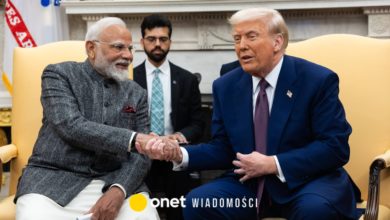
At the same time, Trump announced new tariffs against India – as a punishment for purchasing Russian oil in violation of sanctions. An additional confirmation of the change in course was the leak of information about the course of the closed-door meeting between Trump and Putin in Anchorage.
In the meantime, the Senate resumed discussion on the bill by Republican Senator Lindsey Graham regarding the introduction of 500%. tariffs on countries that still trade with Russia. This project has an important symbolic meaning. The inability of Democrats and Republicans to agree on the budget, which led to the shutdown of the administration, gives additional weight to Graham's document, which has received bipartisan support: there is consensus in the US parliament on Russia policy.
Finally, in October, discussions about the transfer of Tomahawk cruise missiles to Ukraine increasingly appeared in the American press.
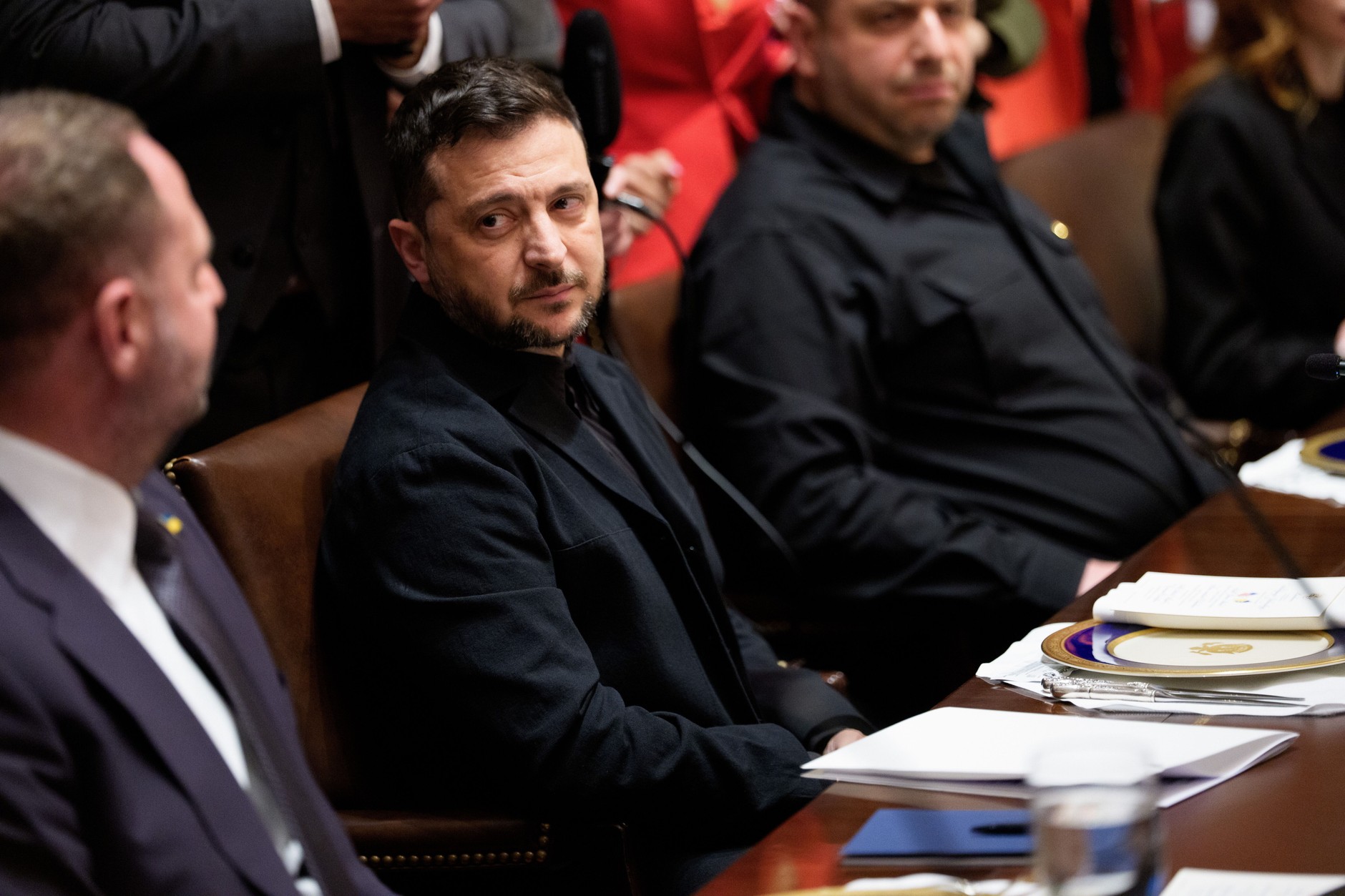
President of Ukraine Volodymyr Zelensky during a meeting with Donald Trump at the White House. Washington, USA, October 17, 2025PAP
Russia clearly did not know how to respond to conflicting signals from Washington. Back in early October, her Foreign Ministry said that a top-level Russian-American meeting was not yet being discussed and that “the impulse from Anchorage,” as diplomats put it, “has finally been exhausted.” The Kremlin soon tried to deny such a pessimistic assessment, but did not announce any specific plans for bilateral relations. Instead, Russian representatives expressed disappointment with Washington's lack of reaction to what they claimed was Moscow's “generous proposal.” The idea is to unilaterally continue compliance with the Strategic Offensive Weapons Treaty (New START Treaty) after its expiry.
The situation was changed by President Vladimir Zelensky's visit to Washington on October 17.
It was hard to expect a breakthrough from this meeting: Donald Trump has too often made it clear that uncertainty is his key political tool.
The article continues below the video
New meeting with Putin
However, Vladimir Putin, who was clearly afraid of Tomahawks in the hands of Ukrainians and had repeatedly promised a decisive response, abandoned conventionality after Zelensky's visit and called Trump – Putin's initiative was confirmed by his foreign policy adviser Yuri Ushakov.
Official information about the conversation was shared by Trump himself via Truth Social. He announced another meeting with Putin, specifying the place and time: Budapest, in two weeks. Before this meeting, a ministerial meeting is to be held, the details of which have yet to be agreed.
Apparently, Trump was much better prepared for this conversation than Putin.
Russian authorities later admitted they did not understand how Vladimir Putin would be able to reach Hungary, given the ban on Russian planes overflying the airspace of most European countries. The next day, at the initiative of Budapest, a telephone conversation was held between Prime Minister Viktor Orban and Putin. This even more confirmed the fact that the meeting in Budapest announced by Trump is taking place Washington's plan and perhaps its European allies, but is by no means a diplomatic initiative by Moscow.
Budapest is a symbolic place for the next summit meeting between Russia and the United States. It was there that a memorandum was signed in 1994, under which Ukraine gave up nuclear weapons in exchange for guarantees of territorial integrity and security.
In the contemporary context, Hungary is also an ambiguous place for conversation. On the one hand, Viktor Orban's government has consistently shown sympathy for Vladimir Putin, not hiding its skepticism towards the sanctions and the authorities in Kiev. On the other hand, Hungary remains a full member of the European Union and NATO. From the point of view of Donald Trump and his position as a mediator in the conflict, Budapest turns out to be the right choice. The choice of this location highlights the United States' attempt to play an independent role.
Vladimir Zelensky's visit to Washington did not bring any breakthroughs or unpleasant surprises.
It can even be assumed that his main task was to provoke Putin to call the White House to confront him with the fact that another meeting was necessary.
Possible delivery of Tomahawk cruise missiles to Ukraine discussed in the press did not come to fruitionalthough it was stated that the issue had not been withdrawn from the agenda. A specific result of the meeting can be considered that Zelensky and Trump more clearly formulated the thesis about the need to stop hostilities on the current front line.
One of the peculiarities of Zelensky's next visit to Washington was the lack of the usual support from European allies. Moreover, the comments of European leaders were very moderate.
After the meeting between Trump and Zelensky, the heads of several European states and EU representatives expressed very restrained and cautious optimism about the possibility of a peaceful end to the war.
The Middle Eastern countries that previously actively participated in organizing contacts between Moscow and Washington also remained extremely quiet, including: Türkiye.
With the end of Zelensky's visit and the announcement, the meeting in Budapest began new countdown: two weeks until the next event. Considering Trump's style, it cannot be ruled out that in the coming days he will try to change the script again to surprise both sides. It may provoke urgent statements, prompt participants to take premature steps, or even try to hijack the meeting's agenda, presenting Putin or Zelensky with a fact that will require an immediate response.
Trump often uses this tactic in negotiations. The next two weeks promise to be as intense as the meeting itself.