Red Leicester is a raw milk cheese with a nutty and sweet flavor with a citrus aftertaste. Without a doubt, it is distinguished by its bright orange-red color. The cheese is intentionally dyed this vibrant shade with a natural dye called annatto. It doesn't contribute to the flavor of the cheese, so why is it added?
The story goes that Stilton and its blue veins were so popular that other cheeses, including Red Leicester, struggled to stand out. So the cheese makers thought: “What can we do to increase its popularity? Let's just change its color to red“. It worked. Red Leicester is now one of the most popular cheeses in the UK.
Read also: 100 tablets a day. This is what the day of an “immortal” millionaire looks like
What is annatto?
— It is a natural dye from a South American plant, used since the beginning of the 19th century. Farmers' wives previously used marigold or keratin. Annatto is a very deep color and sticks to the curd when we incorporate it into the process. Whey doesn't have much color, but it does have curds, explains David Clarke, cheesemaker at Leicestershire Handmade Cheese Co.
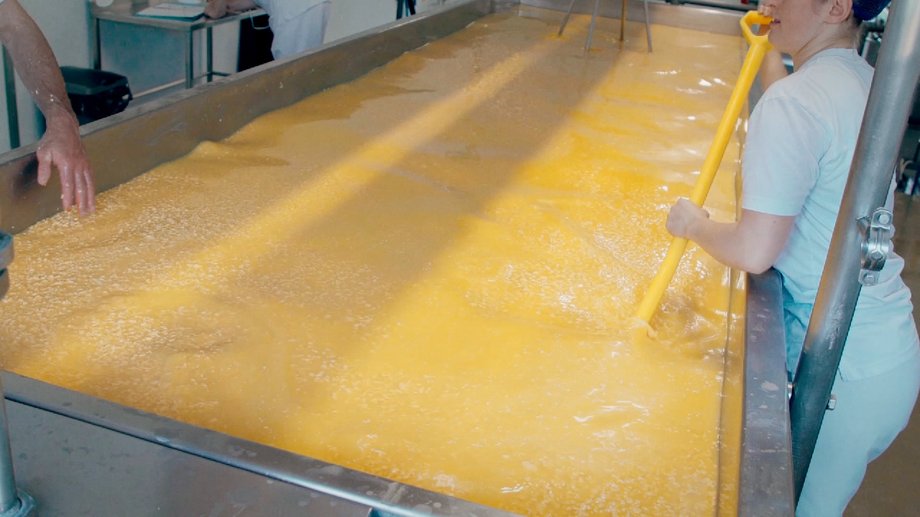
Annatto is a key ingredient in Red Leicester cheese
|
Business Insider
After the milk has curdled, Izzie and Craig cut the curd until it is the size of a pea. The curd still looks a bit white because the annatto hasn't fully stuck to it yet and is still floating in the whey. An hour later, the whey is drained to reveal the very yellow curds. They are cut and cut into blocks and the color becomes lighter and lighter.
This cheese must stand out
says David.
This is how Red Leicester cheese is made
The curds are then ground and salted. David uses this fork to spread the salt evenly. Each cheese is then shaped and pressed into a 10 kg wheel. When the cheese is two days old, it is wrapped in lard. This is a traditional method that has only recently been abandoned. A muslin cloth is dipped into a bain-marie of hot lard and then wrapped around the cheese.
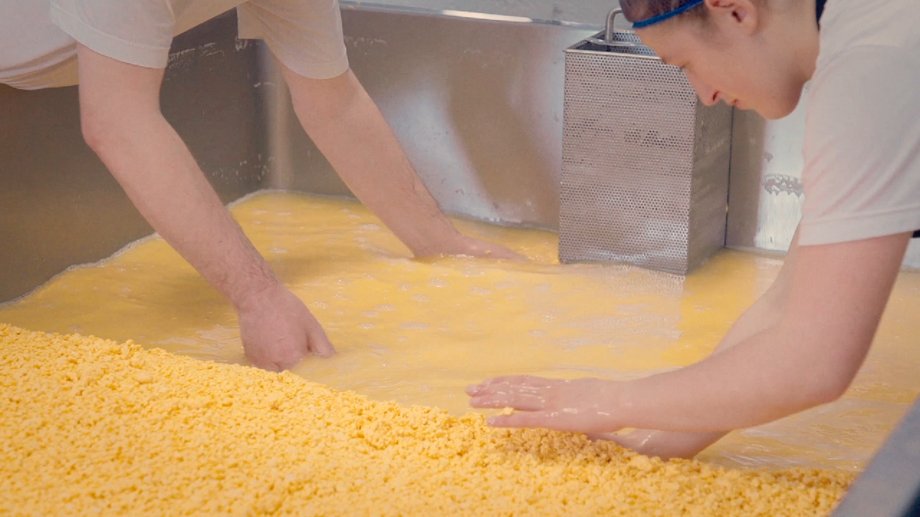
Red Leicester is a cheese that owes its fame to one dye
|
Business Insider
Lard does not add flavor to the cheese, but it creates a seal around it, preventing it from drying out and retaining its moistness and citrus flavor. It also protects the cheese from mold, which eats the lard instead of the cheese itself, by keeping it moist.
Mold feeds on lard. It eats the lard slowly, allowing the cheese to dry out as it matures
explains David.
Red Leicester matures in a humid room for six to 14 months. Here you can see the mold growing and starting to do what David wants: it eats the lard and leaves the cheese intact. Despite its moldy appearance, the cheese will have a nutty, sweet flavor with a citrus aftertaste. The lard remains on the cheese and is only removed when it is ready for sale.
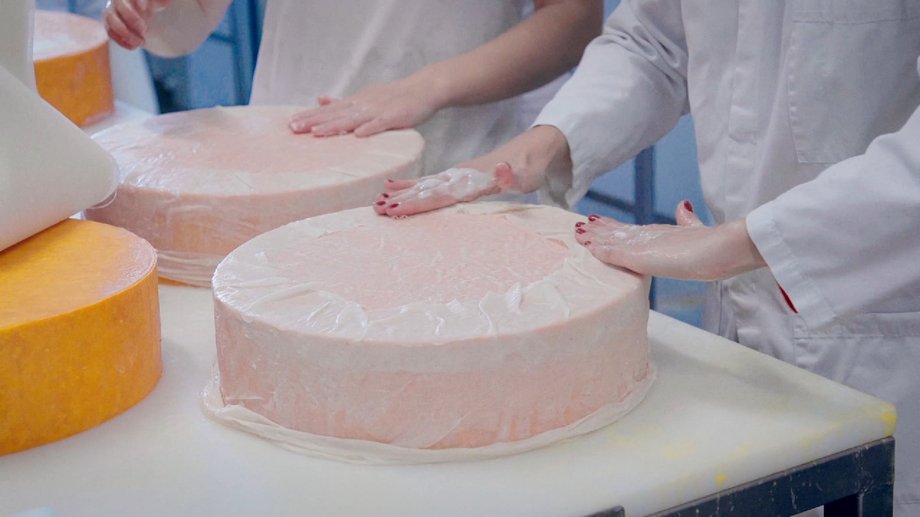
The lard protects the iconic Red Leicester cheese
|
Business Insider
Using lard and raw milk to make Red Leicester are two traditions that have been lost. Like other cheeses in Britain, Red Leicester suffered from rationing during World War II, and farms either stopped producing it or abandoned traditional methods. It was David who brought back this traditional way after over 50 years.
“These colors are amazing,” says David.
– There's quite a contrast between them. You can't do this job if you don't like cheese. I like that it's a little crumbly but still holds its shape, I reply.
“It's also a little 'meaty,' which is the texture we want,” David explains.
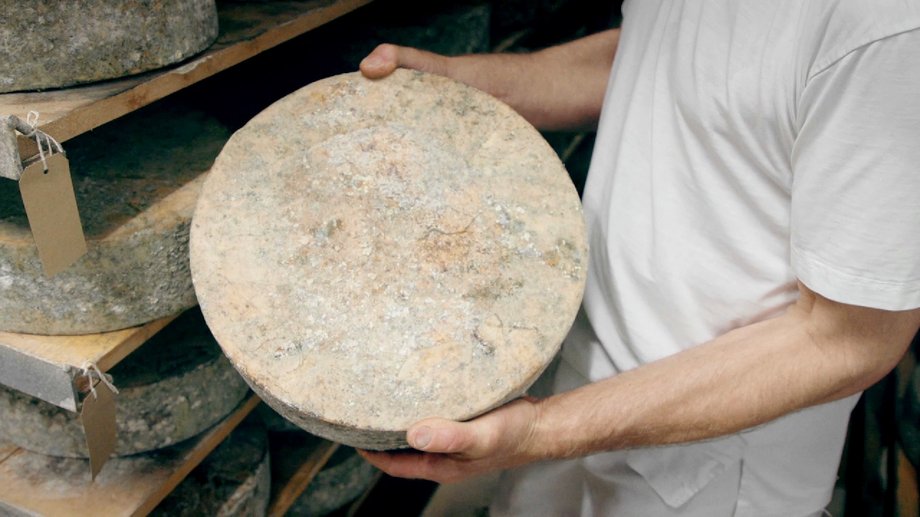
Red Leicester tastes exceptional
|
Business Insider
— I really like this combination of textures. It has a nice, spicy taste, I admit.
-It's a bit citrusy. The Red Leicester cheese should be easy to break down. There are small spots on it that are like… – wonders the cheese maker.
-Like eyes in cheese. That's what a cheese maker once told me.
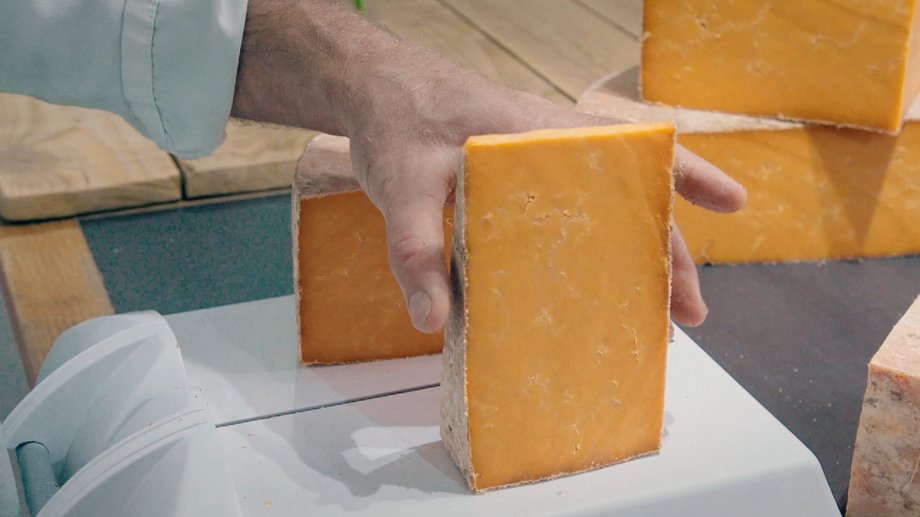
Red Leicester cheese is distinguished by its nutty flavor and citrus note
|
Business Insider
Author: Claudia Romeo, journalist, Insider