The rise of Geert Wilders. How a party without members became the main political force in the Netherlands and what that means


Geert Wilders leads the largest party in the Netherlands — but he does it in his characteristic style: alone. The Freedom Party (PVV), founded in 2006, was from the beginning conceived as a formation dominated by one man. Formally, it has two members: Geert Wilders and a foundation controlled by… Geert Wilders, writes politico.com.
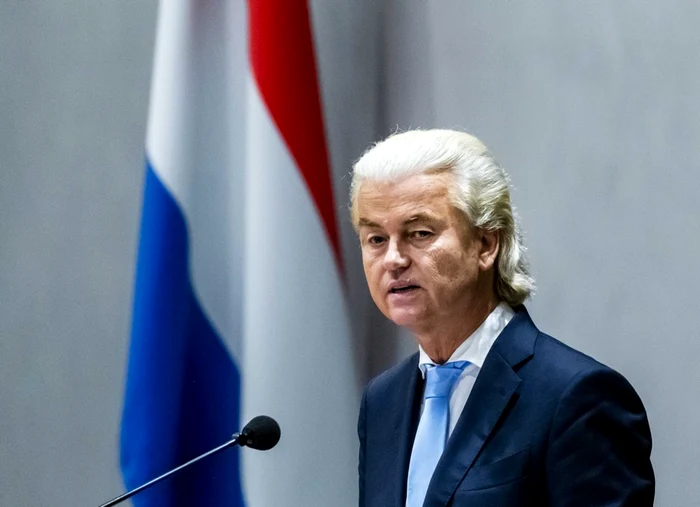
Wilders has been living under strict police protection for years/PHOTO: EPA/EFE
Over the past two decades, Wilders has become a central figure on the Dutch political scene, promoting an agenda marked by opposition to immigration, Islam and the traditional political establishment. Despite the unusual structure — no congress, no members, no internal deliberation mechanisms — the Freedom Party is, according to recent polls, again at the top of electoral preferences.
Wilders' popularity comes in an increasingly volatile political context. The 2023 parliamentary elections brought the PVV to first place, with 37 seats — the best score in the party's history. Although Wilders did not directly take over as prime minister, his party won nine portfolios in the government led by former intelligence chief Dick Schoof. However, the coalition collapsed less than a year after its formation.
“Fortress Policy”
The Freedom Party operates differently from any other political party in Western Europe. It doesn't hold conferences, it doesn't have a youth organization and it doesn't allow new members. His deputies and MEPs are directly elected by Wilders, and party discipline is strict.
Former members and collaborators describe the atmosphere in the party as one of absolute control, where dissent or the expression of personal opinions are penalized. “The system is not violent, but if you make a mistake — a simple wrong retweet — you will feel the consequences,” a former PVV MP told the BBC on condition of anonymity.
Even MPs who dare to propose more transparency or internal democracy are marginalized. Hero Brinkman, a former PVV MP, claims he was kicked out of the party's leadership after calling for more involvement of members in decision-making. “They told me clearly: there is no place for your own ideas here“, he declared.
A protected presence, an unbridled speech
Wilders has lived under strict police protection for years following death threats he received for his stances on Islam. He lives in a secret location, drives around in armored vehicles and works from a secure wing of parliament.
This isolation helped shape an outsider image and reinforce a confrontational discourse. Recently, while campaigning for snap elections in October 2025, Wilders called for the borders to be closed, the army to be sent on patrol and Syrian refugees to be expelled. He argued that the current asylum system was leading to the “decay of the Netherlands”.
The government coalition fell apart immediately after Wilders announced this plan. Prime Minister Schoof criticized the move as “irresponsible”, while other coalition partners spoke of an “act of political suicide”.
A party without structure, but with great ambitions
Although the strategy of a “party without members” avoided internal disputes, it also had disadvantages. PVV lost millions of euros in public funds and contributions, being dependent on private donations. In the past, funding has come from conservative American organizations.
The lack of a solid base also led to difficulties in filling key positions. The party's website currently lists vacancies for positions such as chief of staff and political adviser. In addition, there have been controversies surrounding some members, including allegations of inappropriate behavior or ties to foreign powers.
The Dutch tracked down on October 29
The snap election on October 29, 2025 will be a new test for Wilders and his party. Although he is unlikely to be invited back to govern, he remains a central political figure. If he is expelled, he is expected to criticize the system harshly and claim that the voice of his constituents is being ignored.
Internationally, Wilders has strengthened his relations with leaders such as Viktor Orbán and Donald Trump. In a recent speech at an international right-wing conference, he declared: “We patriots own the future because we are anchored in the past.”
On the PVV's list for the October elections, Wilders predictably comes first. One of his oldest collaborators, Fleur Agema, will no longer run. She was replaced by Sebastiaan Stöteler, leader of the PVV delegation in the European Parliament.
Regardless of the outcome, it is clear that Wilders' influence on Dutch politics is not going away anytime soon.