Every day, the blue and gold train “Yantar” sets off from Moscow on a 1,285-kilometer journey to Königsberg. It is Friday, March 19, 2027. There is a power outage in much of eastern Lithuania. The train stops an hour before the border.
Initially, passengers do not pay attention to the stop and breakdown, but as time passes, their surprise increases. In the evening, conductors walk through the carriages, explaining that there is no information on when the power will be restored. Passengers do not have visas to enter the European visa zone, so they cannot leave the train.
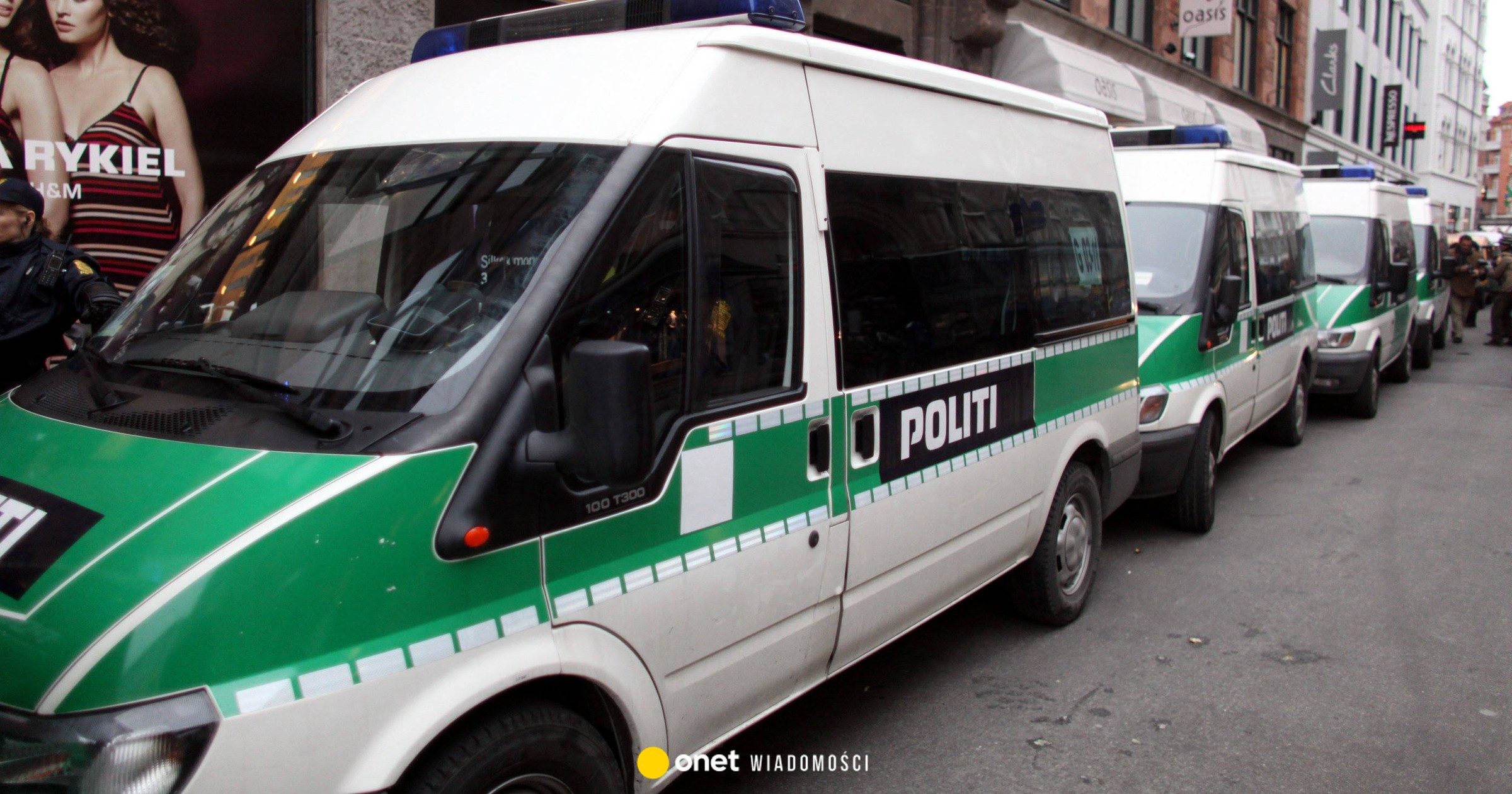
Around midnight, the governor of the Königsberg region announces that he is sending a border guard contingent to Lithuania to deliver food and supplies. A convoy of marked police vehicles passes through a poorly guarded border crossing and drives along the A7 motorway. American intelligence later estimated that most of the Russian forces were made up of special forces veterans hardened on the front lines of the war in Ukrainebut dressed in border guard uniforms.
Lithuanian police and several military units chase a Russian convoy as it reaches the railway tracks and begins unloading food and water. In Vilnius, the crisis operations center suspects that the power outage is due to a cyberattack originating from Russia. The officers on duty wake up the Prime Minister and the Minister of Defense. Very disturbing things are happening.
There is an intensive exchange of telephones between Vilnius and Königsberg, and later also Moscow. Russian authorities say they are only protecting their citizens and helping to preserve Lithuania's sovereignty by preventing Russian passengers from leaving the train.
The article continues below the video
On Saturday morning, the train is already surrounded by concentric circles of Russian forces and the Lithuanian army and police. Around noon, six shots are fired. Three Russian policemen fall to the ground, two are killed, one is wounded and one Lithuanian policeman is injured. Lithuanian observers claim that the shots were fired from the train, but the situation is escalating anyway.
Less than an hour later, the Kremlin announces that it is sending troops to Lithuania to secure and evacuate the train. 20 minutes later, the armored column crosses the border of the Koenigsberg region – a column so large and heavily armed that no observer believes it was assembled in just a few hours.
In Moscow, Vladimir Putin issues a statement explaining that he is only sending a rescue operation. He assures us that this is not an invasion. The Lithuanian defense minister calls NATO headquarters in Brussels in a panic, and the prime minister, equally panicked, calls President Donald Trump at Mar-a-Lago. In both conversations, the message is short. Lithuania calls for help.
The above scenario is fictional – for now – but it seems very real.
Ask those whose job it is to worry about conflicts where war might break out in the next five years, and the Baltic states — the trio of Estonia, Latvia and Lithuania that broke away from the Soviet Union after the fall of the Berlin Wall — are on almost every expert's list.
Russia may want to test NATO in this way and break the unity of the West. But the eastern flank of the North Atlantic Alliance is not the only inflammatory region in the world. Here's a quick guide to other hot spots around the world where the likelihood of war remains.
Quarreling neighbors with nuclear weapons
For four days in early May, it looked like the world might face one of the most terrifying nuclear escalation scenarios ever – a major conflict between India and Pakistan. Both of these countries have nuclear arsenals that are not controlled and secured as thoroughly as experts would like them to be.
Tensions escalated after a terrorist attack in late April in the disputed Indian-administered region of Jammu and Kashmir, which resulted in several days of exchanges of fire targeting military bases on both sides of the border. Before the ceasefire (which may or may not have been prompted by Trump's intervention), this was the most serious conflict between the countries in decades.
A particularly disturbing aspect is that Pakistan's military doctrine has a low threshold for using nuclear force against India. Political pressure in both countries combined with the relative immaturity of nuclear doctrines may mean that any nuclear exchange could turn into a race to use as many weapons as quickly as possible. This would result in hundreds of nuclear attacks in just a few days of war.
China's invasion of Taiwan
Chinese leader Xi Jinpong is believed to have set a deadline of 2027 to prepare his armed forces to invade Taiwan. China is currently undergoing a massive expansion of its amphibious forces and is conducting increasingly frequent exercises near the island, which it considers a “rogue province.”
— They're practicing [Chińczycy, scenariusze dotyczące Tajwanu] all the time because it's the most important thing their military forces can ever be used for, says Jon Finer, former deputy national security adviser in the Biden administration.
Moreover, Xi Jinping wants to go down as a key figure in Chinese history. As the 2020s progress and the end of his term approaches, Taiwan remains one of his main “unfinished” matters. Beijing has strengthened its grip on Tibet and taken full control of Hong Kong, but democratic Taiwan is politically drifting further and further from Beijing.
As the political situation in Taiwan evolves, Xi Jinping may feel that the window for action is closing — and attack.
The endless war on the Korean Peninsula
Nearly three generations after it began, the Korean War has never officially ended, a pain felt by both the highly developed country in the south and the backward agricultural dictatorship in the north.
The 238 km long demilitarized zone between North and South Korea has existed for so long – about 60 years – that it has become one of the wildest forests in the world, teeming with thousands of different species of wild animals.
Along its edge, approximately 4 km apart, there is the outer perimeter of the demilitarized zone, which is one of the most heavily fortified and protected places on the planet. It was equipped with artillery and land mines. All of Seoul is within range of North Korea's missiles.
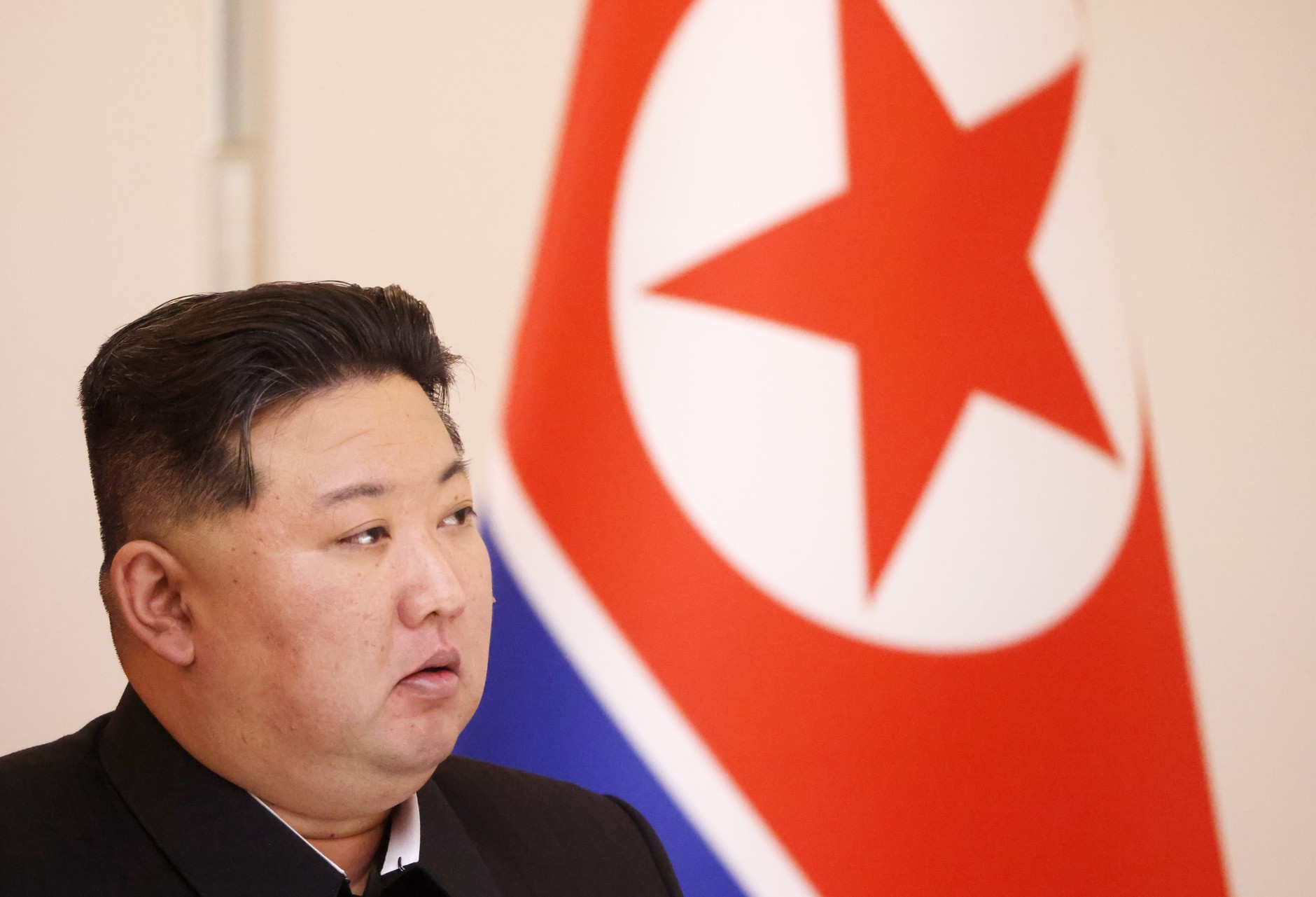
North Korean dictator Kim Jong UnContributor/Getty Images/Getty Images
North Korea is a slowly declining country, plagued by famine and paralyzed from within by government brutality, and Kim Jong Un's leadership has done nothing to change its future. However, its advantage is nuclear weapons, which saved it from the fate of dictators such as Saddam Hussein and Muammar Gaddafi.
If Kim senses opportunity and weakness or, rightly or wrongly, feels an existential threat to his power from the West, anything is possible.
Tensions on the China-India border
Like the border dispute with Pakistan, India's long-standing border tensions with China date back to British colonial times. In 1914, Britain and Tibet established a border with India, which China never accepted. In 1962, Chinese troops tried to occupy what was considered Indian territory, which led to a month-long conflict that killed several thousand people. As a result of the conflict, China changed the course of the border and called it the “Line of Actual Control”.
Further fighting in 1967 resulted in the death of several hundred soldiers on both sides, and another clash was averted in the 1980s when China misinterpreted Indian military exercises as a potential attack. Since then the armed forces of both countries have become among the largest and most advanced in the world.
The border with India is over 3,000 km long. km reflects China's broader geopolitical reality – the country is located in one of the most geographically inhospitable regions in the world.
The Middle Kingdom borders 14 neighbors, more countries than any other country, and has disputed maritime borders with another seven countries.
In their book “China's Search for Security,” political scientists Andrew J. Nathan and Andrew Scobell point out that these neighbors include four of the world's eight other nuclear powers, and that China has been at war with five of them since World War II.
Simply put, the region is prone to misunderstandings and escalating conflicts — and currently tensions remain so deep that both Chinese and Indian soldiers are prohibited from carrying weapons along the border.
In 2020, in the remote Galwan Valley in the Himalayas, near the site of the 1962 fighting, there were brutal clashes between armies, with soldiers fighting in hand-to-hand combat using fists, stones, fence posts and even batons wrapped in barbed wire. At least 20 Indian soldiers died, some of whom fell from a mountainside, and possibly as many as 40 Chinese soldiers.
Another factor that could increase the likelihood of war is the lack of normal safeguards, treaties and routine communication channels between the two countries that could help defuse the crisis, such as the “hotline” between Moscow and Washington that prevented misjudgments during the Cold War.
China routinely avoids establishing such communication channels with the United States, India and other countries, viewing such safeguards as an attempt to unfairly constrain China. In these uncertain conditions, another war is therefore possible.
I’m Ashley Davis as an editor, I’m committed to upholding the highest standards of integrity and accuracy in every piece we publish. My work is driven by curiosity, a passion for truth, and a belief that journalism plays a crucial role in shaping public discourse. I strive to tell stories that not only inform but also inspire action and conversation.