Arabica from the laboratory. This is Nestlé's controversial plan to combat the looming coffee crisis

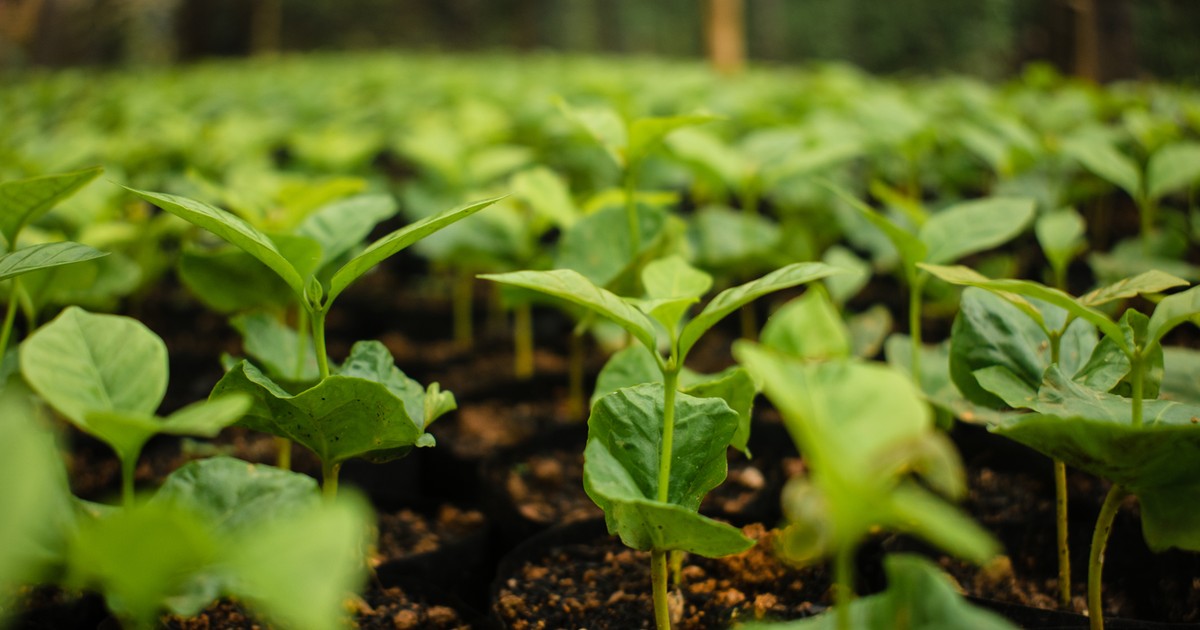
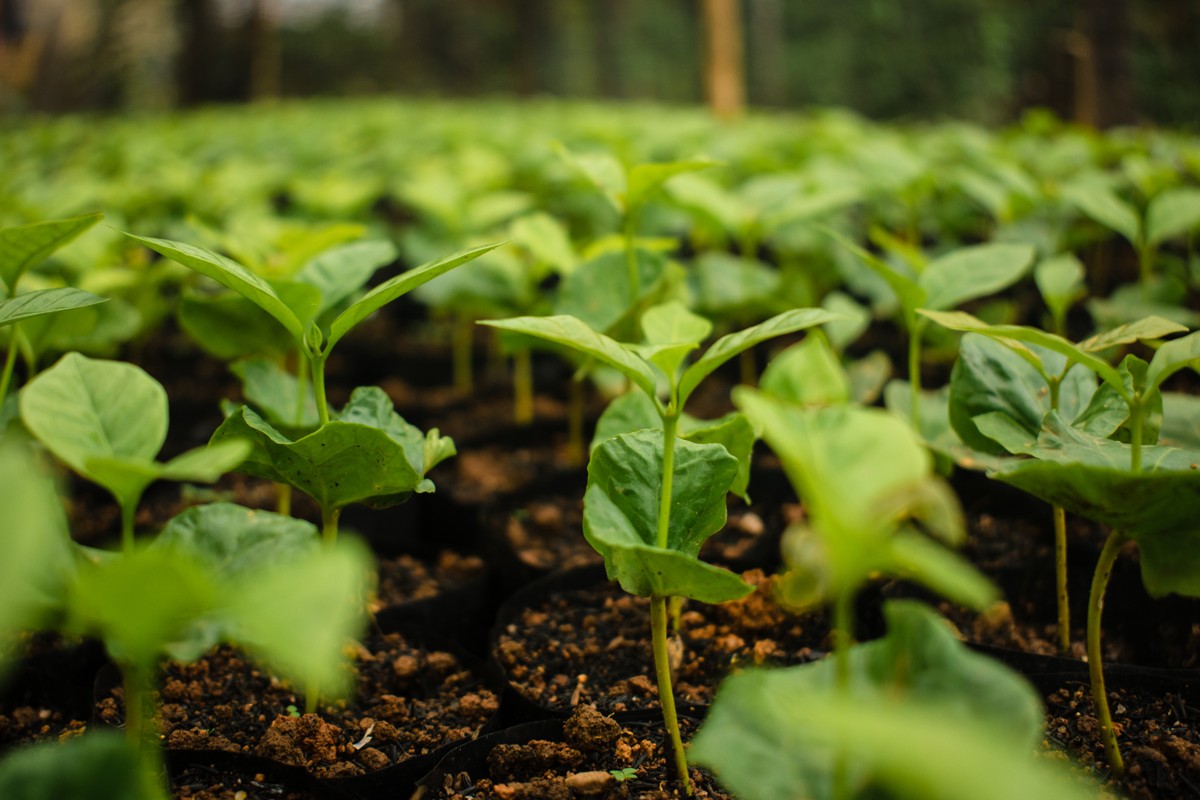
The procedure looks quite brutal: the researcher decisively cuts a young coffee seedling from its stem. Then he cuts the second one, cuts it, connects the two parts and wraps it with adhesive tape. This is how a hybrid of Arabica and Robusta is created. This seemingly simple experiment, carried out in the greenhouse of the Swiss food company Nestlé in Tours, France, serves a great purpose – finding the perfect plant for the coffee of the future, and thus saving the daily ritual of millions of coffee lovers.
More than 3 billion cups of coffee are consumed around the world every day, of which one in seven comes from Nestlé. But coffee is a loser in the clash with the climate: heat, drought and fungal diseases cause a decline in yields. In some countries, production has fallen by two thirds in 25 years. Scientists warn that supply could halve by 2050 – while demand will double.
Read also in BUSINESS INSIDER
Nestlé makes about a quarter of its revenue from coffee products
For the world's largest coffee producer, billions of dollars in profits are at stake. Nestlé derives about a quarter of its revenue from coffee products. It is therefore not surprising that the company is intensively looking for ways to avoid the impending supply crisis in its laboratories. This is an expensive strategy – the equivalent of almost EUR 2 billion annually goes to research and development, much of which concerns coffee.
However, environmental organizations and critics have doubts about who really benefits from these innovations: farmers or the company itself? Especially since the Swiss food giant has repeatedly come under fire for its methods. Recently, Nestlé was embroiled in a scandal related to illegal mineral water filters. In the fight for the future of coffee, the company must now refute accusations that its actions create new forms of dependency. Many of the plants under research can only be propagated in the laboratory.
Meanwhile, tiny, several-millimeter-long plants in glass vessels look completely harmless. These controversial micro-seedlings in the Tours laboratory have names such as “Star 4” and “Roubi 1” and are the latest creations of Nestlé scientists. It will take about a year and a half before the “coffee embryos,” as the company's botanists call them, will grow into seedlings large enough to be transplanted to growing countries such as Ecuador, Côte d'Ivoire and Thailand.
The situation there is made worse by price changes in recent years. The price of Arabica beans has tripled in five years, and Robusta has even quadrupled. This sounds like a blessing to small farmers, but in reality, few of them benefit from it. The greatest profit comes from processing – coffee roasting in industrialized countries. In countries located in the equatorial zone, where the delicate plant grows in the highlands, only a fraction of the market value remains with producers.
See also: Ago and other Chinese companies have figured out how to addict people at home. Now they export this model all over the world
“Nestlé will not become a plant seller”
Last year, in Latin America, farmers symbolically burned bags of grain intended for Nestlé, accusing the company of forcing them into poverty and dependence due to dumping prices. Photos of the protests have spread around the world – exactly the type of negative publicity Nestlé doesn't need right now.
The company is already under pressure: there have been three changes in the CEO position in the last few years, most recently in September, when Laurent Freixe stepped down after the scandal. His successor, Philipp Navratil, is expected to restore stability – especially in the key coffee segment.
One of the people at Nestlé who is supposed to prevent the coffee crisis is Stefan Canz. This agronomist is responsible for the “Nescafé Plan” – a multi-billion-dollar sustainability program for farmers around the world. Canz travels the world, trains growers and distributes seedlings. He also regularly visits the research center in Tours, where the white flowers of the coffee trees shine like little stars in the sterile space of the greenhouse, and the air smells of wood and flowers at the same time. For the company, he is an expert to secure the future of coffee beans, and for farmers – an intermediary between the laboratory and the plantation.
Canz firmly rejects accusations that Nestlé is contributing to the exploitation of small growers through new varieties. — We don't make money from this and we don't intend to become a plant seller – he says, standing in the glass lobby of the research center and slowly sipping his coffee. Seedlings, he explains, are given away free of charge in most growing regions; only in higher income countries like Vietnam do farmers pay a small amount. These incomes, he emphasizes, return directly to local structures, e.g. in the form of salaries.
However, this is precisely what raises objections. — The question arises what Nestlé will do with the results of these farms. If farmers have to buy new plants, there is a risk that they will fall into a spiral of debt – warns Claudia Brück from the Fairtrade management board.
WWF also sees a threat: hybrid plants, which can only be propagated in the laboratory, may create dependencies. — Farmers do not have as much clout as corporations – says WWF expert Ulrike Hardner.
Canz denies the allegations: — If we, as the largest coffee producer in the world, do not conduct research on the future of plants, no one else will.
Time-consuming work of dozens of scientists
At the industrial plant in Tours, you can see the scale of effort that Nestlé puts into searching for new varieties. Inside, tropical conditions prevail: temperature 24°C, humidity 65%. On one of the trees there is a yellow and black sign with the inscription “Pollination in Progress”. There are pieces of paper with letters and numbers hanging on the branches – botanists can use them to recognize which experiments are in progress.
About fifty scientists are developing coffee plants that are more resistant to drought, heavy rains, frost and fungi. Next to rows of mature trees laden with red fruits, hundreds of micro-planted plants grow in glass vessels.
Visitors are rare here and can only enter in special suits, which are then immediately cleaned – for fear of leaking any seeds or pollen. Because coffee trees need several years to produce beans of the desired size and quality, the work of scientists in Tours is extremely time-consuming. Over the last decade, Nestlé has developed just ten new coffee varieties and introduced them to growing countries.
Compared to the enormous technological investment, Nestlé's breeding methods are surprisingly traditional. Scientists are using genome sequencing to understand the characteristics of different coffee varieties — for example, their resistance to “water stress” caused by heavy rains.
However, the plants are propagated through classic crosses, not genetic engineering. “We do not modify the plant genome or use biotechnology in breeding,” says Canz. – Since there are few varieties of coffee trees, traditional options are sufficient in this case – he adds.
Industry experts confirm this. — Genetically modified coffee would be immediately rejected by society. No coffee producer could afford this, says Thomas Eckel, owner of the Murnauer Kaffeerösterei roastery and an expert in raw coffee cultivation.
Even environmental organizations such as Fairtrade admit that investment in research into new varieties is necessary to ensure the future of coffee. However, the balance of power remains unequal – between the company, which buys approximately 10 percent each year. world harvest and may dictate conditions for small growers for whom harvesting is a matter of survival.
“In principle, there is nothing wrong with farmers achieving higher yields and greater crop safety thanks to new plants,” says Felix Ahlers, CEO of Frosta and founder of the Solino coffee company. “But even with improved varieties, they remain the same small-scale growers on the ground – at the first tier of the value chain in the coffee business,” he adds.
So they receive the smallest share of the profits from the grain trade.
So will Tours crosses actually save coffee, or will they create new dependencies? We will find out only in a few years, when the new plants will bear fruit. One thing is certain: while the seeds of the future are ripening in Nestlé's laboratories, the world's cultivated areas are shrinking. The future of coffee will therefore be decided not only by Nestlé but, above all, by the market. And the atmosphere.
The above text is a translation from German website WELT