“The chaos will begin.” A Russian sociologist anticipates the end of Putin. “As soon as the” hawks “will see that Russia begins to lose, they will tear it.”


For some time, a strange silence has been in Moscow. Not because it would be quiet, but because too many shuts up when they should talk. According to the Russian political scientist and sociologist Igor Eidman, established in Germany, the Kremlin power circles begin to understand one simple thing: the war against Ukraine can no longer be won. And with this achievement, the inevitable question comes – what do we do with a little?
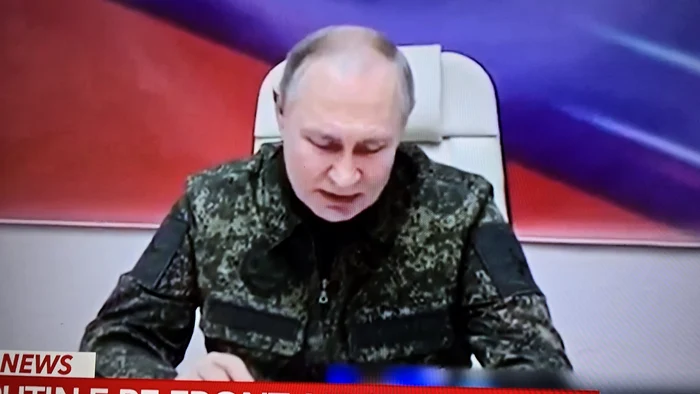
Russian president Vladimir Putin/Photo: X
In an analysis presented for 24 kanal, Eidman warns that the “hawks” in the power circle-those who initially supported the invasion-but also the pragmatics, who have calculated their interests in money, resources and influence, begin to see the reality: the conflict is in a deadlock, and Russia loses land. Not only a military, but especially geopolitical and economic.
Total mobilization, poisoned apple
Putin knows that Russia does not have enough resources to carry on a war of wear. In theory, it could trigger a general mobilization. In practice, he is afraid of what could happen in the street, in the province, among his own device. So it prefers the variant of “freezing the conflict”. But it does not really accept it. The result? A dangerous state of stagnation, in which each day brings new losses and less solutions.
Meanwhile, Ukraine receives new armament and continues its preparations for new offensives. When the Russian elites will realize that the war can no longer be supported – neither in trenches nor in speeches – they will act. According to Eidman, “then Putin will be removed.” Chaos could include Russia, and the Kremlin would face an unprecedented internal crisis.
A power built on fear, in search of exit
Putin still has complete control over power. But, as a pendulum never stands, as well as the war – when it will be decisively inclined in favor of Ukraine – it will catch it unprepared. The elites will try to save themselves, looking for compromises with the West, discussing damages and, inevitably, about the withdrawal of troops.
Repairs, recaptured territories, rehabilitation of relations with the west – all these will become real themes only after the fall of the Kremlin leader. Not out of conviction, but out of necessity. Because those around Putin, says Eidman, were never ready for a long war. They just wanted to steal, send their children to London, buy yachts in the Mediterranean and protect their accounts from Switzerland.
Prigojin was just the beginning
The system has already shaken. The attempt to revolt Evgheni Prigojin showed how fragile the political edifice built around Putin. Although the crisis was rapidly “stabilized”, the crack remained. And with each month of military failure, with each day when sanctions bite deeper, deepens and distrust in the “irreplaceable leader”.
Meanwhile, in Washington, Donald Trump returned to the White House. But not even the new American context offered the Kremlin a rescue cola. Putin refused to accept the proposals for mediation, keeping Russia in the same political and military impasse. And this begins to irritate those who stood with them from the calculation, not from loyalty.
Exhausted propaganda, finished resources
Against the background of this blockage, Putin continues to issue more and more contradictory messages. He accused the West of causing the war, claimed that “pain is common” and described Ukraine as a western pawn. More recently, the Kremlin leader criticized the US intention to deliver Ukraine Tomahawk, calling them “a dangerous threat”, but has been in a hurry to add that they “will not change the situation.”
Behind this rhetoric, however, reality is different: Russia no longer has the internal ability to support the conflict. Mass recruits are made among foreigners – about 5,000 citizens would have been sent from Cuba and 25,000 would come. Mercenari are sought in Iran, Iraq and even among former Afghan soldiers.
The end is not yet written but the end is visible
What follows for Russia is hard to predict. But the signals are increasingly clearer. In a system built on control, fear and loyalty, the loss of war means more than a military defeat-it means the end of an era.
When will the rupture occur? Maybe after the next Ukrainian offensive. Maybe after a wrong decision made under pressure. Or maybe the moment one of the close ones will understand that his personal salvation passes through the removal of Vladimir Putin.