We are in Kalamata on Peloponnese in Greece. This region produces the best olive oil in the world. It is made from Koroneiki olive. It is very small, but very rich in taste and aromatic olive. Thanks to the extraction of cold and slow fermentation process, Koroneiki olive oil tastes like no other – like a real nectar of the gods. Finally, we are in the land of ancient myths and heroes.
– This olive oil is considered very bitter and spicy. It has a very intense taste, grassy and fruity. This is what makes the olive oil to Koroneiki olives unique. Her aroma, spicy and intense character – explains Dimitra Mathiopoulou, co -founder of The Olive Routes.
How is the best olive oil formed?
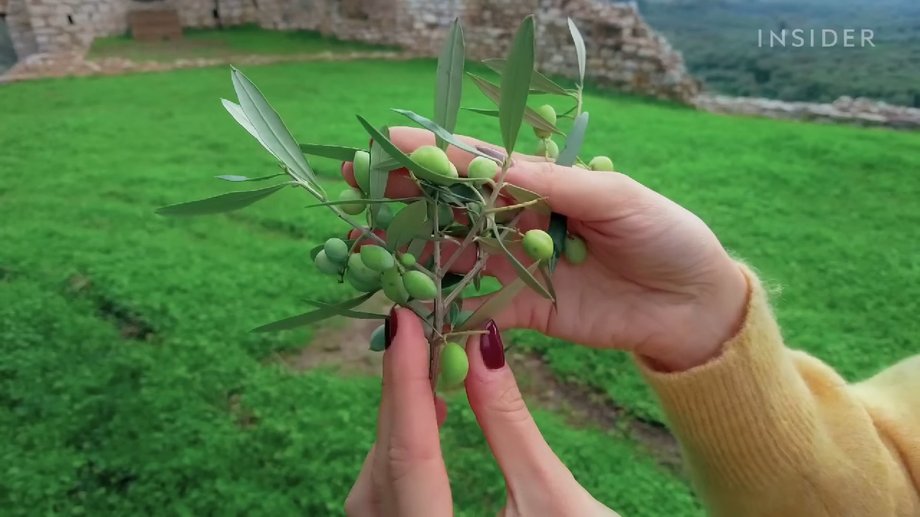
This region is characterized by a mild Mediterranean climate with long sunlight, which makes it an ideal place for olive groves. Coroneics olives are collected from the end of October to the end of January. The best olive oil is the one that was obtained from olives collected during the first three weeks, when they are light green.
The olive variety is crucial
|
Business Insider
Olive oil from early harvest is more nourishing. It is rich in polyphenols and antioxidants that make the taste fresh and more intense. As they mature, the olives do not become larger, but darken.
Ripe olives contain more oil than green and give larger yields, but the oil of them has a milder taste. To preserve the nutrients in Koroneiki olives, the harvest takes place as quickly as possible. There are two methods. One of them is shaking the tree olives with the help of electric “rakes”.
– Employees just shake olives. Olives fall and employees do not hurt trees – explains Dimitra.
– Only the olives that are ready for harvesting are falling? – I'm asking.
– Employees do everything. They check olives – some of them are more mature and others are more green. We need both types.
Another method is to prune all internal branchesand then collecting olives with this machine that filter leaves. In both methods, olives fall into the mesh made of breathable material to avoid squeezing olives. The mesh is then closed, and the other branches and leaves are removed manually.
– How many olives are in one bag? – I'm trying to find out.
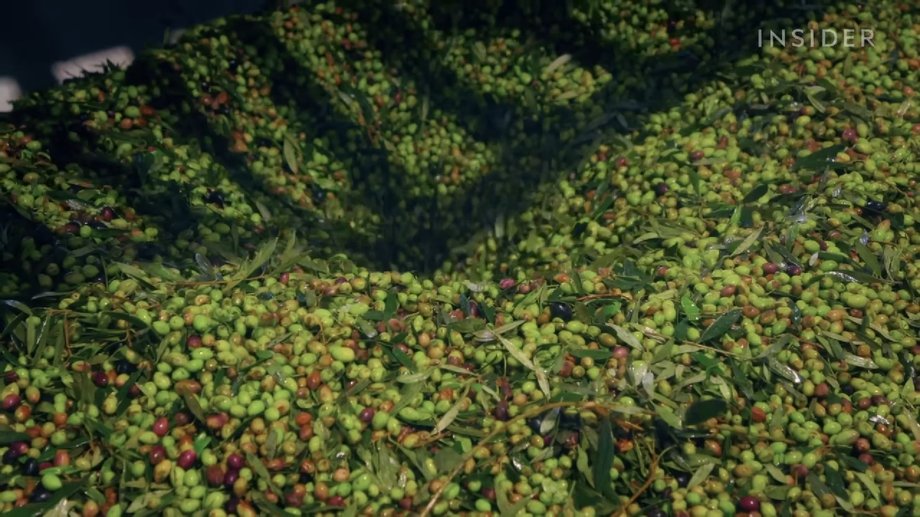
– 50 kg. We get 10 kg of olive oil from these 50 kg. Olive olive. Squeeze it to extract olive oil. Here it is. Smells fresh? – asks Dimitra.
“It's nice,” I answer.
– This is the fresh grassy taste that we are looking for in fresh olive oil. Exactly the impression that you just scraped the olive and found an aroma – he explains.
10 kg of olive oil is made of 50 kg of olives
|
Business Insider
Why is Kalamata's olive oil not made?
Koroneiki olive has a sister – Kalamata's olive. Both varieties are important for the life of the olive grove.
– They are really good to pollinate trees. Let's also think about tradition. People produced what they needed for their own homes. So they needed both Kalamata and olive oil olives – explains Dimitra.
Due to their bitterness, Kalamata olives are not processed into olive oil. Instead they are Used as table olives and undergo the porridge process. First they are dipped in brine, then in vinegar, and then stored in jars with olive olive oil.
We have over 2,000 olive trees. Some of them are 1000 years old. We are very associated with olive trees. Each family has 200, 300 trees. They make oil for their family, even if they are not farmers. It is also an additional income for them
– explains Dimitra.
In addition to obtaining oil from the olive groves of your family Dimitra cooperates with local families to obtain their oil. Her mill is actually paid by the sale of olive oil from these families, because Dimitra stops 8 percent for herself. production. Every day, over 1000 bags reach the top of the Dimitra mill. The oil is extracted within 24 hours.
After blowing the leaves by the machine, the olives are washed. This is an important step, removing the soil, which can be found in olives and give olive oil the earthy taste. There is also a weight that helps you weigh olives and see what percentage of olive oil has been extracted from them.
– We must weigh olives to see how many olives every family has brought. In the case of a Koroneiki variety, when olives are from the early harvest, we get about 14 percent. In the middle of the season we get about 20 percent. – he explains.
It is said that this oil tastes like the nectar of the gods
|
Business Insider
The extraction of olive oil is very fast
Olives, including stones, are ground to paste. The paste ferment and spinning for a few minutes to bring out the aroma of Koroneiki olives. Then the temperature drops very quickly to be able to protracted olive oil.
– Cold extraction means that olive oil is produced at a temperature below 28 degrees C. In principle, we do not press olives. The pressing takes place in the open air. We don't want oxygen. The pressing is also associated with human touch, which we do not want. – he explains.
The extraction of olive oil takes place in this machine in just 15 minutes. It works like a large vortex that separates solid bodies, such as paste, stones and pulp, from a fluid, which is olive oil. The process is very fast. Olives have been turned into olive oil in less than 45 minutes since the arrival. The liquid gold that arises is an extra Vergine olive oil, the best species in the olive oil family.
Extra Vergine means that cold extraction has retained all antioxidants and polyphenols present in Koroneiki olivesas is the case with cheese made of raw milk. Olive oil is also measured with a parameter called free acidity.
In the case of Extra Vergine oil, free acidity must be 0.8 percent. or less, which means that less than 0.8 percent fatty acids normally present in olive oil have been damaged during production or storage. Extra Vergine olive oil is more nourishing, but also has a shorter shelf life.
– We have liquids, so now we have to separate them. There is naturally water in olive oil. A second spin process occurs, this time it takes place vertically. Olive oil is light, so it flows to the surface. The water is heavy, so it stays downstairs. In this way, we naturally separate them – says Dimitra.
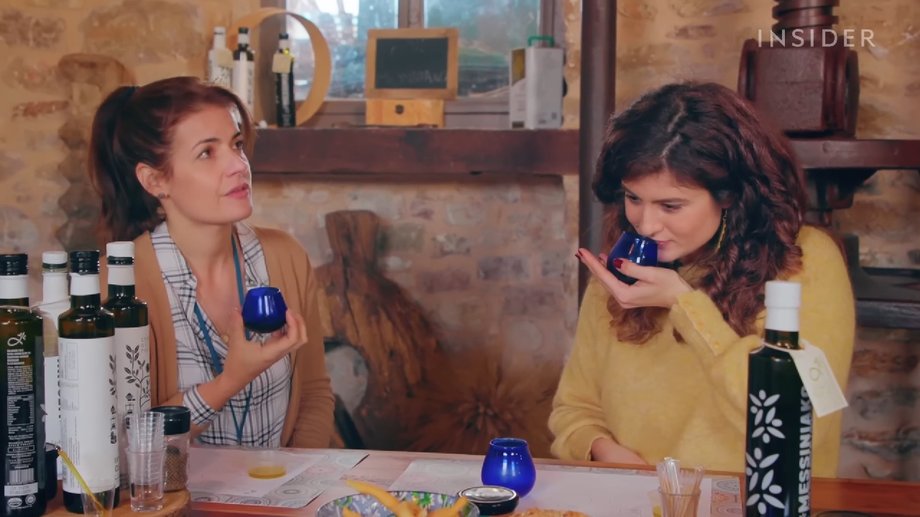
Dimitra Mathiopoulou, co -founder of The Olive Routes with Claudia Romeo, Insider journalist
|
Business Insider
Olive oil is stored in 300-ton stainless steel tanks. When the tanks are not full, they are filled with nitrogen. Light, oxygen and temperature are the worst enemies of olive oil. Unlike wine, there is no such thing as aging in a bottle. Olive oil is bottled only when it is needed. The Dimitra mill produces over 600 olive oil tanks per year.
– Traditional Olivmet began to operate in 1904 and my husband is its owner in the fifth generation. We usually taste olive oil at 28 degrees C. It is an ideal temperature, because we sense the aromas of olive oil. Extra Vergine olive oil has three features. The first is a fruity fragrance. You can only feel it with your nose. We rate it on a scale of 0 to 10 according to national standards. Steel the oil – asks Dimitra.
“I could put her on the bedside table,” I laugh.
– It smells fruity and fresh. The variety of koroneics smells like freshly cut grass. I estimate this fragrance at around 6-6.5-says Dimitra.
– What are the other two features?
– One of them is bitterness. Feel her on the right and left side of the tongue. Another is the spicy he feels when swallowing. Very spicy! Good bread and olive oil make me feel blessed. I feel wonderful – admits Dimitra.
“You are blessed because you do it,” I say.
“I really love it,” says the woman.
Author: Claudia Romeo, journalist, Insider