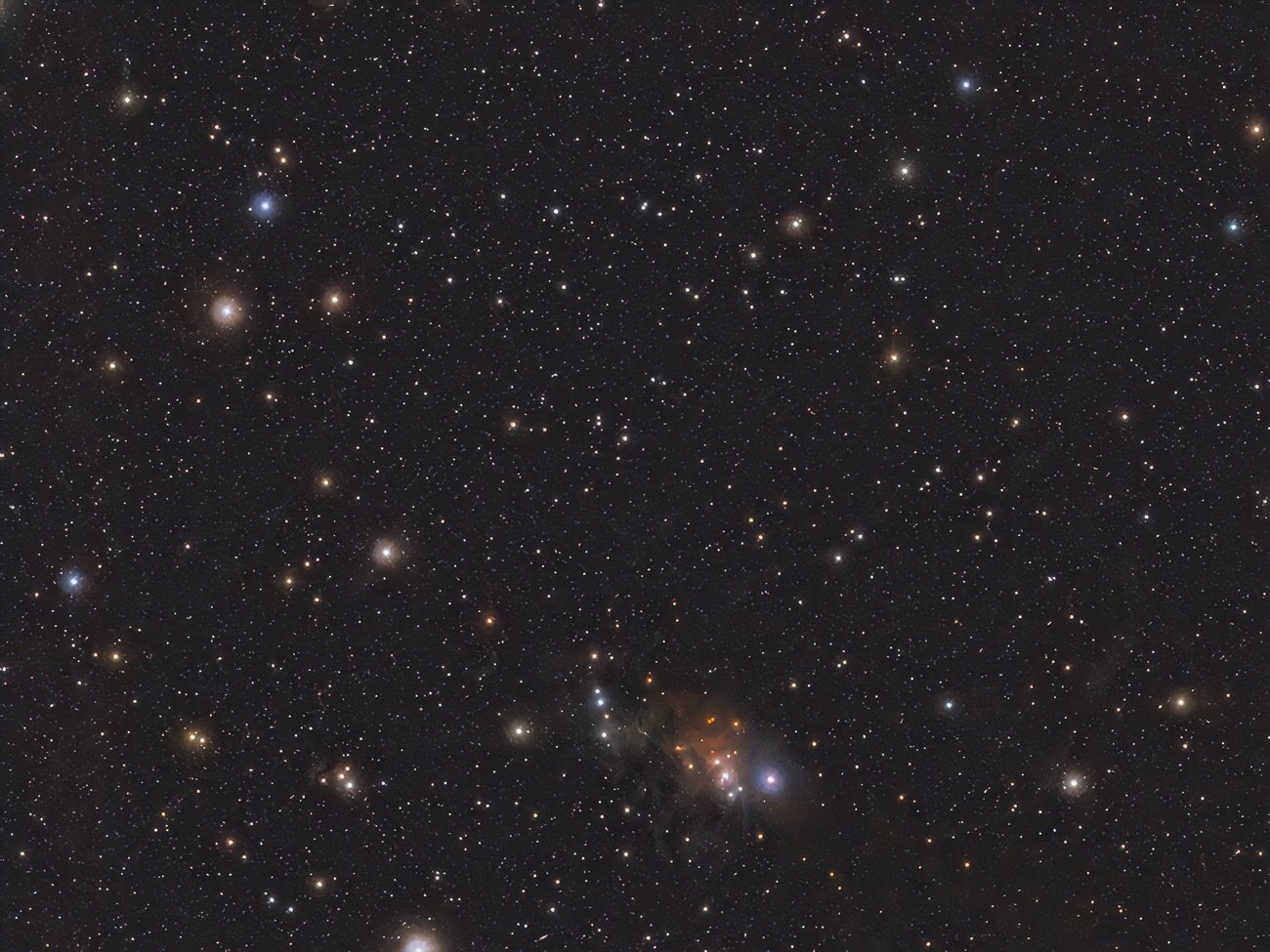
The publication notes that according to the astronomical calculations of such an object should not exist. The planet, called CHA 1107-7626, is not only there is no parental star-it freely drifts in space-but there is also behavior, usually observed in young stars-it flashes sharply, changes brightness and actively attracts the substance. According to calculations, the object adds 6 billion tons per second – this is a record for any famous planetary body.
According to the head of the study by Viktor Alendros-Abad from the INAF Observatory to Palermo, this is the most powerful process of accretion that has ever been observed in the planetary object. “He literally blurs the very concept of what the planet is,” the scientist said.
CHA 1107-7626 was opened in 2008 in the field of star-forming chameleon I, about 620 light years from the ground. By mass, it is only 5-10 times heavier than Jupiter, that is, too small to be considered even a brown dwarf, not to mention the star. A brown dwarf needs a mass of at least 13 Jupiters, and the stars for starting a thermonuclear reaction usually need 80 such masses.
At the same time, the planet actively attracts the material from the surrounding disk of gas and dust, which is more characteristic of stars at the stage of birth. In 2025, astronomers noticed a sharp increase in its brightness, and in the archives they found a similar surge in 2016, therefore it is possible that this is a cyclic process.
The analysis showed that the accretion rate increased eight times in just a few months. Silicates, hydrocarbons and water vapor were found in the disk around the object – typical signs of star birth.
“It seems that this object simply did not understand that it is a planet, and behaves like a young star, only smaller,” said Belinda Damien from the University of St. Andrews.
Observations of CHA 1107-7626 are important for astronomy in that they show how conditional the boundaries are between the concepts of “Zvezda” and “Planet”, the publication notes.