Warning from the EU Peak: “We are in the most dangerous situation since the end of World War II” / “We are in a confrontation with Russia”


The European leaders have drawn an alarm signal at the beginning of the informal summit on Wednesday in Copenhagen, where the Ukraine war and the threat of Russia are the main topics, I write Politico and The Guardian.
The Danish prime minister Mette Frederiksen warned on Wednesday that Europe is “in the most difficult and dangerous situation since World War II.”
“I think it is serious. I think the war in Ukraine is very serious. When I look at Europe today, I think we are in the most difficult and dangerous situation since the end of World War II-not from the end of the Cold War,” she said, according to The Guardian.
“The hybrid war hit Europe,” Frederiksen strengthened, at the beginning of the Copenhagen Informal Summit, attended by the heads of states and governments in the EU.
French President Emmanuel Macron also said that Europe is “in a confrontation with Russia”.
“We are in a confrontation with Russia, which for several years is very aggressive in the information space, including during the elections, and intensifies its cyber attacks,” said the French president, quoted by Politico.
Unlike his Finnish and Danish counterparts, Macron did not use the word “war”, but referred to “hybrid threats in the confrontation.”
“Anyone violates the air space is exposed to the reprisals: it is our right,” Macron said, adding: “We are put to the test.”
Warings also came from the head of the European Commission, who said that Europe will not allow Russia to “seminate division and anxiety”.
“He is a pattern, and this pattern comes from Russia,” said von der Leyen, about the drones reported in Denmark. “Russia is trying to test us, but Russia also tries to sow division and anxiety in our societies. We will not allow this,” she assured.
An important summit
The leaders of the 27 countries of the European Union meet in Copenhagen on Wednesday to strengthen the continent's defense in the face of the Russian threat, in the context in which mysterious drones appeared on the Denmark sky have increased the tension in recent days, France Presse reports.
At the informal meeting of the heads of state or government in the EU, who started at 1:00 pm (Romania time), President Nicușor Dan.
Thousands of policemen were mobilized for this summit, which will be followed, the next day, by an extended European meeting. Military forces in Germany, Poland, Scandinavia, France and even Ukraine are present in Copenhagen. The United States has also sent anti-Drone equipment, an illustration of European fears following recent events.
The recent reports of drone in Denmark have led to the closure of several airports, including the one in Copenhagen, the largest in Northern Europe.
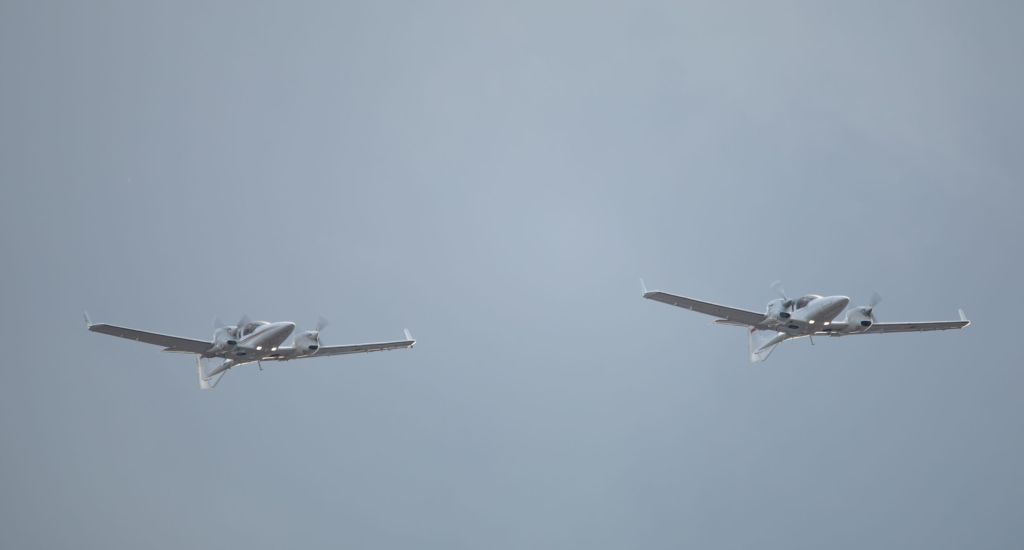 Military objectives in Denmark, revolved again by unidentified drones. The measure taken by the Copenhagen government before the European Summit
Their origin remains unknown so far, but the Danish authorities have not hesitated to show to Russia, already accused of being behind the twenty drones into the Polish airspace in early September, drones in Romania and three fighter jets in the Estonian airspace a few days later.
What will the European leaders discuss in Denmark
Estonian prime minister Kristen Michal sees in these incursions a tactic of Moscow to distract the Europeans. “Putin wants to talk about ourselves,” instead of working to help Ukraine, “he said in an interview with AFP.
In this context, the 27 Member States will discuss the means of strengthening their continent's defense. The EU wants to give priority four emblematic projects: the defense of the space, the consolidation of the eastern flank, the missile defense and the “wall of the drones”.
“Europe must provide a firm and united response to the incursions of Russian drones at our borders,” the President of the European Commission, Ursula von der Leyen, said on Tuesday.
The European Commission has made available to the Member States 150 billion euros in loans, which were fully subscribed, of which 100 billion by the “first line” countries, geographically located near Russia, such as Poland, Romania or the Baltic countries.
Other financing could follow, but it is important, at this time, to know how to organize ourselves best to have the necessary capabilities in these four fields, a diplomat in Brussels explained.
The 27 Member States will discuss this aspect before the European Commission presents, at the end of October, a “roadmap”.
Frozen Russian assets used for the benefit of Ukraine
The meeting in Copenhagen must also be an opportunity to find sustainable sources of financing for Ukraine, at a time when peace prospects seem to be removed and American financial support are exhausted.
Given the budgetary difficulties facing numerous Member States, the idea of better use of frozen Russian assets in Europe has reappeared.
About 210 billion euros of the assets of the Russian Central Bank at Euroclear, a financial institution based in Brussels, are blocked from the Russian invasion of Ukraine in February 2022.
Fearing turbulence in the markets, many countries categorically refuse to be confiscated. The French president insisted that the confiscation of Russia's frozen assets and their use to support Ukraine risks undermining the credibility of European financial authorities and could scare investors.
In contrast, many countries propose the use of these assets to finance a loan to Ukraine, which the European Commission estimated at 140 billion euros.
The EU will then be indebted to the Euroclear, which will continue to be the holder of these assets. Kiev will reimburse the loan only if Russia accepts to pay war damages. And if Moscow will refuse, sanctions and, therefore, block these assets will be maintained, according to a working document presented to the 27 Member States.
However, the value of this loan is still under discussion, according to a diplomat from Brussels.
The problem of Hungary
Brussels also wants to encourage Ukraine in its efforts to access the EU. Negotiations are currently blocked by Hungary.
The President of the European Council, Antonio Costa, will propose to bypass this veto, promoting the idea of a qualified majority vote for the opening of each chapter of the accession negotiations.
However, unanimity will remain the rule for closing each chapter and moving to the next, which relativizes the extent of this measure, according to diplomats in Brussels.
All the more so, in order to be adopted by the 27 Member States, the agreement of Hungary will be unanimous.