“Lukașenko's drug is power.” Belarus opening policy towards the West, viable maneuver or wire?


Receiving an American delegation at the Minsk Presidential Palace, the last dictator in Europe smiled broadly while receiving a gift sent by Donald Trump: a pair of cuffs with the print of the white house. Alexander Lukașenko was delighted by the unexpected attention, after the last one was considered a bet in the West, The Guardian reports.
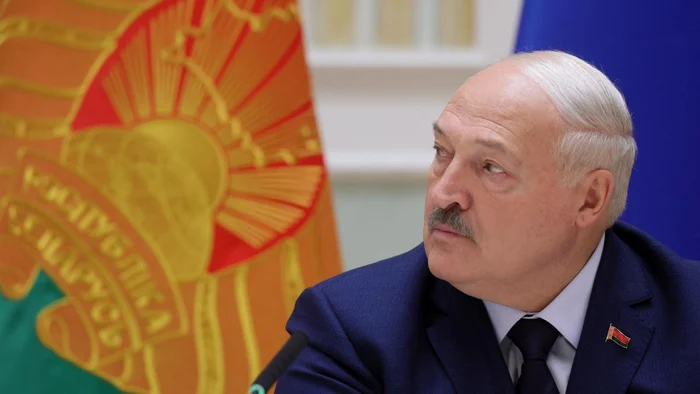
Since Trump's return to the White House, the authoritarian leader in Belarus, to power since 1994, has begun to come out of diplomatic frost, cautiously tattooing a maneuver beyond Moscow, who considers Belarus both the nearest ally and a vital buffer for Russia.
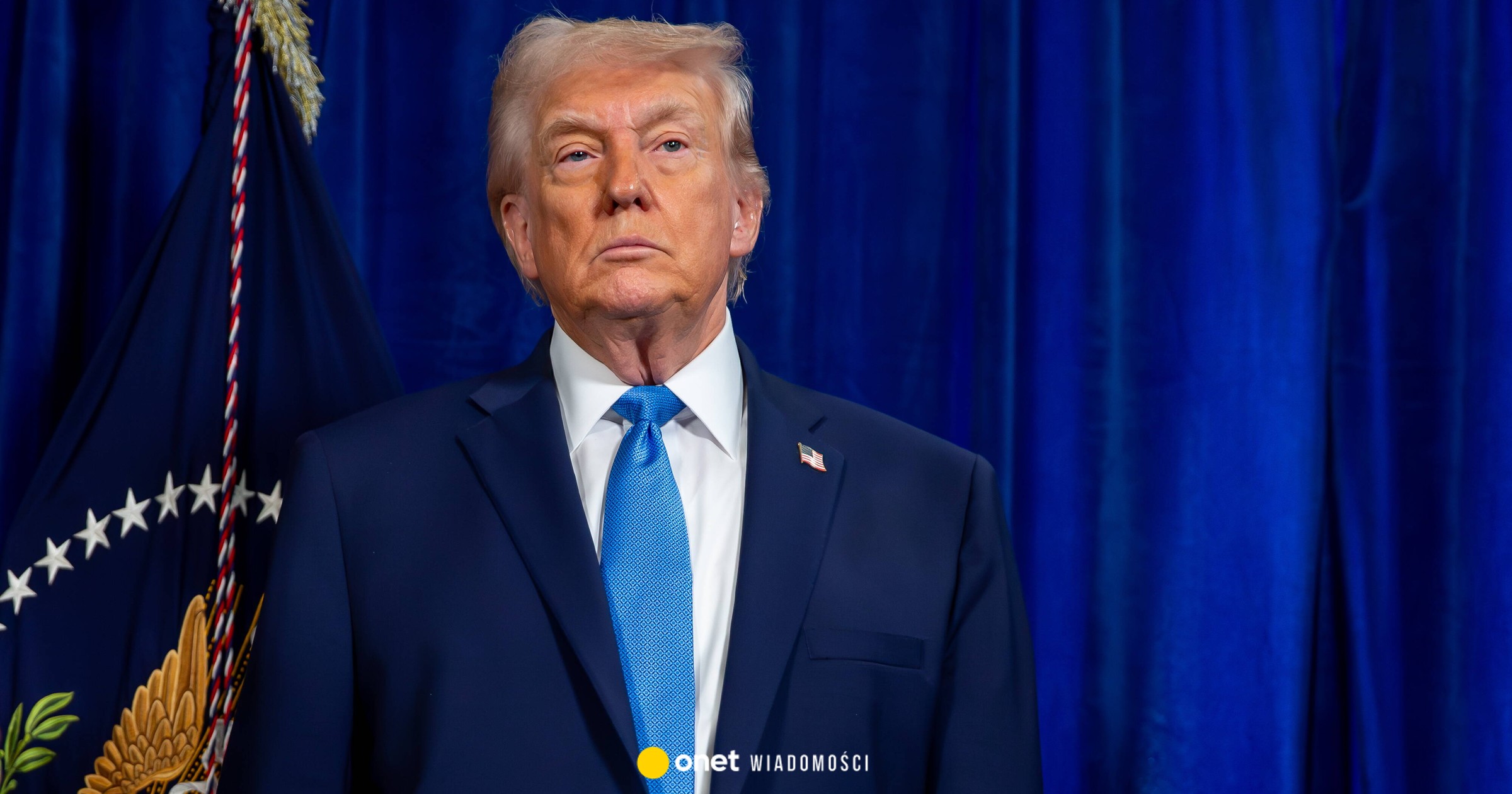
Inturable a political opening of the new Trump administration, Lukașnko has regularly met with American officials and even had a telephone call with the US president, who even launched the idea of a direct meeting.
In Washington, some perceive Lukașenko even as a potential interlocutor of Vladimir Putin for the end of the War in Ukraine. For example, Keith Kellogg, Trump's envoy to Ukraine, said in private that his prospect on the Russian leader is valuable, according to a source familiar with discussions.
At the same time, European diplomatic sources said that there are discussions in Brussels about the effectiveness of the EU Isolation policy of Belarus and, if not the possibility of giving Lukașenko an exit path from the shadow of Moscow. Belarus also reported opening to discussions, two sources said.
“People who have not dared to speak the word” president “of 2020 now will discuss”, praised Lukașenko in front of an indigenous audience in early July. “Discuss global issues with your president – that's what something says. It shows that he respects his opinion.”
Most of the three decades in power, Lukașenko based his survival on the art of balance between Moscow and the West.
Belarus benefited from oil and Russian gases, generously subsidized, to keep its economy on the waterline, leaving the door open to Brussels whenever Moscow was pressing too high, waving promises of reforms that never materialized.
Belarus's option palette
“There is a persistent myth that Lukasnko is happy to be the vassal of Moscow. In reality, his maneuver has varied over the years, but he has never ceased to look for ways to broaden his options,” the European official said.
The 2020 tricked presidential elections and the brutal repression that followed broke the relationships of Minsk with Europe and the US-and left Lukașenko dependent on Moscow for his survival.
“Lukașenko is a narconian: his drug is power. Like any addict, he will do and sell anything for a last dose,” says Sergei Sparsh, a 39-year-old activist who has recently been released from a Belarus prison, in a gesture considered an attempt by Lukașenko to win the West. “To stay in power, the Russian Belarus sold.”
Russia raised with loans, discounts for energy and security guarantees to strengthen its position at its most vulnerable moment, and when Putin launched its large-scale invasion of Ukraine in 2022, relationships became really close.
Belarus served as a land and logistics center for Russian troops, offering the launching ramp for Ukraine attacks from the north, just 145 kilometers from Kiev. Since large -scale invasion, Minsk and Moscow have signed a comprehensive security pact, and Lukașnko, after many years resisted, finally agreed to host Russian nuclear weapons on the country.
However, Lukașenko rejected Putin's pressure to send his own bands to the war, aware that such a decision would be deeply unpopular – not only among the population, but also of their own armed forces.
The economy, in the straits
But the economic dependence of the Moscow Belarus deepened, however, as the Western sanctions turned the country into a vital channel for Moscow, generating a temporary increase in exports and state revenues.
At the same time, Belarus factories increased production, supplying Russia with clothes and essential components for war. But the yield could be supported. As Russia's economy slowed under the weight of sanctions and warfares, Belarus was drawn with it.
“We have come too close to Russia; we have no other alternative,” commented Natalya, a Minsk resident, for The Guardian journalists.
The shortage of basic foods, including potatoes, has become emblematic for the economy in the straits, causing the government to reintroduce Soviet -style price ceilings. At the same time, the massive emigration aggravated the labor deficit, causing Lukașnko to bring 150,000 Pakistani workers to cover the need.
The fragility of the economy became even more obvious this month, after Poland temporarily closed its border, blocking a profitable supply route.
Lukașenko was unusually honest in terms of these issues. “We have to handle it,” he told officials in a television meeting. “We have to act, we have to trade, we have to solve the problem of the industry.”
In the face of increasing economic pressure, Lukașenko returned to what a European official described as the “old wire” between Putin and the West.
In an apparent demonstration of his availability to open the dialogue, he invited this month American military officers to observe Zapad -2025 military exercises – the first such participation from the invasion of Ukraine – and publicly claimed that Belaruse forces helped to intercept Russian drones.
“It is almost incredible the kind of openness we show and which we provide in the exercise,” said Defense Minister Viktor Khrenin.
Belarus's maneuver space
In this context, an important question is how much space Moscow will give his nearest ally to cut a provisional opening to the west – and if he can act independently of Russia.
Yauheni Preiherman, the founder of the Minsk Dialogue Council on international relations, a group of experts collaborating with the Belarus Ministry of Foreign Affairs, said: “It is not about how far will” allow us “to the Russians.
“Nobody here is crazy enough to try to be another Ukraine-everyone understands the risks. But there is a decision, sometimes unsuccessful, to take advantage of any circumstances that would allow us to reopen that space and work more independently.”
The central element of the exchange in which Lukașenko was engaged was the release of dozens of political prisoners – a movement that critics describe as a cynical strategy, given that internal repression has not given any sign of relaxation.
For the authoritarian leader in Belarus, recent diplomatic collaboration is a logical movement, given his obstacle to preserving the sovereignty with the need to maintain Russia's support, say analysts and sources from within.
Artyom Shraibman, a researcher at the Carnegie Russia Eurasia, said: “Dictors do not like to be addicted to friends. He has always had the instinct to distance themselves from Moscow.”
The recent movement of closeness to the West is also motivated by the fear of losing the opportunity. Although a peace agreement between Russia and Ukraine seems to be distant, Minsk reigns that Belarus could be excluded from a possible lifting of the sanctions requested by Moscow, the analyst points out.
On the other hand, so far, his attempts to connect had quite modest results.
After the release of political prisoners earlier this month, the US announced a partial relaxation of restrictions for Belavia, Belarus National Airline, marking the first such measures in recent years.
“The sanctions were raised, although only for a company, but an important one,” said Shraibman. “Symbolism is important: it creates a precedent and opens the negotiation season. And Lukașnko has things to negotiate.”
More than 1,000 political prisoners are still in prison, according to human rights groups, and Lukașnko's regime is closer to others in recent weeks.
Washington, in turn, sees other benefits. “Americans think it is useful as an additional channel with little,” said Precarman, describing Lukașnko as “the best Kremlinologist in the world.”
“He is one of the few people who had to deal with Moscow for 30 years.”
A change of position in Brussels?
But the same analyst warned that Lukașnko should not be considered an independent referee, as “it is as clear as possible to remain loyal.”
Lukașenko now seems to bet on the Trump administration, calculating that a closeness to Washington will drive Europe to align, “said Shraibman, explaining that he” rejects Europe's subjectivism, being convinced that Trump can hold it. “
Few analysts believe that Europe would be willing to offer a relaxation of the sanctions imposed on Belarus in the absence of large concessions.
But in Brussels, a discreet examination is outlined regarding the fact that the aggressive position of the EU towards Belarus – which excluded any contact with the regime of Lukașenko – has reached the limit of its usefulness, according to people familiar with the discussions.
“The maximum pressure did not work,” said an EU diplomat. “After five years of isolation, we did not reach our self-declared goals. Belarus is closer to Russia, and the repression has not ceased.”
What the current policy should replace remains unclear, the diplomat added, given Lukașenko's refusal to compromise or break from Moscow.
“The proximity to Lukașenko has its limits – he knows how to play this game perfectly.”