The list of Targets of Russia. Why was the former president of the Ukrainian Parliament killed: “It's just the beginning”


The full day assassination of the former president of the Ukrainian Parliament Andri Parubi, in Liov, is only the latest death in the clandestine campaign of assassinations and attacks, which both Kiev and Moscow carries, reports The Guardian, in an analysis on the methods used in these assassinations and the lists of possible Ukrainian targets.
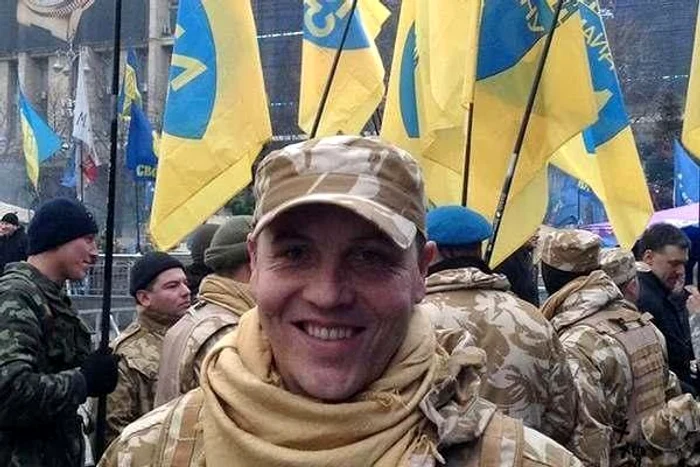
The killer of the Ukrainian deputy Andri Parubi, aged 54, was a man disguised in the delivery, who probably followed his victim a few weeks before the crime, shooting her from a short distance from the block where he lived on August 30.
The assassination is only the most recent in a series of murders by different methods (shooting, caps and scooter explosions) that are part of the shadow war between Russia and Ukraine, involving the respective security services and their local accomplices.
A look at Andri Parubi's past offers some clues about the reasons why he became a target for Russia.
Parubi was one of Ukraine's best -known national politicians: he advocated Ukraine's independence against the Soviet Union in adolescence, and his opinions became radical in the 1990s, when he joined the far -right Ukrainian environment. Subsequently, he moderated his opinions, but he still argued that Ukraine should eliminate any Russian influence.
During the 2014 Maidan Revolution, Parrubi organized groups of protesters in “self -defense units” that fought against the anti -revolt police. After the triumph of the Revolution, he became the secretary of Ukraine's Security Council, while the country was trying to go in a new direction, moving away from Russia. Until the outbreak of the war on a large scale in 2022, he was no longer in the foreground, but he was an elected to Parliament.
“He was a true patriot, a person with a sincere desire to build a better Ukraine,” said Iarema Spirit, the former press secretary of the deputy killed. The deputy and colleague from in the Party of European Solidarity Volodimir Ariev, said: “He was a person who fought for real independence from the Russian Empire, the post-Soviet empire.”
Why would a target for Russia be
In Moscow's vision, Parubi was responsible for the deaths of dozens of pro-Russian supporters in Odessa, in May 2014, after the confrontations between Russian and Ukrainian supporters culminated with a fire in which over 40 people died. The Kremlin narrative presents these dead as a brutal and deliberate massacre.
In an interview given in 2015 to the Ukrainian television station “Hromadske”, Parubi revealed that the intelligence services informed him that the Russians put a plot to take him out and bring him to Russia for a-spectacle process on the “coup” in the Maidan Square. “After that, for the first time in my life, I agreed for a security team,” he said at the time.
But many Ukrainians had a different perception of the brutal events in Odessa: namely that the moment when the pro-Ukrainian forces responded to the separatist feelings inspired by Russia, preventing the repetition of the scenario that the Kremlin had set up in Donbas.
A speech by Vladimir Putin shortly before launching the invasion in Ukraine shows that the Russian president wanted revenge for those events: “The criminals who committed this atrocity were not punished, but we know their name and we will do everything we can to punish them-to find them and bring them to court.
Russia could not conquer Odessa, so he resorted to other methods.
Parrubi appeared on a “list of killed targets”, which were with dozens of prominent Ukrainians. SBU obtained it from a partner information service in the weeks after the large-scale invasion, a security source for The Guardian said.
The then chief of SBU, Ivan Bakanov, personally called Parrubi to warn him that he finds on the list, this source said. But given the situation in which Ukraine was, trying to reject the Russian invasion, there were not enough resources to provide guard. Those on the list were told to be cautious and take care. Some Ukrainian publications have reported that Parrubi subsequently asked for personal guard, but he was refused the request.
Another recent murder seems to be related to the violence in Odessa: in March, the blogger Demian Hanul, aged, active and in the anti-Russian movement in Odessa in 2014, was shot dead. Local prosecutors reported that the suspect of the armed attack is a Ukrainian soldier, who committed the attack on the order of people who claimed to work for the Ukrainian authorities, but who, in fact, worked for Russia. The process in his case begins soon.
Russia is preparing other assassinations
Ukrainian deputy Oleksii Honcearenko told The Guardian that he was also warned by the security services that he would be on the Russian target list. In June, a Russian court was missing from 10 years in prison for what he has established to be his guilt for Odessa's violence.
Valeri Kondratiuk, former head of Ukraine's foreign and military intelligence services, said that Russia's internal FSB security service coordinates assassinations: “FSB deals with lists, then coordination takes place between their different services,” he said.
Kondratiuk said that, given that Parrubiy was known to be a “personal enemy of the Kremlin”, it was a mistake from the state not to offer him body guards and that the assassin is revealed by the security apparatus.
“There should be three security rings: in the first phase foreign intelligence services should follow the threats; if it fails, counter -information should follow the planning process, and if it fails, its personal security should neutralize the threat. All three circles have failed here,” he said.
Who commits the assassinations
Russian services have become experts in the recruitment of Ukrainians, sometimes resorting to ideology, sometimes using recruitment under “false flag” and giving criminals or Ukrainian authorities. Moscow has recruited even Ukrainian teenagers in the roles of suicidal attentionrs without knowing to attack police and other official buildings.
But attacks on specific targets are often often involved. In what is believed to be the first successful attack on a Ukrainian security official outside the front line, Colonel SBU Ivan Voronici was shot dead in July, in a secure complex in the center of Kiev.
According to some sources, Voronici was the deputy chief of the fifth department of SBU, a secret unit established after 2014 and who performed bold operations inside the occupied Ukraine. It seems that it can be assigned numerous attacks on separatist leaders installed by Russia in Donbas, which explains why it would have been a priority target for Russia. The authors, a couple who traveled to Ukraine with Azer Passports, were later killed in an exchange of fires.
In the case of Parubi, so far no direct evidence has been presented that Moscow would have been behind the murder. The killer, arrested two days later, proved to be originally from Lvot and claimed that he wanted to avenge the Ukrainian authorities and be transferred to Russia to seek his missing son. Many aspects of his story, however, seem to be their uneasy. Parrubi's friends and colleagues are convinced that the track will eventually lead to Russia.
“Who was killed? From the first second, we had no doubt. The Russians, Putin and the fifth column in our country,” said former President Petro Poroshenko.
It is unwavering that both Moscow and Kiev now consider assassinations as an essential part of their war effort, although none assume public responsibility.
Just a few days before the killing of the Ukrainian deputy, an explosion in a shopping center near Lubianka, the FSB headquarters in Moscow, killed a person and injured more, including a man identified by Russian news agencies as a high-ranking FSB officer. A source from Kiev said the man was part of the fifth FSB service, responsible for sowing discord in Ukraine.
This was just the latest attack from a whole series of murders in Russia, including a general man in front of his block by an explosive scooter and a car-carp for the radical nationalist ideologue Alexander Dighin, who killed his daughter, Daria.
In private, many say that this part of the shadow of the war will continue even when the weapons are on the front. “Think about how many people are targets for revenge, how much anger and resentment there are,” said a source of the Security in Kiev. “Even if we have an armistice and an agreement, these crimes will continue years afterwards. This is just the beginning.”