Housing crisis: Romania, between the demographic decline and the stagnation of constructions

Photo source © Radub85 | Dreamstime.com
The lack of housing at affordable prices has become a major challenge throughout Europe, and Romania is no exception. The recent data published by the National Institute of Statistics reveal a worrying tendency: in 2024, a little over 60,000 homes were used, the lowest level in the last 5 years.
- Romania loses one million inhabitants every decade, being among the countries with the most pronounced demographic decline in Europe
- Only 0.7% of the stock of housing are new constructions, one of the lowest European rates, compared to 1.5% in Poland
- 1.5 million homes are unoccupied (16.4% of the total) while there is housing deficit for young people
- 26,000 homes completed in the first half of 2024, 6,000 less than in 2023
- The decrees go to the massive retirement, creating a “strong shock” on the active population in the coming years
A common problem with different manifestations
The lack of housing at affordable prices has become a major challenge throughout Europe, and Romania is no exception. The recent data published by the National Institute of Statistics reveal a worrying tendency: in the first half of 2024 only 26,000 homes were used, about 6,000 less than the same period of 2023.
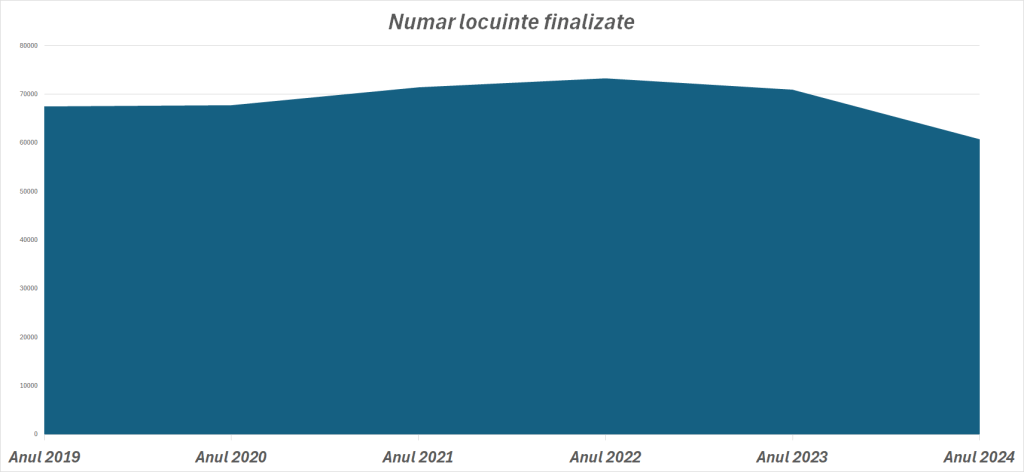
The Romanian paradox becomes even more obvious when we analyze the figures in perspective. Although our country built about 60,900 homes last year, reaching a total of almost 10 million housing units, there is a major gap between offer and demand. With about 8 million families and 1.5 million unoccupied homes (16.4% of the conventional total), Romania is facing an inefficient distribution of housing resources.
European specialists use several indicators to evaluate the magnitude of the housing crisis:
The age of housing independence
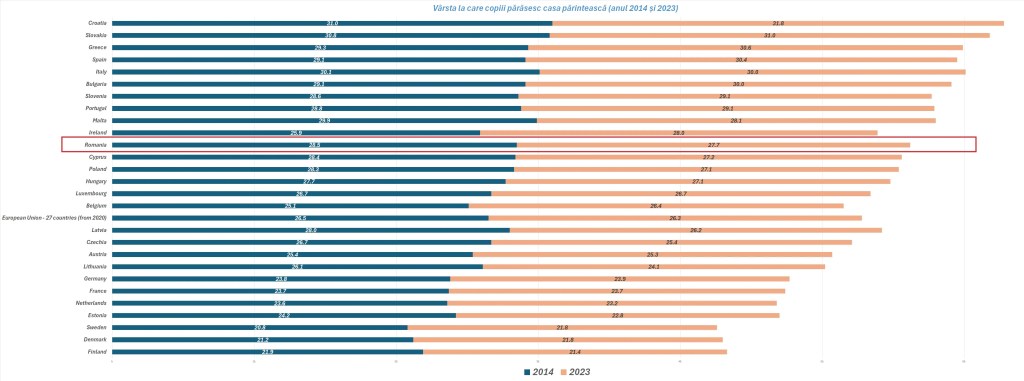
One of the most relevant indicators is the age at which young people leave their parental home. Croatians, Slovaks, Greeks, Spaniards and Italians remain most in the family home, while young people from the Nordic states obtain housing independence much earlier. The Swedes, for example, leave home over 10 years earlier than the European average, being followed by Dutch, French and German.
The housing density
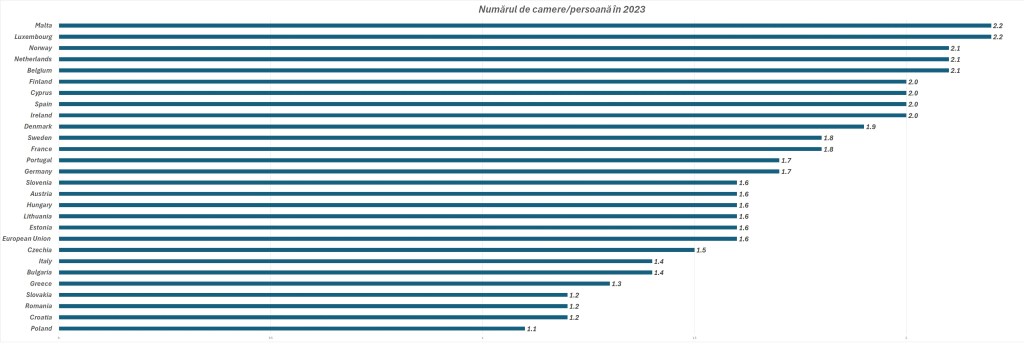
The living space per person offers another perspective on the quality of living life. Malta and Luxembourg record the highest levels of rooms per inhabitant, while Poland, Croatia and Romania are at the tail of the ranking. This situation reflects not only the quantitative deficit, but also problems of living quality.
Financial accessibility
The burden of housing costs varies considerably in Europe. The German households bear the highest relative costs, paying over 13% of the home available. The situation in the Netherlands presents extremes: the owners benefit from generous fiscal deductions and pay below 5% of the income for housing costs, while the tenants on the free market allocate over 40% of housing revenues.
The demographic challenges of Romania
The Romanian demographic context adds a unique dimension to this crisis. Romania is among the European countries with the most pronounced demographic decline designed, losing about 1 million inhabitants every decade.
In contrast, Ireland and Sweden anticipate a demographic growth of over 10% in the next two decades, which will intensify the pressure on their real estate markets.
The rhythm of construction: Romania in the red area
Poland dominates the European ranking of new constructions, adding 1.5% annually to the stock of housing during 2020-2024, followed by Austria and Sweden. At the opposite end, Romania registers one of the lowest new housing rates in Europe: only 0.7% of the total stock in recent years.
This construction stagnation places Romania along with the South European countries such as Italy and Spain, where new homes represent below 0.3% of the existing stock. The causes include long -term authorization procedures, financing problems and lack of appropriate land.
The economic and social impact
Housing deficiency is not only a social problem, but also a brake for economic development. ING studies show that the lack of accessible housing limits the mobility of the labor at national level. When young people and new people come to a region cannot find decent and cheap homes, they opt for relocation, limiting the regional growth potential.
The European governments recognize the severity of the situation and set ambitious objectives: Germany aims to build 400,000 housing annually, and the Netherlands aim to 100,000 new units per year. However, these targets are frequently missed due to cyclical factors (increased interest, high construction costs) and structural (bureaucratic procedures, lack of land).