Most Romanians believe that the war in Ukraine affects Romania. Why do people most fear the most

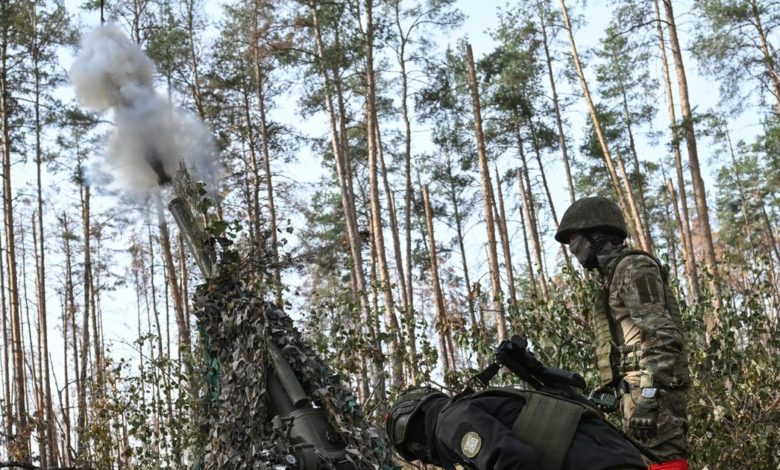
Three out of four Romanians believe that the war in Ukraine affects our very large and quite large country, shows the Barometer Informed.ro – Research Inscop made between September 1-9.
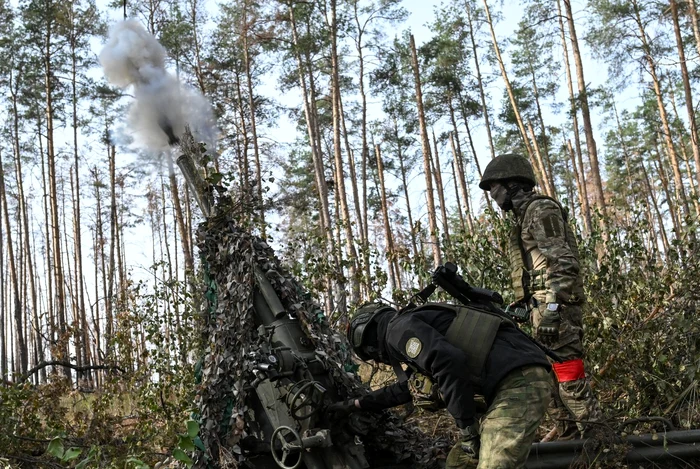
Most Romanians believe that the War in Ukraine affects Romania Profimedia photo
According to the survey, 39.6% of respondents believe that the Ukraine war affects Romania, 35.3% to a large extent, 11.2% to a small extent, 11.3% to a very small extent or not at all. 2.7% do not know or do not answer.
I also believe that the Ukraine war affects Romania in very large and largely: 73% of PSD voters, 78% of PNL voters, 69% of USR voters and 77% of gold, respectively 72% of men and 78% of women, 69% of young people up to 30 years old, 76% of those aged 30 and ages between 45% 59 years and 76% of those over 60 years old. 69% of people with primary education, 76% of those with high school education, 79% of those with higher education, 79% of the residents of Bucharest, 70% of those in Urban with over 90 thousand inhabitants, 75% of those in the small urban and 76% of the rural. measure.
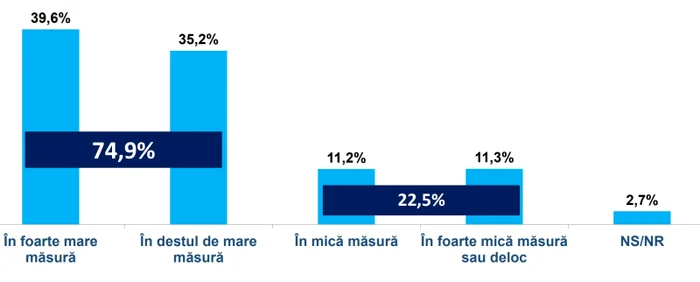
PHOTO Barometer Informa.ro and Inscop Research
I believe that the Ukraine war affects Romania to a small extent or to a very small extent /not: 20% of PSD voters, 22% of PNL voters, 30% of USR voters and 20% of gold, respectively 26% of men and 19% of women, 31% of young people up to 30 years old, 22% of those aged 30% and ages of 45% 60 years. 26% of people with primary education, 22% of those with high school education, 19% of those with higher education, 20% of the residents of Bucharest, 27% of those in Urban with over 90 thousand inhabitants, 22% of those in urban small and 21% of rural, respectively 22% of the employees in the state and 21% of those who work in the private country.
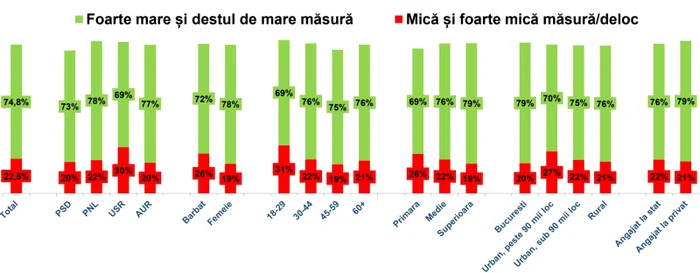
PHOTO Barometer Informa.ro and Inscop Research
War -related concerns
Ask what concerns them most about the Ukraine war, 43.5% of Romanians mention the safety of Romania and the risk of conflict extension, 36.2% Economic crisis (energy prices, inflation), 8.5% Stability of the European Union and NATO, 7.5% the situation of Ukrainian refugees in Romania. 0.7% indicates something else, and 3.7% do not know or do not answer.
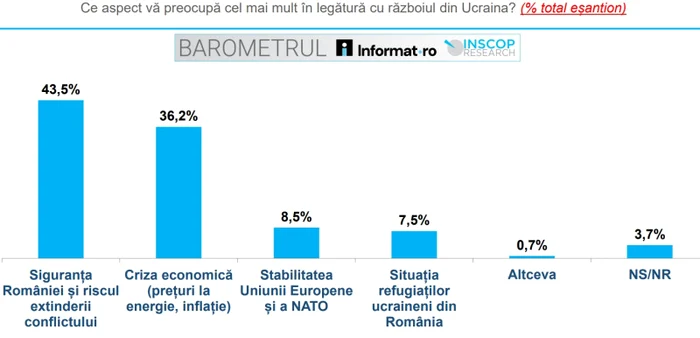
PHOTO Barometer Informa.ro and Inscop Research
PSD voters, women, people over 60, inhabitants of Bucharest and Urban Mare are the categories of population most concerned about Romania's safety and the risk of conflict extension.
The economic crisis is mentioned especially by: gold voters, young people under 30, people with primary education, rural residents and state employees.
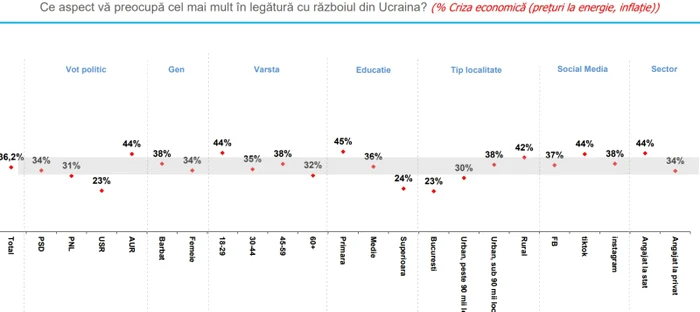
PHOTO Barometer Informa.ro and Inscop Research
What the results show
The director of Inscop Remus Stefureac explained that the results of the survey indicates that the anxiety of Romanians is mainly caused by two effects, the first would be “The safety of the country under the conditions of conflict extension” And the second would be the economic crisis – energy prices, inflation, etc.
“75% of Romanians believe that the war in Ukraine affects Romania in a great and quite large extent. The opinions are homogeneous among the various socio-demographic groups, which shows that the implications of the conflict triggered by Russia are deeply felt by the population of Romania. economic (energy prices, inflation) ””said Stefureac, according to a press release.
He added that “PSD voters, women, people over 60, inhabitants of Bucharest and great cities and people with higher education are more concerned about the risk of conflict expanding, while gold voters, 18-29-year-olds, people with primary studies, rural inhabitants and employees in the state are more concerned than the media of the economic environment,
The data were collected between September 1-9, 2025, with the help of the interview through the questionnaire.
The data were collected by the CATI method (telephone interviews), the volume of the simple sample, stratified being 1,103 persons, representative on the significant socio-demographic categories (sex, age, occupation) for the uninstitutionalized population, aged 18 years and over.
The maximum admitted error of the data is ± 2.95%, to a degree of 95%.