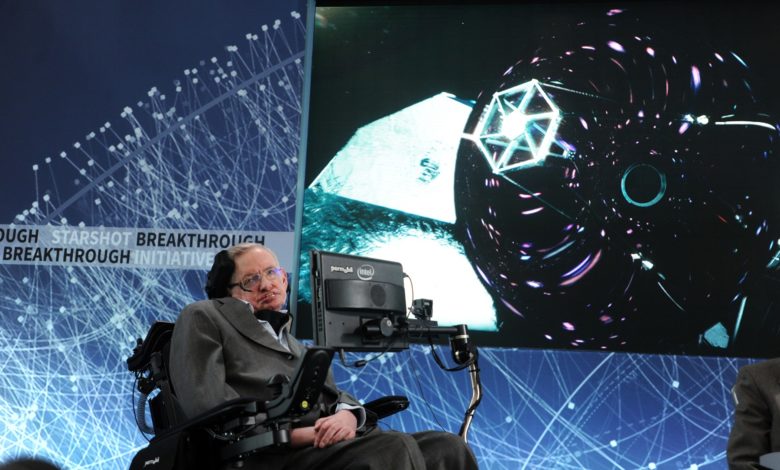
The researchers say that their ability to analyze gravitational waves has improved so much in the last decade that they have recently been able to check an essential idea about growing black holes – one formulated by Stephen Hawking since 1971, NPR reports on Thursday.
On September 14, 2015, the physicists achieved the long -desired goal of detecting gravitational waves, where the shock emitted by cataclystic events such as the violent fusion of two black holes.
They presented their huge discovery in February 2016 and it brought them the Nobel Prize for Physics only a year later, when the time interval between a discovery and its recognition with a Nobel has grown constantly over the decades, reaching an average of over 30 years.
In the ten years since the initial discovery, scientists have detected hundreds of black holes that were merged, as well as other extreme cosmic events, such as neutron stars and black holes that join with a neutron star.
Now, a separate team from researchers has presented a new discovery in a study published on Thursday in Physical Review Letters.
What does the theorem of black holes say
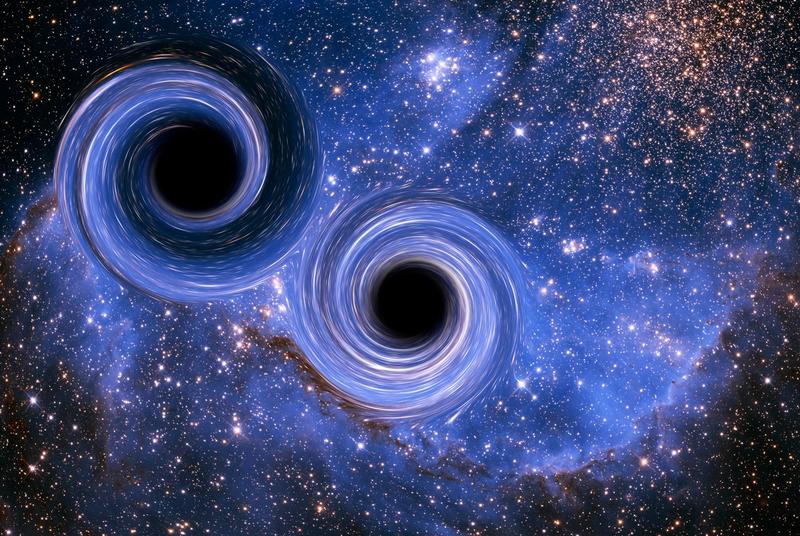
When the black holes blend, their masses combine, which leads to the surface growth. But they also lose energy in the form of gravitational waves. In addition, blending can cause the resulting black hole to increase its rotation, which leads to a smaller surface. The theorem of the area of the black holes states that, despite these competing factors, the total area must grow.
“There is a very famous statement in physics, made by Stephen Hawking, namely that area, surface, black holes can never decrease,” explains Maxiliano, astrophysicist at Columbia University and at the Flatoron Institute.
He says that exactly this noticed scientists after analyzing the gravitational waves detected earlier this year. On January 14, the detectors recorded gravitational waves from two black holes at about 1.3 billion-year-olds, which collided.
These black holes had masses between 30 and 40 times the mass of our sun, so their impact was very similar to the one that led to the first detection of a gravitational wave in 2015. Since then, the two gigantic detectors operated by the Ligo program (the laser interferometer from the gravitational waves), in Louisiana and in Washington.
“Because detectors are so much more efficient today, we can record the signal much clearer,” says Katerina Chatziiannou, a specialized physicist in gravitational waves at Caltech.
This allowed them to carry out a new analysis that showed that, between the two, the initial black holes had a combined area of 240,000 square kilometers. After they joined in a single black hole, its area was about 400,000 square kilometers.
“We have shown exactly the Hawking theorem”
Hawking's theory says that the final area of the black hole must be greater than the sum of the initial areas, stresses Chatziiannou, “and this is the thing I have observed with that signal.”
He states that this type of evidence is exactly what Hawking hopes for a decade ago, when the first detection of a gravitational wave was announced. In fact, he got in touch with one of the scientists involved then to see if the gravitational waves could be used to test this prediction.
At that time, however, it was simply not possible, because the data contained too much “noise” and the analysis techniques were not sufficiently advanced.
Hawking died in 2018. “It is regrettable that Hawking is no longer among us, but no doubt is a way in which his inheritance continues to live,” says ISI.
“All these ideas that people thought in the 1970s, believing that they are just theoretical speculations, now manifest itself in real data,” adds the researcher. “We see that these things happen almost exactly as they were predicted.”
Another famous physicist predicted the existence of gravitational waves
Albert Einstein, who predicted the existence of gravitational waves in 1916, believed that they would never be detected.
“If we had told him that we detect gravitational waves from black holes that collide almost every day or every two or three days,” says, “I'm sure he would have been amazed.”
Gabriela González, researchers in the field of gravitational waves at the State University in Louisiana, also states that the team of researchers was surprised by how many black holes mergers observed.
“I have seen so many mergers of black holes. We learn so much about them that sometimes I am tempted to call this” astronomy of black holes “rather than” astronomy of gravitational waves, “she says.
She would have predicted that they would see many more fusion between neutron stars, but so far, only a few examples have noticed.
This could change, as researchers are already working on plans for new gravitational wave detectors, which would be ten times more sensitive. “This is our dream,” she says, adding that, over a decade, these detectors could be under construction – maybe even completed.