The top -down freezing of system heat prices ended on June 30. Its extension – as is the case with electricity bills – does not seem possible, however, the rulers want to direct help to the most needy. We quoted key data on the assumptions of the bill on heating voucher, prepared in the Ministry of Energy here. According to the assessment of the effects of the regulation attached to the bill, the voucher will potentially go to approx. 3.3 million households. The cost of the whole for the period from July this year to December 2026 will be slightly above PLN 884 millionand the state will cover this amount from the intentional reserve of the budget.
Read also: Heating in blocks will increase strongly. What does it result from?
Network heat helps
Let us remind you that the right to use the voucher will be below two income thresholds (PLN 3272.69 in multi -person households and PLN 2452.52 In one -man), and by the end of next year the maximum support will be PLN 3,500. The condition for receiving assistance will also be fees exceeding PLN 170 per gigajul thermal energy.
Interestingly, access to system heat, produced by a local plant and supplied with networks to buildings, usually improves the economic condition in terms of energy expenditure. In the worst position, described in a much speaking indicator, high costs – low income, are usually residents of single -family houses who heat themselves. According to data from the Institute of Structural Research (IBS), in 2016 as much as 75 percent people affected by energy poverty lived in single -family homes, usually not included in the network. The same percentage of veins in villages or in small towns.
Newer data of the same think-thanku, which summed them up on the basis of the research of the Central Statistical Office, indicated that in 2022 energy poverty It concerned 1.3 million households. 380 thousand of them – just over 29 percent – heated houses with coal or wood stoves. In turn, the Polish Economic Institute in a report from last year indicated that in 2022 the problem had affected the problem from 3 to even 40 percent households. Such a large range resulted from taking into account several indicators or dimensions of the phenomenon – from the so -called heating poverty, i.e. a high share of energy expenditure in the household budget, through municipal poverty (lack of access to appropriate infrastructure or life in an indispensable building), to structural poverty (in which high expenses overlap on low income) and so -called Hidden energy poverty (low bills result from a drastic reduction of energy consumption, i.e. simply living in the cold).
Let's return to the heating plant customers. Examples of cities such as Tychy or Ruda Śląska, which in the study of January this year is the IBS Institute of Reform, show that Connecting to the heating network limits the scale of energy poverty. Among the recipients of system heat in these places, 7 percent suffered from them, at 26 percent. people in a group using individual heating.
Also, the Polish Economic Institute proves that system heating has a beneficial effect especially on reducing municipal poverty. “This kind of poverty is nearly 4 times less often experience farms using central heating as the main heat source, it occurs twice as often in households that have access to hot water or gas from the network,” reads in last year's report. In turn, the living status of residents of houses with individual and emission heat sources can further deteriorate after the ETS2 system enters into force, provided that with the help of funds from the social climate fund or other income for emission rights, the state will not provide them with sufficient help (as we wrote, coal heating people will be most strongly affected).
Read also: How to spend PLN 65 billion? Consultations of the socio-climate plan are underway
What matters? Thermomodernization
Heat recipients from the network are usually in a better situation; Alicja Piekarz, an expert of the Polish green network, confirms that the problem of energy poverty usually concerns people involving individual heating. Our interlocutor reminds of the official definition of the phenomenon included in the Energy Law, including co -occurrence of three factors – low income, high energy costs and low energy efficiency.
– However, there are also more subjective and qualitative shots. People who are forced to give up other important life needs can also be considered poor energy. If someone is unable to pay for educational classes for a child due to fees, he has also been affected by energy poverty to some extent. It may also happen that with a rapid and drastic increase in prices of such fuels as coal, poor energy becomes a person whose earnings exceed thresholds entitling to use social assistance – adds the baker.
However, low income is the most common determinant. With limited impact on the prices used for heating fuels or the height of the approved tariffs, Alicja Piekarz emphasizes the importance of the third definition element – energy efficiency.
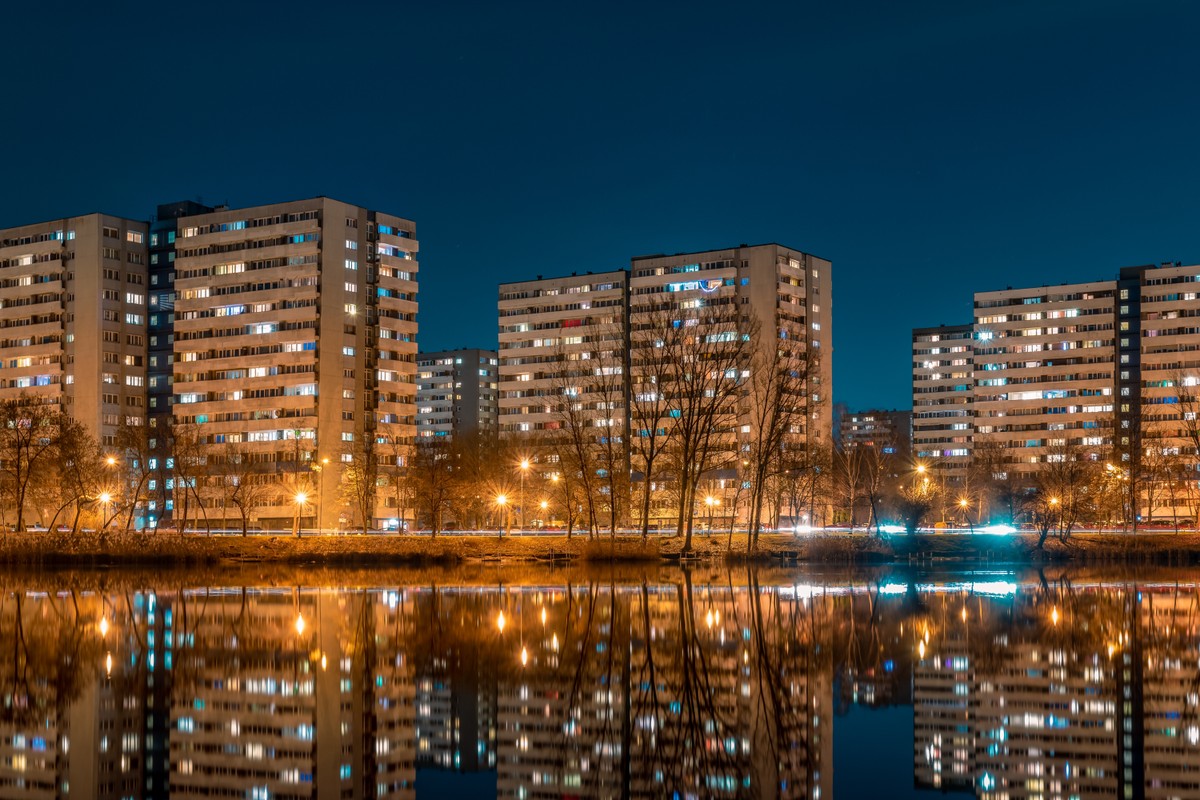
– A lot depends on the exchange of heat source with more effective and the state of insulation of the house. Heat can run away, among others through thermal bridges in external partitions. In the case of people living in multi -family housing (as part of communities or housing cooperatives), real estate managers may play an important role in taking actions to improve energy efficiency. In turn, local authorities have a significant impact on municipal construction in this area – explains the expert.
In the case of multi -family buildings – i.e. the most common recipients of network heat, included in the draft of the Ministry of Energy Act – the source of financing thermomodernization activities are, among others Programs of Bank Gospodarstwa Krajowego. The key of them The TERMO program consists primarily of preferential loans for cooperatives, communities or social construction societies; Subsidies are also at stake. Funds can be financed by building insulation, replacement of lighting with energy -saving, reconstruction of heating systems, modernization of ventilation and air conditioning systems, or installing its own renewable energy sources in buildings.
The rest of the article is under video material
A coherent support system
Although the Ministry of Energy today takes a heating voucher for its banners, media and political attention usually focuses on electricity bills. – Electricity prices are said much more than heat prices, meanwhile GUS data clearly indicate that the latter constitute the largest part of the average household energy expenditure – says Konstancja Ziółkowska, manager for social affairs at the Energy Forum. – Many heating plants constructed their tariffs on the basis of fuel supply contracts concluded during the energy crisis. Therefore, despite the subsequent decrease in coal or gas prices, they are high today – the expert indicates.
Due to the possible price shock for the most sensitive recipients after frostbite prices too heat, our interlocutor believes that instruments such as a heating voucher are currently needed, although will not replace long -term activities focused on independence of the heating sector from fossil fuel import. However, he also sees a field for a more systemic approach in the cover support itself.
– various types of energy covers should be integrated with each other. The energy voucher, the heating voucher, or earlier, e.g. coal additives are tools that function separately and “do not see each other”. For the administrative restriction of chaos and more effective help, one coherent support system should be created. It is also worth remembering in the context of the entry into force of the ETS2 and the Social Climate Fund – indicates.
Another related issue is to improve the quality of public data on heat sources, progress in thermomodernization of buildings and energy poverty. – Good solutions operate in Great Britain, where with the help of the so -called English Housing Survey State has been successfully gathering knowledge in these areas for 50 years – he sums up.
The discussion about energy poverty and the most effective ways to fight this phenomenon will not end quickly, and with the upcoming start of the ECJ2 will probably become, nomen omen, and hotter. The same applies to heating transformation. The industry and experts talk about various solutions that usually come down to a common denominator – decarbonization. The electrification of local systems is a often postulated path of transformation by taking over excess electricity from renewable energy, using heat pumps, electrode boilers and heat warehouses. In the report published on September 3, the Institute of Renewable Energy writes about this. In turn, the Energy Forum recommends a peeling northwest; The inspiration is to be a dish in which the heating sector began a successful march to the green heating in response to the fuel crisis from the seventies of the last century.