Interview a Romanian surgeon returned from France says what is behind the “biggest health scandal of the last 35 years”: “The stake is huge, it is 10 billion euros”


“It is juggled with very large amounts and very large responsibilities.” This summarizes the scandal regarding the change of the way in which the heads of sections in hospitals are appointed orthopedic doctor Marius Ush. After having a few years in France, he chose to return to Romania, but only work in the private system. In a dialogue with Hotnews, the doctor explains what implications the modification announced by Minister Alexandru Rogobete, who also aroused a scandal in the PSD, being challenged by the former ministers Alexandru Rafila and Florian Bodog.
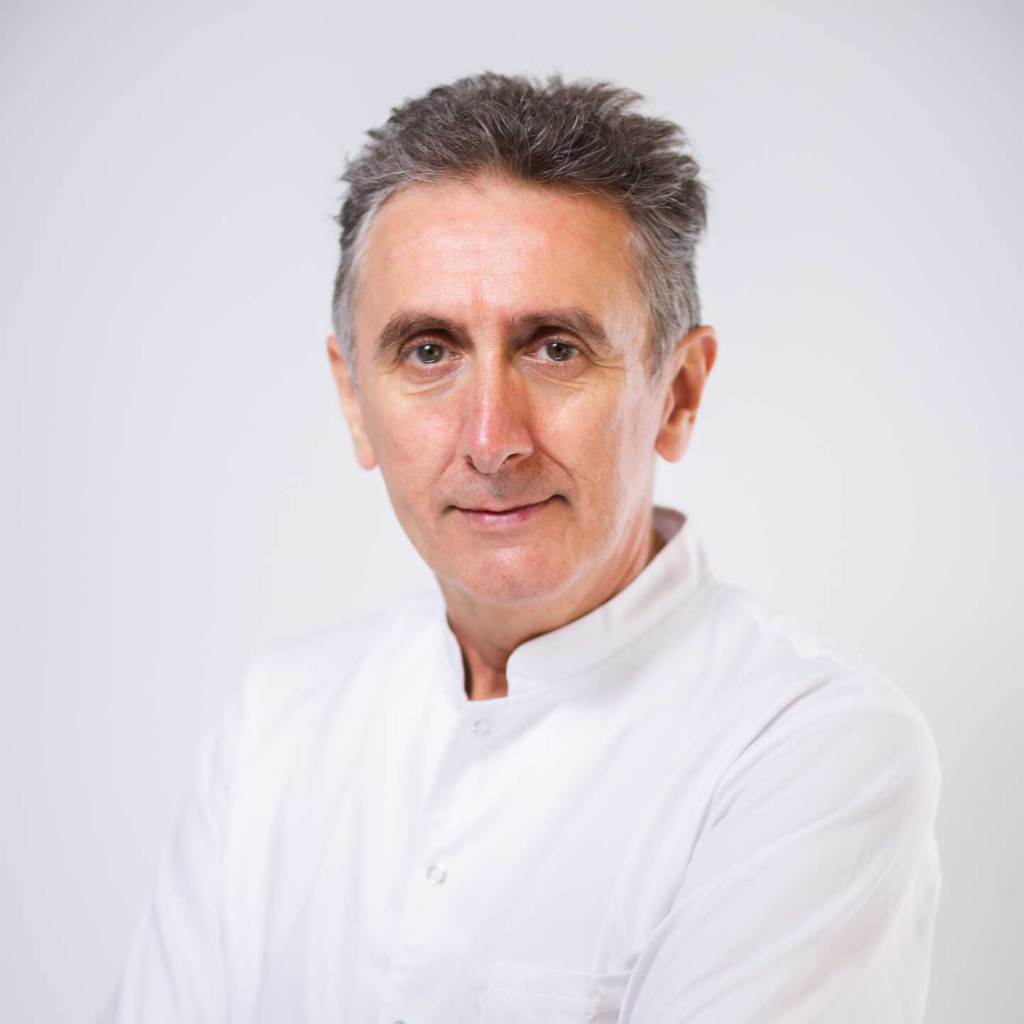
- Marius Ush graduated medicine in 1997 and is an orthopedic surgeon with over-specialization in the surgery of the forerunner. He left for France at the age of 38, where he had been in a hospital in Strasbourg for 3 years, and in 2007 he returned to Romania, where he has worked, since then, exclusively in the private system. He says he made this choice because “I had no chance to enter a clinic in Bucharest or a university hospital in another city, I wanted to be independent.” He claims that “fear” many doctors come to not talk about the problems in the system and launch harsh accusations against the universities of medicine and pharmacy.
In Romania, the department heads can be appointed, at this moment, only if they are proposed or passed the veto of the medical faculties. “A paper comes from the UMF and they are named department heads,” describes the Marius Uşu procedure.
In the province, in hospitals that are not university clinics, the appointment of the heads of the section “comes from the manager, who is put politically, by the mayor, prefect”, continues the doctor.
The current government changes the rule and imposes a competition, as in hospital managers, which has aroused dissatisfaction in the area of medicine and pharmacy universities.
In the dialogue with HotNews, Marius Usu talks about a “discretionary” power of the department heads in the Romanian public hospitals: “They decide who engages, who operates, who operates, what drugs are bought in the section, from what producer, who goes to congresses, who has a doctorate. “So, the stakes are very big: money, money, money,” says the doctor.
“At the competition, there is a risk that someone is better prepared than them”
HotNews: Mr. dryu, Minister Rogobete proposed the organization of competitions on clear criteria for the position of head of the department, not the exclusion of people from the universities of medicine and pharmacy from participating in these competitions. Then why is this opposition to the UMF?
Marius dryu: In the university clinics there are two categories of doctors: some who are UMF and others who are not UMF. Statistically speaking, those who are UMF arrived there more bypassed, for example did not give the residency-this was from my time until 2015-2020.
– Why do I reject the idea of organizing competitions?
– At the competition, there is a risk that someone is better prepared than them. There are cases of doctors who have become great specialists and great teachers in sideways – through a preparatory, being university assistants, research assistants, by doctorate. All these were ways to “shunt” the residency. Residential is the only truly correct exam in the medical world after 1996.
And they are a caste. You can only reach the UMF with great, great weight. If you are the son of Dad or something else. It has always been so.
A paper comes from the UMF and are called section heads. In the province, in hospitals that are not university clinics, the appointment (department heads – n.red.) Comes from the manager, who is politically, by the mayor, prefect.
“The head of the section decides who engages, who leaves”
– How much power does a section head?
– The head of the section has some discretionary powers: he decides who is engaged, who leaves. He decides what nurses are committed. And you have seen through the province what amounts are transported to the employment of nurses. I'm not saying about doctors anymore. They are fabulous amounts. Who are handled by whom? By the head of section and manager.
Look who the managers of the university hospitals in Bucharest are. I'm theirs only. Because the stake is huge. The stake is 10 billion euros. Section chiefs decide not only the employment, but they decide all the products that are bought in the section – one medicine or another. They decide who goes to an international congress, who has a scholarship, who has a doctorate. I decide everything. They are feudal on the estate.
The stake is that it is juggling with very large amounts and very large responsibilities. We make or do not make the respective purchase, we buy or buy medicine X. The head of the section decides whether to pay from the respective manufacturer and not from the other. No one controls it, there is no censorship on what is used as medicines and other products in hospitals.
He can buy at what price he wants, from any producer. There is no control. And then, the stake is great.
“Doctors are silent, no one has the courage to speak”
– Why don't doctors talk about these things?
– There is no talk of fear. Doctors are silent, no one has the courage to speak, being related to the post in the hospital.
The head of the section decides whether on that day you are allowed to operate or not. The head of the section says in the morning: “You operate, you do not!” Even if you say you have an emergency patient, there are situations when you are answered: “Do not operate, I don't want to.”
At the Collective, on the night of the fire, at the Floresca Emergency Hospital, one of the Arcii sections remained closed – the section of Professor Ioan Lascăr. The others in the hospital were not allowed to enter that section. This is what happened with the section of Sorin Oprescu from the University Hospital. He had the claim to have a dedicated section and only he entered there.
This is generally valid in all sections: the head of the section has a separate operating room, which he does not share with anyone. No one comes in there.
So the stakes are very large. Money, money, money.
The mere fact of sending someone to a congress is made according to affinities: the doctor is sent if he is good, if he did not speak against the head of the section. This is discussed in all sections.
I'm not even talking about the private health system. Because the current trend is to migrate from the private to the public health system. And then, even the private ones have this fear and don't speak.
The state is earned better than private
– Why do you leave the private system to the public health system?
– Because it wins very well in the state. At present, salaries in the public domain are quite high. A doctor can earn 5 – 6 – 7 – even 10 thousand euros a month, all with guards. It reaches some colossal amounts. And then, who is not afraid to disappear from the scheme? This is how the law of silence was installed.
I have countless colleagues who have left private in public. There are fewer responsibilities in the state, the program is lower.
And then, why stay in a private hospital, where you work from morning to evening for 3,000 euros? Migration is not only to doctors, but also to medical nurses.
I worked in the state hospital in the 2000s, when I did the residency. Nothing has changed since then.
This is now the largest political scandal in health, in the last 35 years.
– Do you say that there was no such scandal in the health system?
-Believe me, another colleague was saying, it is the biggest political scandal in the last 35 years. Because they are the biggest stakes. If they came to be between them (reference to the scandal inside the PSD – n. Red.), You can figure it out.
It was also such a political scandal that passed under the radar, as it is said, in the 2000s, when Adrian Nastase Premier was.
Then, a draft law was submitted to the Chamber of Deputies that said that the quality of preparatory, assistant, doctoral, and so on, with the resident is no longer equivalent.
What did that mean? It meant that all the “beizades” who arrived specialist doctors on sideways were obliged to present themselves at the residency contest. Well, a political scandal was coming to take down the Nastase government. Do you realize what level has arrived?
After all, the project failed, went on to equate resident-preparatory. These doctors who equated their quality as a resident could reach specialist doctors in 3 years instead of 6, primary doctors in 5 years instead of 11. An example is Cătălin Cîrstoiu.
“A portion appears to enter the system and others”
– The competitions that the current Minister of Health wants to organize will solve the problems?
– The competitions will be harder to handle, but still maneuverable. Because in the competition commissions they will be theirs. I do not come, in private, to examine the one who will give a competition.
Although this should happen: independent people, outside the section come from outside the system.
Otherwise, some competitions will be arranged. But there appears, however, a gate to enter this system.
– You have been teaching for a few years in France. There, are the heads of the hospital section called transparent?
– It's a delicate question. Because, sometimes, there is based on kinship, nepotisms, political arrangements, unfortunately. And there, sometimes, the hires are made on beautiful eyes.
Only the general level is much higher for all doctors. And then, even if there is a nepotism like that, it's not so big difference between one and the other. Between one who arrived for good and the other who reached the nepotisms.
Unfortunately, medicine is a very closed, sinful and caste -based world, because it wins a lot, all over the world. It's a truth.
Doctors will always exist and will have a search, no matter what artificial intelligence will come. Will not be able to be replaced.