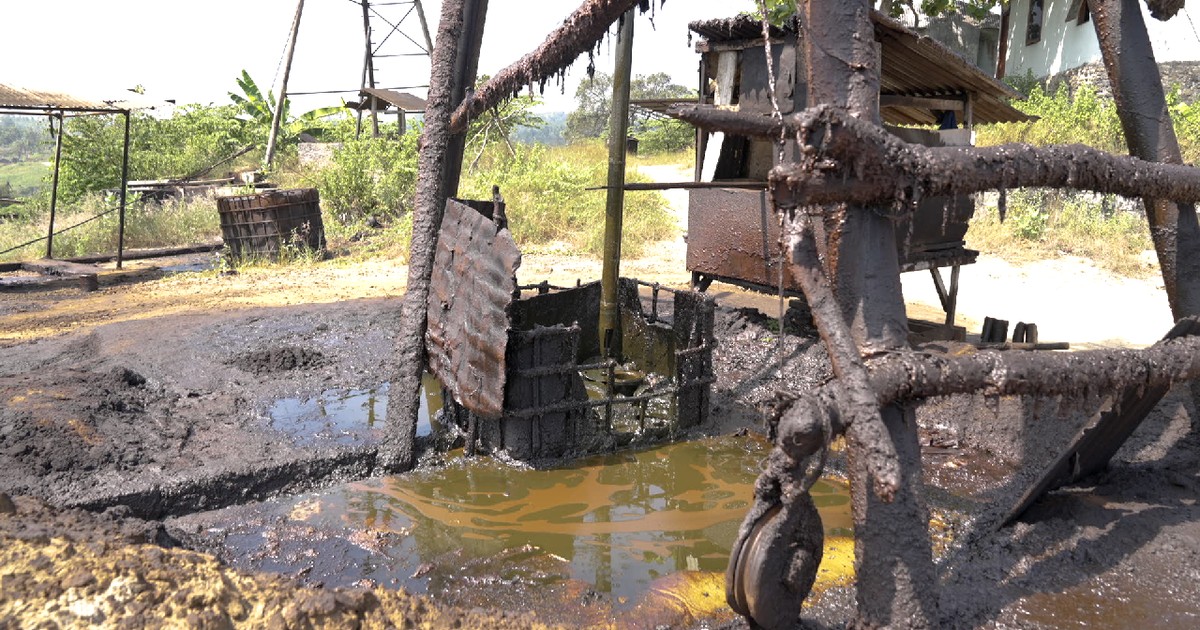
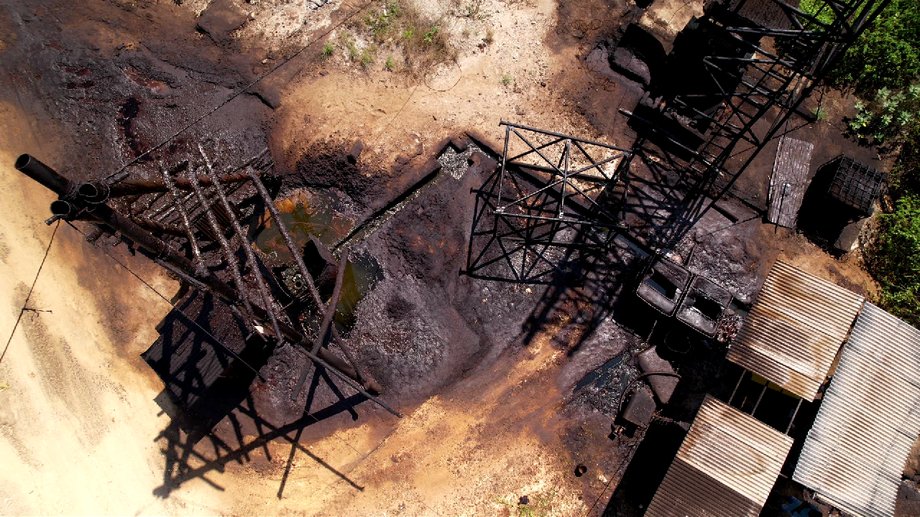
These kerosene windows got stuck in the past. For over 100 years, this is the most lucrative occupation in this distant part of Indonesia, in which the Earth was destroyed by toxic leaks. Employees risk their lives to bring out what else has remained.
– I used to be healthy. My hand got stuck between two pieces of iron and now my finger looks like this – says Pauni, an oil shaft employee.
However, employees are not the owners of this oil. They are forced to sell it to a state -owned company that, according to local, pays so much that they are barely enough to survive.
“I'm afraid of this work, but I can't show fear because I need it,” says Jaenuri, an employee dealing with oil refining.
So why do these old, toxic windows still exist? And how did it happen that thousands of people have to work in them?
The Pauni learned to extract oil when he was only 19 years old. Now he teaches his nephew.
We are forced to perform this work. If we stop extracting oil, our family will suffer
– says the Pauni.
Many of the 700 oil windows near his village in Eastern Java were built by the Dutch at the end of the 19th century. Currently, most of them belong to the locals, but only about 200 still operates.
“In the name of a gracious and merciful God,” Pauni prays.
Pauni always prays with his colleagues before starting work.
– Let's go! – he calls.
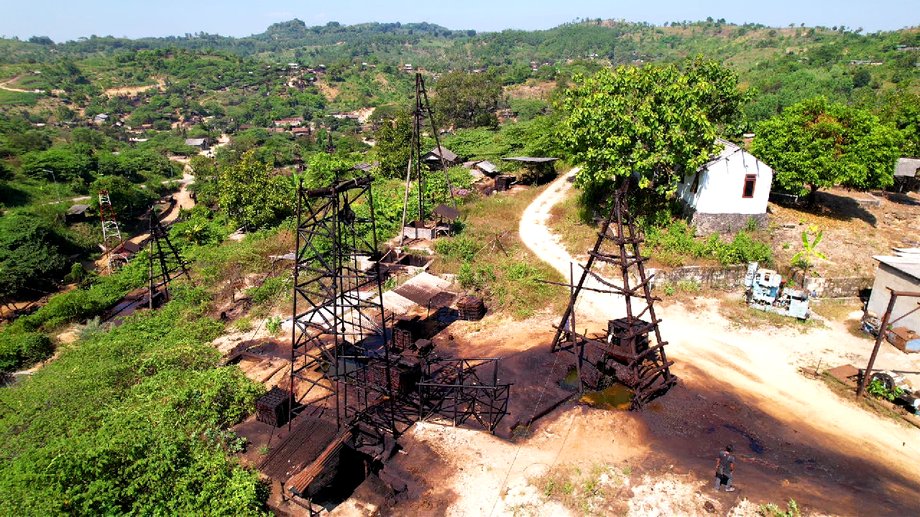
Oil windows built by the Dutch over a hundred years ago are still operating in eastern Java
|
Business Iniser
Here, oil shafts often use primitive tools
The basic tools that employees rely are improvised and rustic. Like the engine that they removed from an old dump truck. They must push the accelerator pedal and brake to immerse and emerge a pipe. This pipe is so -called slurry. It has small holes on the side through which oil affects and flows.
They need a long enough rope to leave the sludge to the oil deposit. At this point, oil is located at a depth of about 305 m, which almost equals the height of the highest building in Indonesia.
When the sludge reaches the bottom, the holes open, let in pus. Then, when the rope begins its way up, the holes close, stopping the pus inside the pipe. Pauni uses this heavy iron rod to drive a sludge down. The whole process is dirty.
Pauni says he sometimes wears a mask to protect against splashing liquid. However, he is most afraid of possible explosion. Old equipment can overheat and light. With such an amount of oil, an open flame can quickly cause hell.
In June 2024, a fire in a different well at Sumatra killed four employees. It is also difficult to keep these wells in good condition for a long time. They are too narrow and deep for people to crawl to them and fix them from the inside.
If the pipe breaks in the hole, it's hard to straighten it. We then have to build a new glass next to the old
– admits the Paunia.
Sometimes the mud clogs the windows and prevents the sludge from reaching the oil.
– We fall into a blind street then – says the employee.
Extracted oil flows into these pools. In its raw form, he mixes with mud and water. Oil flows to the surface within a few minutes, and employees collect it. Pauni's nephew, Joko Mulsono, helps them. They use a vacuum cleaner to transfer oil to the car.
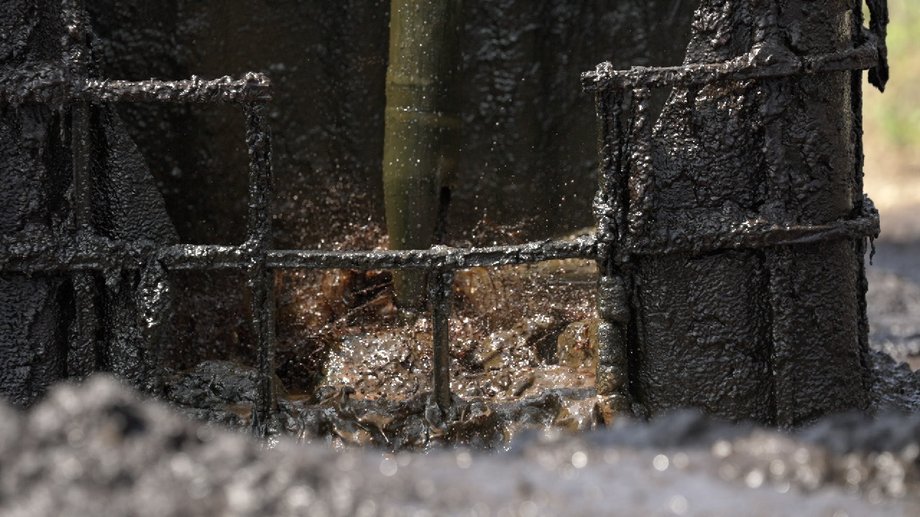
Oil extraction using old methods can end tragically for employees
|
Business Iniser
Oil extraction – how was it once?
About 200 years ago, before the creation of oil shafts, oil was naturally coming out of the ground here. The locals collected small amounts to light lamps and produce medicine.
In 1887, the Dutch, who colonized Indonesia, began large -scale drilling. Their oil company, Royal Dutch, managed many windows and refineries on Eastern Java and brought workers who received low remuneration for work.
With the global increase in the demand for crude oil, mining in Indonesia has also developed, and this land has changed beyond recognition. The Dutch left these areas after Indonesia obtained independence in 1949.
Crude oil, which leaked from the shafts, has already managed to pollute the surrounding soil and water. This significantly hindered the cultivation of the role – the work that provided residents to keep the windows long before the creation.
Oil extracting became the most lucrative work, but it wasn't as much as before. When Pauni started this work in 2004, he could extract up to 3,400 liters of oil a day. Now the extraction of 210 liters takes him a week. There is more of it underground, but the glass is too shallow, and the Paunia has no machines to drill deeper.
– This glass will not make us rich. This is impossible because mining is too low – admits the Paunia.
Although workers are the owners of the Earth, the state -owned company Pertamina has the right to all oil underground. Therefore, according to the law, employees must sell their oil to a company through an enterprise belonging to local authorities. However, they often earn more, selling it illegal refinersthanks to which Pauni can earn twice as much as from Pertamine.
The latest estimates from 2014 showed that the state -owned company lost almost $ 11 million. Annually for employees who sell their oil independently. Even after selling on the black market, employees earn only around $ 12. weeklywhich is not much, even in this part of Indonesia. That is why most employees bring lunch out of the house and share it with others.
– Here are chili with manic leaves and eggs – says one of the employees.
The Pauni pays an additional $ 6 to his nephew. A week for carrying oil to the refinery. Transport has become a separate profession.
– What else could I do? Whether we like it or not, the oil windows are here, so we have to work in this industry – admits Joko Mulsono, a driver carrying oil.
Joko has been doing this for 16 years. He once did about 10 courses a day – each for a different shaft owner – but this number fell to just four or five if the day is hardworking.
“Sometimes I don't have any course if the mining is small,” he admits.
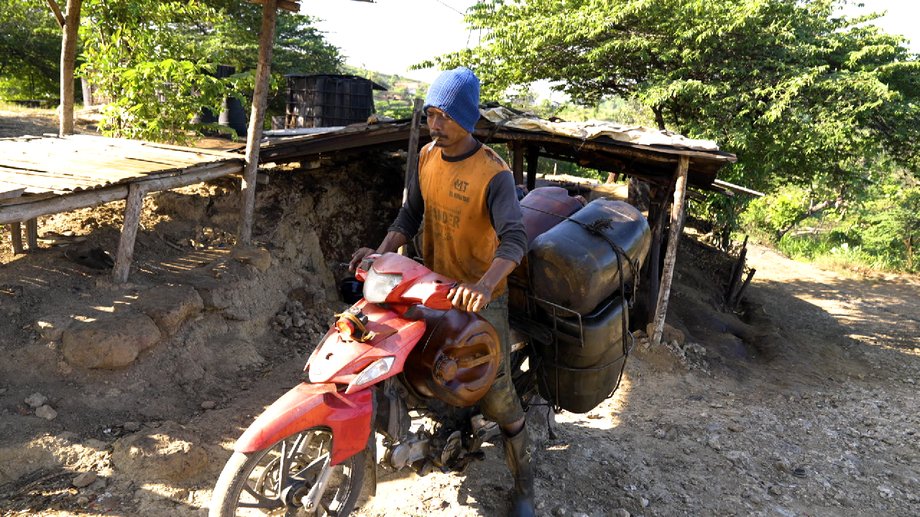
Employees say they have no choice
|
Business Iniser
Working on oil extraction is hard
Pauni's neighbor, Jaenuri, processes oil in this craft refinery using traditional techniques. He works 13 hours a day, wearing and down these hills weighing nine kg containers filled with oil. It pours oil into these 230-liter barrels. First, Jaenuri ignites this underground stove. It uses it to heat oil in this barrel.
It fills it halfway, leaving space for cooking. The temperature must reach at least 300 degrees C. before the evaporation process begins, which is crucial for refining. The steam flows through those pipes that are cooled with water. It turns a pair back into liquid.
– The most difficult part of my work is to remove oil from the pipe after refining, because this process takes a lot of time – admits Jaenuri.
The refined fuel goes to the boiler and is re -heated until it evaporates back through these pipes. Jaenuri repeats this process three or four times to get different types of fuel, such as gasoline and diesel.
We use old techniques used by our great -great -grandfather. We still do it to be able to feed
– says the man.
Throughout the day, employees inhale these vapors, which are a combination of nitrogen, methane and carbon monoxide, which can cause cancer and brain damage. And if the gases are imprisoned underground, everything can explode.
“It's a dangerous job, but I have no choice and I have to do it,” admits Jaenuri.
The whole day of work brings only one barrel of diesel. This is enough to refuel the car three times. Rafineries are also obliged to sell their pelutamine oil, but many of them sell it in small black markets like this.
Locals buy oil for about 60 cents per liter. This is twice as much as Pertamine would pay, although the price varies depending on the global oil prices. The quality of craft oil is worse, so locals use it mainly to drive engines in their windows. Some also use it in their cars, because the nearest gas station is about 100 km. Such a journey would cost them more fuel than they can do during the day.
For oil extraction, employees do not receive sufficient payment to be able to live with dignity
|
Business Iniser
The owners cannot dig windows on their land
Indonesia has sufficient oil reserves underground to supply the whole country for at least four years. Despite this, it imports about half of the oil used, and these craftsmen cannot dig new glass on their own soil. They could be deprived of all rights to oil extraction.
Instead, they must allow large companies to drill in their area – in accordance with the law adopted by the country in 2001 in order to increase foreign investment and accelerate oil drilling.
In the same year, Exxonmobil discovered a nearby oil field and soon signed a contract to help Pertamine in its development. First, she bought 3,000 small landowners. The plant started mining in 2008 and currently produces about 200,000 Baryłek a year, which is about a quarter of domestic oil extraction. Locals say, however, that what they really need from the government are funds for better machines so that they can develop their fields themselves.
– I don't hope and aspiration. Will the government help us? – asks the Paunia.
Therefore, employees find ways to cope on their own because they say they have to. They dig more such shafts to extract the oil in the shallow.
– The legality of oil extraction can be questioned. However, this was passed down from generation to generation, because once the Dutch took over this land. Currently, we want to continue to manage our land so that it is not taken over again – admits the employee.
According to some estimates, extraction from illegally dug shafts exceeds production in those legal by about 10 barrels a day. Meanwhile Locals feel trapped at work that destroyed their land, and now seems to be the only option for stable income.
I can't do anything because my family needs money that I earn from this shaft. I'm trying to earn on oil because I have no other choice
Pauni's family has been practicing mango for generations, but for the last few years his cultivation has died.
– I feel sadness and regret because these areas have become idle. How would I reclaim them? The government should help us solve this problem – says Pauni.
Despite this, the Pauni is grateful for every drop of oil he can get, and for the fact that Thanks to her, his daughter can go to school and have a better life than him.
I currently earn so little from extracting that even covering expenses related to her school is difficult. Money is not enough for us
– says Pauni sadly.