Precursors of off-road cars in Romania. What qualities did the first field cars have and after the model were made


68 years ago, the first off-road car built on the territory of Romania was born. It was about the legendary IMS or ARO M461, an improved variant of a Russian military car. He raged including in South America.
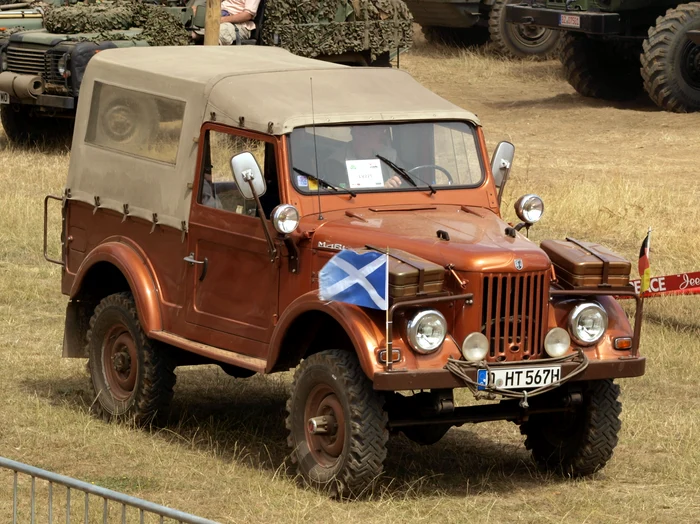
An ARO M461 of the 60s photo Wikipedia
At the end of August 1957, the first car made in Romania was able to face the mud, snow and steep slopes. It was a Romanian off-road of American inspiration, but on the Soviet chain. Pretty complicated, but as true as possible. The model bore the name of IMS 57, suffering over the years multiple improvements. Eventually, a true legend of Romanian car, a reliable car, which helps you do the job regardless of conditions and has become an international star.
Multilateral industry developed from Muscel: from cellulose and paper to gearboxes
The story of the legendary IMS begins, in fact, with Muscelean industrialization. In 1885, at Campulung Muscel, a cellulose and paper factory operated. Cellulose production stopped with Romania's entry into World War II or rather during the pre-preparing military equipment for Barbarossa. The factory immediately changed its profile and the halls in which the paper was produced served to make components for hunting aircraft. More precisely, propellers and machine guns for IAR 80 aircraft, mounted in Brasov. After the war, the factory in Campulung Muscel again demonstrated its adaptation power.
From the propellers he went to motorcycles, in 1953. The Russians required the closure of all Romanian factories that produced armament in World War II. The Musceleni, to survive, also gave up the production of motorcycles. They went to something more harmless: locks. With a generous industrial space for the weather, with numerous workshops, the old factory was used mainly by the Russians for the repair of the military cars of the Red Army. So the mechanics from IMS (the state metallurgical enterprise), as the factory was renamed, began to repair and then produce gearboxes and other components for Gaz-69, the military field machine of the Red Army. Last but not least, the production was extended for the supply of spare parts of all the sovromes (Soviet-Romanian companies by which the Romanian state was actually robbed). However, it was a very beneficial experience for factory people.
The first “off road” car produced in Romania, created after a Russian Willys
After the departure of all the Russian soldiers from the territory of Romania and the dissolution of Sovroms, IMS Câmpulung Muscel thought about adding a bold project. If they still made components for the Russian gas, they also chose to produce a utilitarian car, necessary in the “socialist reconstruction” process of Romania. The model after which they were inspired was Gaz-69, a Russian military car, an off-road car created by Grigoriy Vasserman, a Russian designer and engineer of Jewish origin. Gaz-69 had to replace the older Gaz-67B, the Soviet “Jeep” that led the whole world of World War II on the Eastern Front. The new Gas-69 was in turn inspired by the famous American Willys MB model, the classic American Jeep during the war.
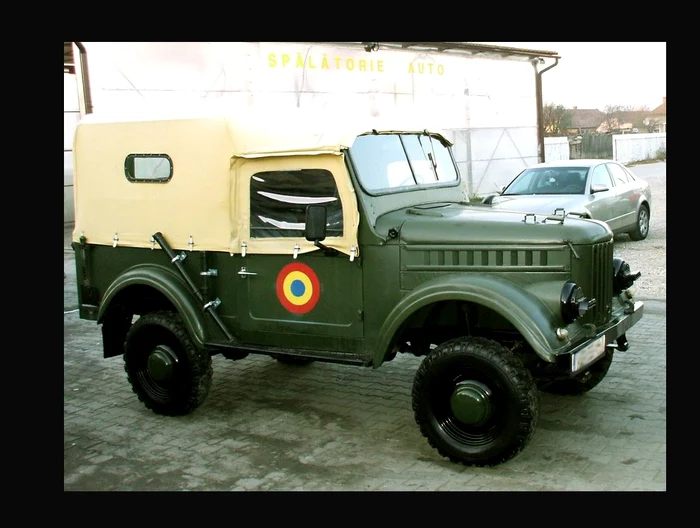
IMS 59 Photo AutomobileRomanesti.ro
US cars have arrived in Russia donated by the American army to support the war effort on the Eastern Front. The Russians were inspired by them and, with the rigorous changes, made their own models, such as Gaz-69. This car had an engine derived from the Molotov, with six cylinders (an American Dodge engine with Russian license), but smaller, of 2100 cubic centimeters and 65 horsepower. Although he did not have many horses, the couple was big and the car was doing his job well. It reached a speed of up to 100 kilometers per hour. Inspiring from Gaz-69 (and implicitly from Willys), Musceleni engineers made improvements and made IMS-57, the first “off-road” produced in Romania. The name of the car comes from the name of the factory the state metallurgical enterprise, and 57 from the year it was produced. It was a real jewel. The body was resistant and resembled design with gas. The car was in two doors and in the back was covered with tarpaulin. It had a 3260 cubic centimeters engine, so larger than the gas-69, and 50 horsepower at 2800 rotations per minute. The maximum speed was 80 kilometers per hour. The fuel consumption was consistent, 24 liters percent of kilometers.
IMS-57 had manual windshield wipers. The windshield was two pieces and the passengers were sitting on a banquet. Interestingly, although the gearbox, the body or chassis are identical to those of the Russian gas 69, the engine is inspiration. IMS 57 started using the starter (a device used to put into operation an engine, at IMS 57 with the help of a pedal located in the center of the pedal area). It was an ideal car for the beginning period of industrialization and collectivization with clogged roads, sites and rough terrain. It also had storage spaces sufficiently roomy. IMS 57 was clearly a roadblock. After two years, in 1959, the IMS-59 model appears.
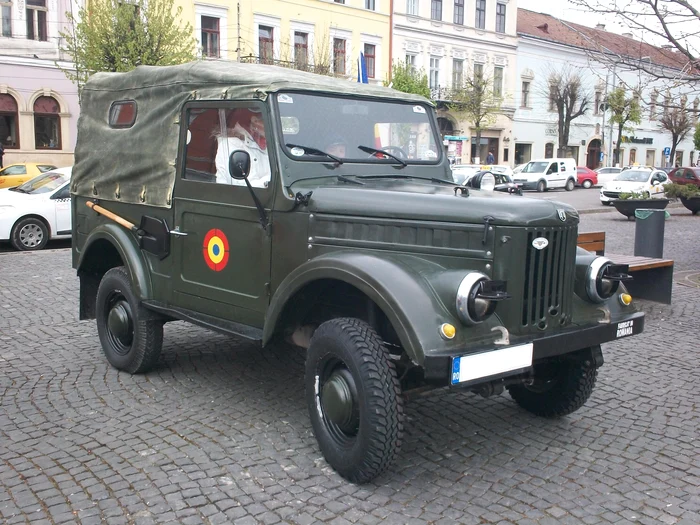
Ims photo wikipedia
IMS-59 was an improved variant. It had several horsepower, 56. The maximum speed had increased at 90 kilometers per hour, and the windscreen wipe was already electric. There were also four -door variants, but also truck type with the bent. The IMS began to conquer the public. Especially those who had to cross bad roads or nomelaturists who enjoyed with hunting and fishing. IMS was the favorite of party activists when it came to recreation. It was solid and did not let you be on the mud. Until 1963, the number of cars produced and sold passed 3200.
A Romanian automotive legend
In 1964, the production of the most successful IMS model began. It's about M461. This model resembled the predecessor, but it was much improved. Its design started in 1961 with sustained tests, especially since the previous models had some problems with steering systems. Thousands of tests were performed, including drawn to the western 4×4 models, especially Land-Rover. Finally, this M461 appeared. It had an engine of 2500 cubic centimeters, on the bezine, with 70 horsepower. Could develop a maximum speed of 100 kilometers per hour. Consumption has decreased considerably compared to previous models. That is, 17 liters per hundred kilometers. It was a robust model, capable of special performances “off road” for those times.
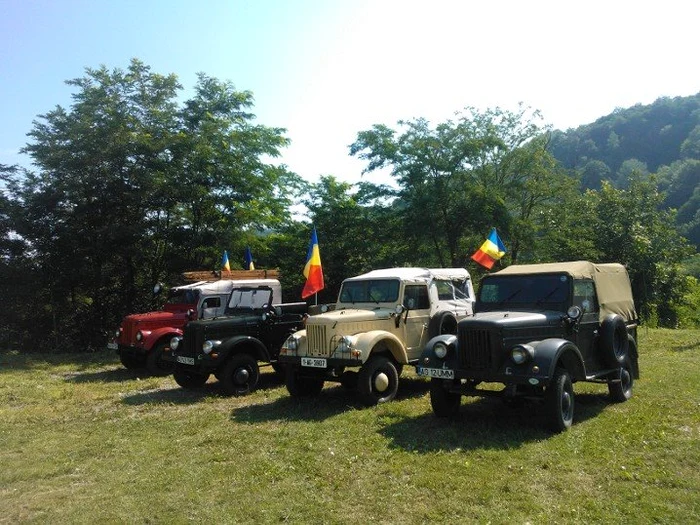
IMS Photo Museum of the Romanian car Câmpulung Muscel
It is said that he could do at least 100,000 kilometers without major repairs. The M461 was also held in international competitions, beating the counterparts in the Western area. An IMS M461 won in 1970 Forests Rally in Belgium, as well as the 1973 edition of a strong Oregon competition. Reliable, interesting, quite cheap, M461 found its place on the international market. The first time they were exported to China, and then to Colombia. There followed another 30 countries on four continents. More than 80,000 units of this model were produced, more than half they went to export. There were South American countries that produced them under license. Even in Egypt, being called “ramses”. The Romanian army used them for a long time. He has participated in numerous automotive salons, being noted and even awarded. After 1975, its production focused on the new ARO models.