A physicist proposes to use the largest month in the solar system as a huge detector of dark matter


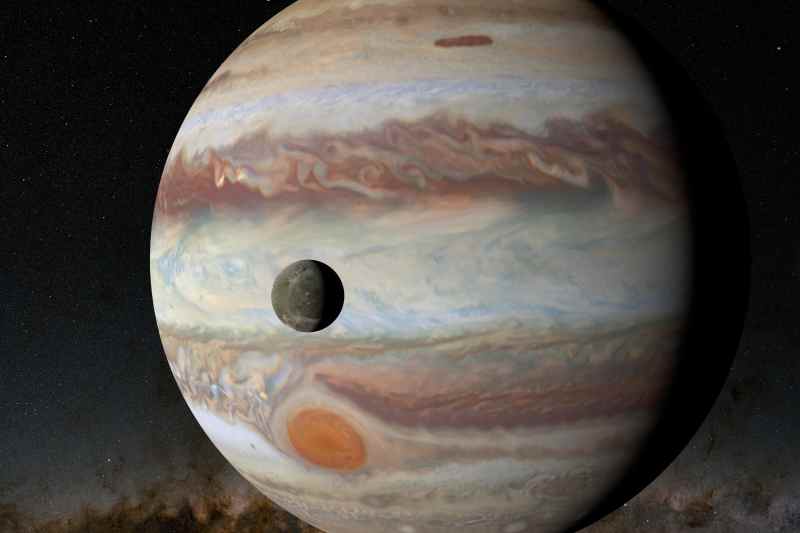
Luna Ganymede orbit around the planet Jupiter, Photo: Shutterstock
When you are looking for the unknown, the classic wisdom of physics suggests that a larger detector increases your chances of discovery. A physicist who follows this advice has advanced a bold plan to use Ganymede, the largest month of the planet Jupiter, as a dark matter detector, Gizmodo reports.
The dark matter refers to the “invisible” mass that scientists believe is 85% of the universe. Over the years there have been considerable evidence to confirm the existence of this type of matter, but its “dark” nature-a reference to the fact that it does not respond to light and interact very weak with other types of matter-makes it extremely difficult to detect.
The search for dark matter has tested the limits of the creativity of the physicists, but a proposal made by William Derocco, a physicist at the University of Maryland, could be the most unusual so far.
With an area of about 87 million square kilometers, Ganymede is not only the largest month of Jupiter, but also the largest in the entire Solar System, being even larger than the planet Mercury and Pitic Planet.
How the physicist believes that dark matter can be discovered on Ganymede
In a work published on the arxiv platform, Derocco suggests that Ganymede's craters could keep evidence of dark material particles, which wells such as the NASA or Juice Europe of the European Space Agency (ESA) could see during their missions.
The work, which has not yet been evaluated by colleagues (“peer reviewed”), notes that massive particles of dark subject could have hit and penetrate the thick and frozen surface of Ganymede, leaving deep and extended ruptures.
Unlike small candidates for dark matter, looking for detectors on Earth, these particles would be much larger.
According to Derocco's theory, these oversized particles of dark matter would create “dark matter craters” – depths on the surface of Ganymede, made up of distinctive minerals brought from the deep layers of the oceans of the Moon.
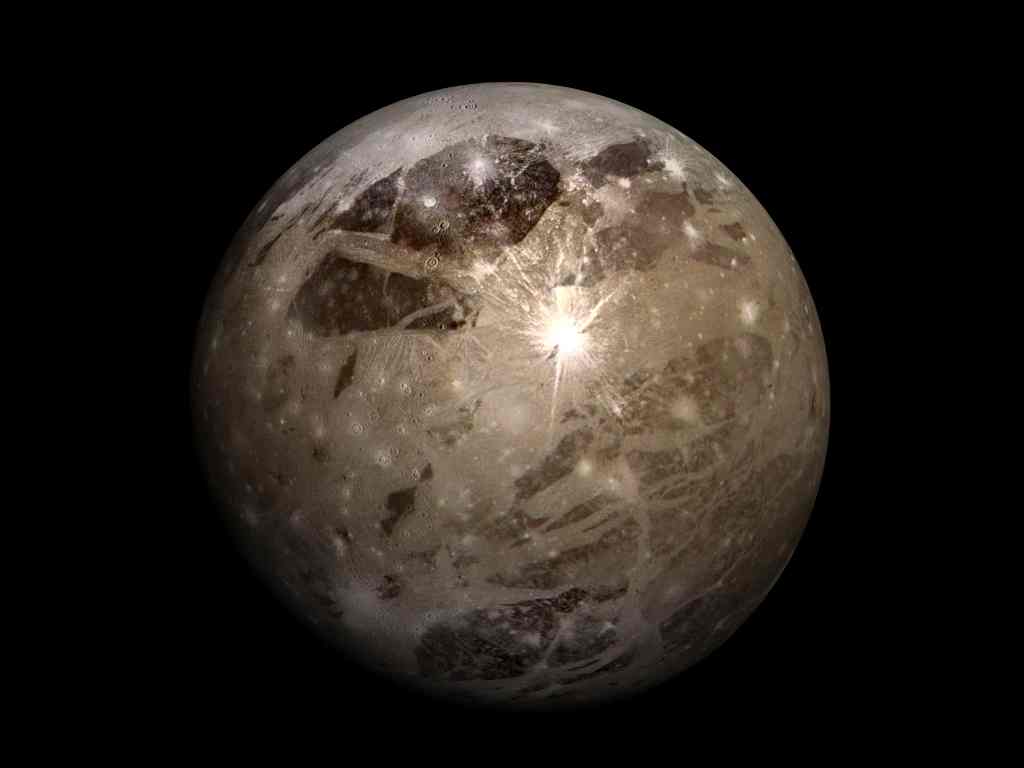
Detecting dark matter would solve one of the great mysteries of astrophysics
“If you used something like a soil penetration radar, you could see this melted ice column that descends down through the ice layer,” Derocco explained in an interview for New Scientist magazine. Studying Ganymede's surface based on this hypothesis could reveal unexpected prospects about the dark cosmic matter, according to the work published by the physicist.
Bradley Kavanaugh, an astrophysicist at the University of Cantabria, Spain, who was not involved in the study, told New Scientist that, in principle, the proposal sounds promising.
However, as with all the experiments that have researched the dark matter, there is no conclusive evidence that such heavy and massive particles of dark matter really exist.
Even though the proposal formulated in the new work seems extravagant, many physicists believe that solving a mystery of physics often means testing bold, unconventional ideas. The big question is whether NASA or ESA want Derocco's idea after its work is evaluated.