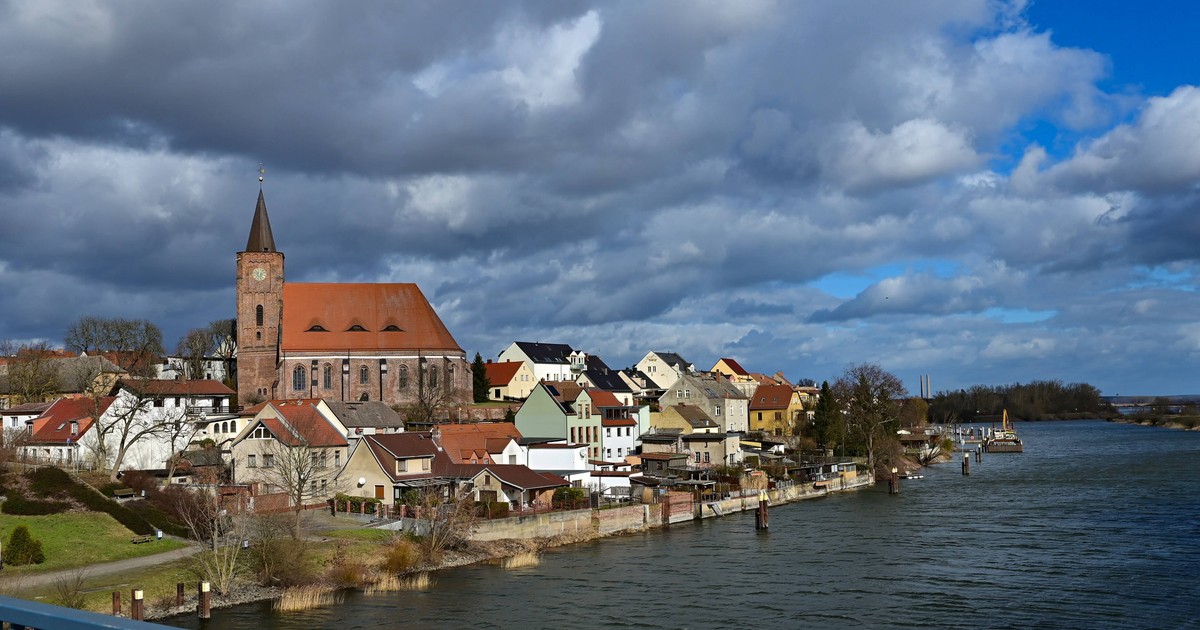
The city of Eisenhuttenstadt in Brandenburg in a unique way fights the outflow of the population and the lack of qualified employees: interested persons can get to know the city during a two -week free “trial apartment” and in an ideal case to settle there permanently. However, the requirements for candidates are high.
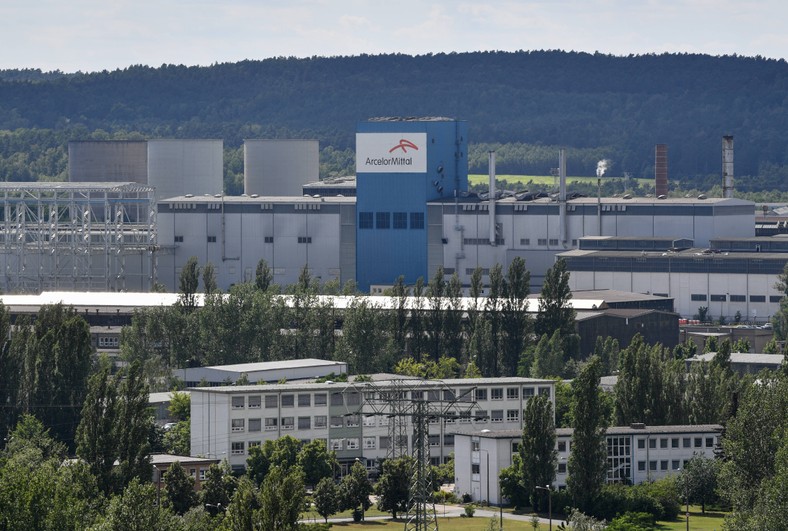
Eisenhuttenstadt very rarely appears at the Center of World Remarks of the World Public Opinion. However, this happened at the end of 2011, when Tom Hanks came from the film “Atlas of Clouds” from Berlin to this city in Eastern Brandenburg. Shortly afterwards, the actor in David Letterman's program presented the idea of urban planners behind “Iron Hut City” to the Americans [“Miastem chat z żelaza”]. It was built from scratch in the early 1950s. With the steel steel, from which its name came from. According to Hanks, the communists wanted to show there, “how wonderful and wonderful life is, which socialism provides them.”
Now Eisenhuttenstadt has again hit the first pages of newspapers around the world: the mayor Frank Balzer, a social democrat, together with his colleagues, invited at the end of spring to a two -week “trial stay” so that the interested parties could learn about the benefits of living in a small city. The campaign was informed in Europe, Asia, Africa, South and North America. Project manager Julia Basan was very impressed with the reaction: – We had the pleasure to choose from over 1,700 applications that reached us from all over the world. This is a huge response – she assessed. “Realistic” applications were “most”.
Basan does not hide that he is happy with the advertising effect. “It can be said that our project has been promoted all over the world,” she said at a press conference. What looks like a PR action worthy of the “heute-show” program for some [wieczornego programu satyrycznego prowadzonego przez komika i dziennikarza Olivera Welke]However, it is a serious initiative that has one goal: “We want to ensure the influx of new residents and qualified employees.” Eisenhuttenstadt, like many other cities in eastern Germany, is struggling with a serious decrease in population. Just before unification, about 53 thousand lived here. people, currently there are about 24,000
Patrick Pleul / PAP
View of the area of the ArcelorMittal Eisenhuettenstadt GmbH in Eisenhuettenstadt, Germany, Germany, 3 July 2017.
Long list of conditions for candidates
In order to protect the concept of abuse, misunderstandings and slander, only German citizens and foreigners from EU countries who speak German very well, “have an important work permit and seriously consider moving to Eisenhuttenstadt permanently”. “. On the city's website you can read about the program: “The project is not an immigration or visa program. We do not issue visas, residence permits or work.” Those who hoped for lazy spring and two weeks without rent, read: “This is not a holiday program, Work & Travel [pracuj i podróżuj] nor to study. “
Until July 5, lonely people and families could apply for two municipal apartments. As a decisive selection factor in the two “winners”, the Basan manager gave “internal motivation that says: Eisenhuttenstadt – I can really imagine it.” One of the chosen one is Jonas Brander, a documentary filmmaker. As he claims, he is currently working on a project regarding “living history of Eisenhuttenstadt”. The 39-year-old, who currently lives in Berlin, talked about “very much interest in this place and people”. He said: “Since I live here, I feel very close to my life. That's how I came to Eisenhuttenstadt.”
The second apartment will temporarily occupy a 49-year-old IT consultant Melanie Henniger. As a reason for changing her place of residence, she gave family circumstances: “I am going through a transformation myself now. My children are adult, independent.”
Henniger comes from Frankfurt on the Oder, located about 30 minutes by car north of Eisenhuttenstadt. However, as she claims, she has been living in northern Germany for almost 40 years, currently in Bremen. As she said, her family roots in Brandenburg were completely broken: “It's a great opportunity to get to know this region again. At best, I will be able to take the roots there again.”
The trial stay is scheduled for a period from 6 to 20 September. The city does not want to “cheat” Henniger and Brander and show them only the best – Basan emphasized. “We want our residents of the samples to know the real life here.”
The authorities clearly require the participants of the program to participate in the city's life. For example, “internships in local enterprises, cooperation in associations, initiatives or projects”, as well as “participation in cultural or networking events” were mentioned as “possible forms of commitment”. In addition, according to the announcement, the casting winners should write “a love letter” to Eisenhuttenstadt: “Completely honest, creative and with a personal look.” The project manager adds: “A love letter does not always have to be nice.”
Continuation of the material under the video
Not a word about politics
A glance at social media shows what it is about: like the whole East, Eisenhuttenstadt struggles with judgments and prejudices. In the elections to the Bundestag in February, the extreme right -wing Alternative for Germany (AFD) obtained about 40 percent. the votes of the first and second choice, i.e. twice as much as the Social Democratic Party of Germany and the Christian-Democratic Union. There have been opinions on social media that a significant part of the inhabitants want “the opposite” than immigration: “They want to throw people away!”
The British daily “Guardian” referred to high support for AfD in Eisenhuttenstadt, but also wrote that many residents say that “although there are many dissatisfied voters, they are not giving the tone in the city. They describe the city as friendly, open and even optimistic.” The weekly “Der Freitag”, published by Jakob Augusttein, caught the article “Guardian” and focused only on politics. The introduction wrote: “Now the city threatens that it will become a ghost city. Will he manage to get rid of the far-right image and attract new residents?”
The initiators of the campaign omitted the issue of politics – apparently consciously, fearing that otherwise it would be said again and write only about what could harm the action. They emphasize the advantages of a small city – “uncomplicated, inspiring and adapted to your pace” – and opportunities. According to the mayor Balzer, who does not run in local elections at the end of September, currently there are 250 free jobs in Eisenhuttenstadt. Basan informed about ongoing talks with candidates who were not invited to a test stay, but they can still imagine life in this place. One family will move permanently to Eisenhuttenstadt in a few weeks, it's already established.
Gubin, a city located 30 km south of Eisenhuttenstadt serves as a model. According to the mayor of Fred Mahro (CDU), “the second round of trial residence” is already underway. According to his spokeswoman Laura Lehmann, applications came “from all over the country and the European Union”, but also “from abroad – among others from Brazil”. The spokeswoman described the spectrum of candidates as follows: “From families with school -age children, through professionally flexible people, to seniors looking for an inexpensive and peaceful place to live.”
According to Lehmann, in the first round, from April to the end of September 2024, a total of 33 people lived “for several weeks in furnished guest apartments” belonging to the commune. They were happy. “The continuous flow of consumption, known from the city agglomerations, practically does not exist in Gubin – which has both advantages and disadvantages. However, in terms of everyday stress levels, definitely the advantages prevail.”
At the end of the “first series”, six people actually moved with all his belongings to Gubin, according to the city. “It's definitely a success for us,” the authorities comment.
I’m Ashley Davis as an editor, I’m committed to upholding the highest standards of integrity and accuracy in every piece we publish. My work is driven by curiosity, a passion for truth, and a belief that journalism plays a crucial role in shaping public discourse. I strive to tell stories that not only inform but also inspire action and conversation.