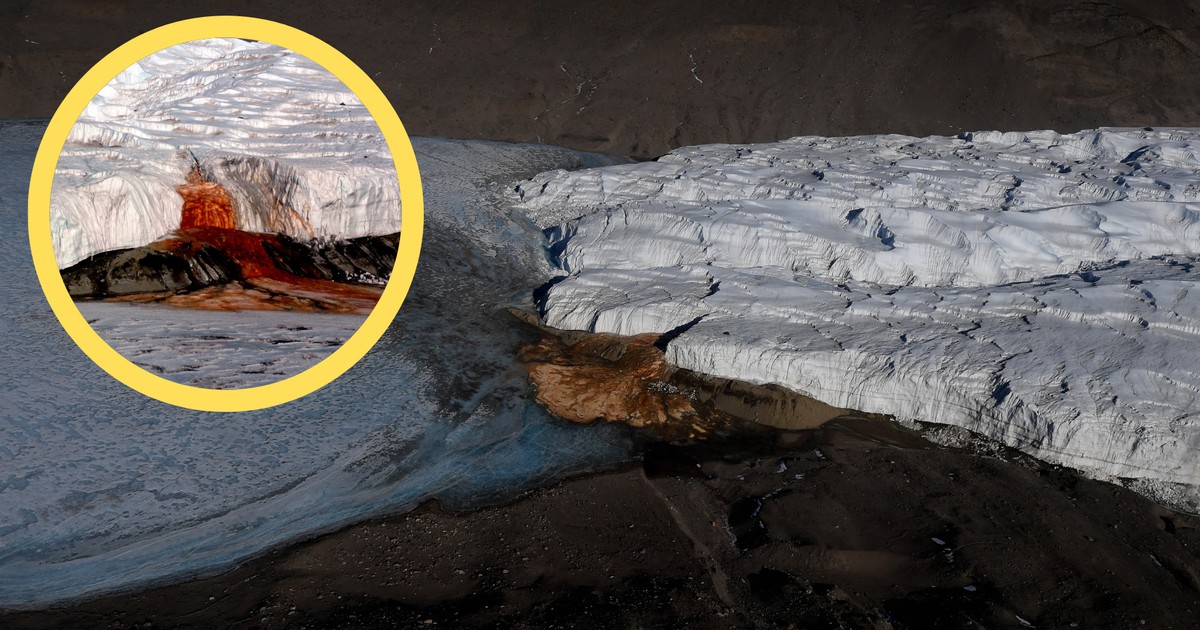
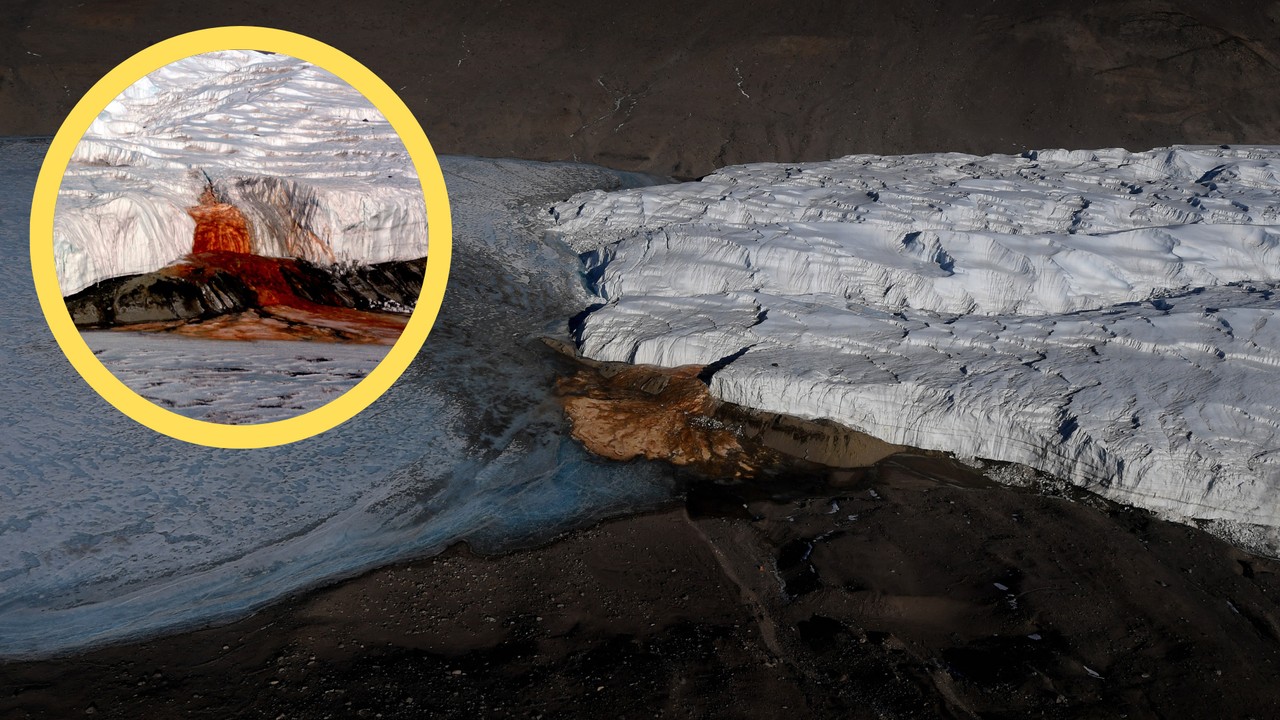
Why does red -circular water flow out from under the glacier? Why, despite the low temperatures prevailing in Antarctica, does not freeze the stream? Discovered in 1911 by the Australian geologist Thomas Griffith Taylor during the British expedition Terra Nova, the blood waterfall remained a mystery for a long time. The discovery aroused amazement and anxiety. Only contemporary research brought answers to questions that bother researchers for decades.
The blood waterfall has been intrigued for decades. An unusual phenomenon has been explained
The blood waterfall was first noticed in 1911, when Thomas Griffith Taylor exploded the valley later named after his name. “Among the extensive ice landscape, I noticed something unusual – a stream of water with an intense red color, flowing from the glacier, as if he was bleeding,” Taylor recalled, describing his discovery.
Initially, it was thought that red water color could be the result of the presence of red algae that could give it a characteristic color. This hypothesis, although logical, turned out to be wrong. In the 1960s, scientists determined that the color comes from the high iron content in water, but they still did not understand where this water came from or how it could flow at -19 degrees C.
A breakthrough in blood waterfall research occurred thanks to modern technologies, such as electron microscopes and spectroscopic analysis. In 2006 and 2018, scientists from the Johns Hopkins University, under the leadership of Ken Livi, took water samples from the Taylor glacier and analyzed them in laboratories.
Discovered that The red color comes from iron -rich nanoparticles, which are released when the water from the glacier comes into contact with oxygen. “As soon as I looked at images from the microscope, I noticed these small nanocups, rich in iron,” Livi reported. These particles, which are the result of ancient microbes, are a hundred times smaller than human red blood cells and also contain silicon, calcium, aluminum and sodium. It is the reaction of iron oxidation in contact with air that gives water its bloody shade.
One of the most amazing aspects of the blood waterfall is the fact that the water remains liquid at extremely low temperatures. The answer to this question was found by a group of researchers from the Alaska University in Fairbanks in 2003, headed by Erin C. Pettit. Using Radio-ECHA technology, they discovered that water contains an extremely high level of salt, twice as high as in sea water.
In addition, when the water begins to freeze, it releases heat (so -called heat shredded coagulation), which heats the surrounding ice, enabling further brine flow. It makes him Taylor's glacier is the coldest known glacier from which water flows out.
The blood waterfall is not only a chemical phenomenon, but also a window to the ancient Antarctica past. Scientists estimate that the water flowing from the glacier comes from the lake, which existed about 1.5 million years ago. This lake was imprisoned under the glacier, when it moved over it, closing the water under a thick layer of ice.
What's more, in this isolated water a community of microorganisms was discovered, which survived in extreme conditions, without access to sunlight and oxygen. These bacteria use the process of chemosynthesis, deriving energy from chemical reactions with sulfur and iron.
The latest research published in 2025 in the journal “Nature Communications” revealed even more fascinating details. An innovative electromagnetic sensor was used, transmitted by a helicopter, to examine the sub -surface structures of the Taylor Valley. It was discovered that there is a wide network of underground rivers and lakes under the glacier that connect to the bloodfall.
Studies have shown that the brine extends at least 12 km deep into the land and has twice the salt content than sea water. This underground network can be a remnant of larger lakes, which once filled the valley, or after the ocean reservoir, which left traces after its withdrawal.
The blood waterfall is also of great importance for astrobiology. The environment under the Taylor glacier resembles conditions that can prevail on other planets, such as Mars or the Moon of Jupiter. Microbes living in ice insulation are proof that life can exist in extreme, seemingly unfriendly places.
Contemporary discoveries not only solved a century -old puzzle, but also opened new perspectives for science, from geology to the search for extraterrestrial life. Future space missions will have to use more advanced technologies to detect traces of life in similar environments. Studies conducted by the American microbiologist Jill Mikucki showed the presence of as many as 17 types of different microorganisms in the blood waterfall.
.