According to a study published in the scientific quarterly “Environmental Research Letters”, nuclear winter would cause “unimaginable losses in people” due to the destruction of agricultural crops.
Corn, the most important cultivated plant in the world, could not grow due to the lack of heat and sunlight. Scientists explain that they saved from nuclear explosions they would have to struggle with hunger on a large scale.
Nuclear weapon releases huge amounts of energy in the form of an explosion, heat and radiation. Smoke arose as a result of fires caused by nuclear weapons would rise in the atmosphere, blocking sunlight. The resulting darkness would lead to frosts, destruction of crops, mass hunger and death – the phenomenon that we call “nuclear winter”.
Continued article under video material
“If we want to survive, we must be prepared even for unimaginable consequences,” emphasized Yuning Shi, author of the study and specialist in the field of plant sciences from the Pennsylvania University.
Nuclear war scenarios
Scientists have simulated corn production in 38 thousand. 572 locations around the world, taking into account six scenarios of nuclear war with growing severity.
Depending on the scale of the conflict, the decrease in corn crops would be different. A regional nuclear war, which would release about 5.5 million T soot into the atmosphere, could reduce the global corn production by seven percent. annually.
In turn, the global large -scale war, which would release 165 million T soot into the atmosphere, could lead to a decrease in annual corn harvest by 80 percent.
Decrease in global production by 80 percent It would have catastrophic effects on humanity, leading to a large -scale global food crisis.
Even a seven percent decrease in global crop production would have a serious impact on the food system and the economy, leading to a reduction in food safety and hunger.
Life tragedy on earth
The authors of the study warn that the total nuclear war and nuclear winter “would be disastrous for humanity.”
“Nuclear wars would cause an unimaginable loss of human lives and genetic resources, as well as the prolonged nuclear winter, which would limit the crop surface and production efficiency for years” – adds a team of scientists.
Serious disruptions of supply and trade chains may deepen this situation, leading to regional or global hunger.
Scientists emphasize that as the climate returns to normal, high levels of UV-B radiation can still destroy crops, and The effects will be felt for many years after the nuclear conflict.
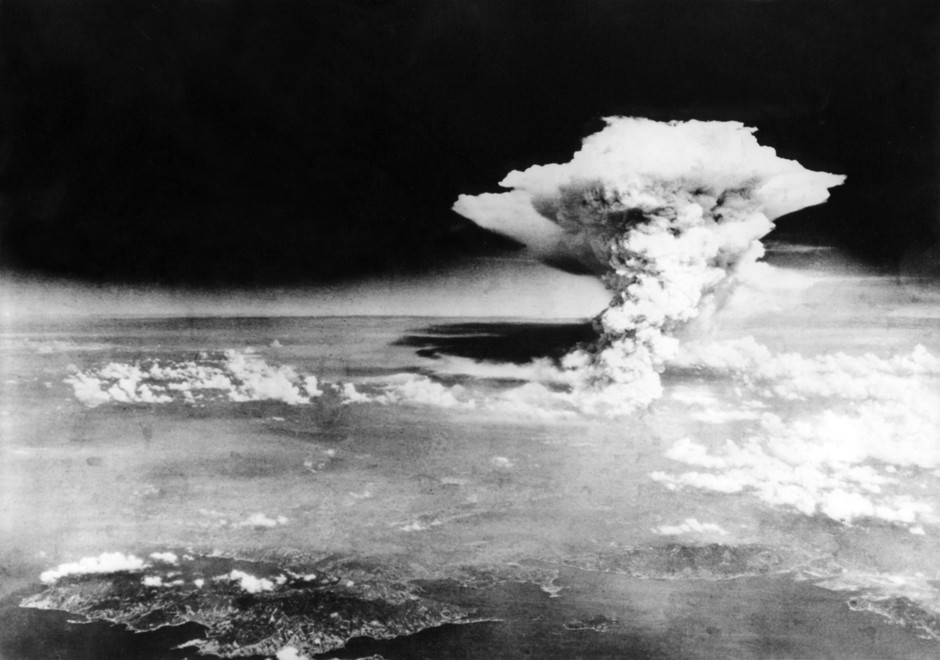
An explosion of an atomic bomb over Hiroshima, August 6, 1945.Pictures from History / Universal Images Group via Getty Images / Getty Images
Nuclear war on a “limited” scale would mean the use of 100 atomic bombs with a capacity of 15 KT each (the same as in Hiroshima), which is only 0.1 percent total nuclear arsenal of Russia and the USAaccording to another study conducted by Paul Ingram from the Existential Risk Research Center (CSER) at the Cambridge University in Great Britain, which was published in 2023 by Science Alert.
Scientists estimate that the “limited” war would cause 27 million direct fatalities and 225 million additional deaths due to hunger.
In the extreme case, the full -scale nuclear war would lead to 400 million direct fatalities, and over 5 billion people would starve as a result of its effects.
I’m Ashley Davis as an editor, I’m committed to upholding the highest standards of integrity and accuracy in every piece we publish. My work is driven by curiosity, a passion for truth, and a belief that journalism plays a crucial role in shaping public discourse. I strive to tell stories that not only inform but also inspire action and conversation.