The boycott of the beginning of the school year. Experts warn that students are collateral victims: “Children are just meaningful arguments”


The school year 2025–2026 is threatened by a tense debut, against the background of the open conflict between the Ministry of Education and the unions. This is after the latter announced clearly and sparked that the school will not start on September 8, the official date set by the school year calendar.

Tuesday, August 12, the tenth day of the Trade Union Protests of PHOTO Adevărul
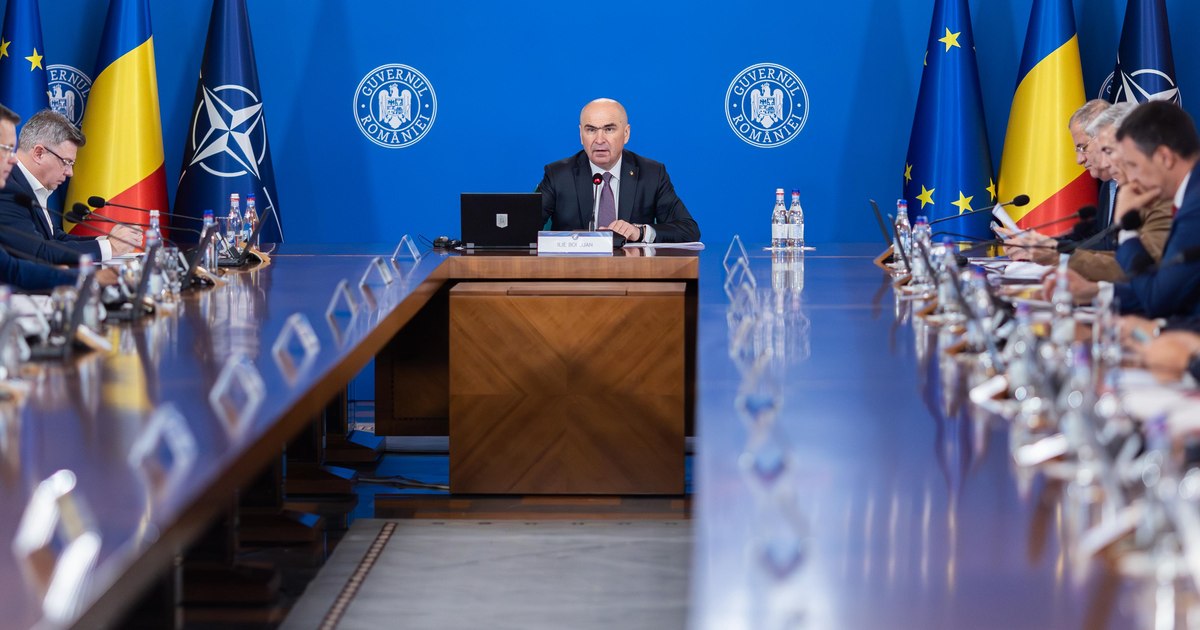
After nine days of demonstrations, the negotiations between Prime Minister Ilie Bolojan, the Minister of Education Daniel David and the representatives of the union federations failed. The members of the main unions in education gathered again, on Tuesday, August 12, in front of the Ministry of Education, being the tenth day when they vocalize their dissatisfaction.
The trade unionists have announced clearly and sparked that the school will not start on September 8, the official date set by the structure of the school year. Moreover, they scheduled a national rally in Bucharest in which over 30,000 members would participate.
Parents' position: “Education is an investment, not an expense”
Contacted by Adevărul, Cătălin Nan, the president of the National Federation of Parents, draws attention to the fact that the protests directly affect families and the climate between school and community.
The main concern is the lack of predictability of the school year and the effects of its disturbance on the family organization and the integration of the students after the holiday.
“From the parents' perspective, the main concern, everyday, in the end is the predictability and stability of the school year and the system. It is clear that a possible postponement or disturbance of this stability, has direct effects in family planning, in integrating children after summer holidays and, above all, in the climate of confidence between school, students and families, which seem to be destroyed from year to year. It seems to work on undermining this climate of confidence: and the parents are to blame, as well as the teachers, as well as the ministry, and that the money is to blame. Year by year, we seem to enter with bigger problems“he says.
He also emphasizes the lack of an impact analysis and the accelerated character of the adoption of measures:
“The measures were adopted in an accelerated calendar and a limited public consultation. I think here is the great dissatisfaction. Without having a published impact analysis. These aspects feed legitimate questions and concerns.”
The leader of the national federation of parents says not only that he took note of the announcements of the unions, and even a point of view is requested and a face -to -face meeting is to take place. Cătălin Nan states that he supports teachers, but once again calls on a real dialogue, to find a fair solution, for all parties involved.
“As a representative federation, I want to be very clear that we respect the right of teachers to support their claims. By legal means, even by boycot. However, we make an appeal to all the parties involved: the Ministry of Education, Trade Unions, ISJs, to continue the dialogue and to clarify the substantiation of these measures. To reach a point of understanding, because we are now only the exponents who suffer from these measures and protests.
There should be transparent communication with parents and students, to minimize any negative effect“says Cătălin Nan.
In parents' vision, education must be viewed strategically:
“Another aspect is that education should not be regarded as an expense, as the other ministries are viewed. From the point
our
of green, Education is an investment, in the medium and long term, in the citizens of Romania, through children. We understand that it is a crisis, that we are going through a very difficult time, but investments in education must continue.“
The proposed solution is a radical one and diametrically opposed to the current situation:
“The solution would be to repeal these measures, to assume the Bolojan government to repeal these measures and to invest more in education.”concluded Cătălin Nan.
Expert in education: “It's about anything else, not children”
The perspective of Gabriele Bartic, an expert in education and COO Brio, goes on the victims of this war between teachers and state. None other than students.
“The non-commencement of the school year at the established term has the most diverse implications for the system, the first and most handy being the effective shortening of the time for education. I dare, as in the case of the previous strike, to say that the main loser are the children. Then, naturally, the teachers who, instead of returning to the class”she says.
Bartic also observes a fracture among education staff, but a social division.
“Here we have the discussion if the teachers will all adhere to the trade union movement and to what extent they (more) feel represented by the current union leaders. Some support the trade union movement, others not, noting that they are aligned with the austerity measures. And then the society in general, because we do not believe that they are not more than 20-30. school. ”
His major criticism, in this conflict: the child is no longer the center of the real concerns of the actors involved.
“Education is about children and the way they can become better citizens of this country. (…) No austerity measures are thought of having the child in the foreground, but neither is the trade union struggle. And when in education it is about anything else – chairs, norms, salaries, uncertainty of adults – to hide it.”
“A toxic divorce”
To describe the current atmosphere, the education expert uses a strong metaphor:
“We are like in the case of a divorce in which none of the parents listen, believe or support the other, but claim that everything they do is on behalf of children. It's not for a long time about children, it's about two shouted monologues in which children are just meaningful arguments. ”
Regarding solutions, Gabriela Bartic proposes a radical change of attitude in dialogue.
“The dialogue can be restored if the actors are willing to understand that the measures are decided, and all we can do is find ways in which these measures affect children and adults as little as possible (…) and the others – that any change needs time for acceptance and much dialog.Re“,
He is a specialist of opinion.
In his opinion, the central problem is not only austerity, but the total blockage.
“Now, no one seems to want to advance. And this type of blockage is the worse for the system. And, my obsession, for children, who not only understand nothing but do not see the adults around them for their actions“,
concluded Gabriela Bartic.
Common points and divergence
Both voices confirm that the students are the main affected, that the dialogue and the clear substantiation of the measures are missing. Both the president of the National Federation of Parents and the Expert in Education, observes the poor communication and demand the real involvement of all the parties.
Gabriela Bartic believes that the changes are already adopted and that the realistic solution is to adapt and minimize the impact, not the complete cancellation.
The current education crisis remains the result of a chain of accelerated political decisions, poorly communicated and insufficiently based, to which a trusted break between the government, teachers, parents and students has been added.
The boycott of the beginning of the school year risks generating irrecoverable losses during teaching, deepening social polarization and eroding, in addition, the credibility of educational institutions, draws the two experts.