Meg Josephson has tried to satisfy others since childhood.
Raised at a house, which she describes as unstable, she remembers how she watched her father's reactions, desperately trying to alleviate tension.
Being a perfectionist and constantly being in the mode of action gave me a sense of security
Josephson said in an interview with Business Insider. “It was the only thing I had control to control my dad's moods.”
Please the new reaction of the young to anxiety
However, when she left the house, she realized that satisfying others was her standard reaction, even when no one really was bad for her.
It was when she began to go to therapy herself, she understood how much she consisted in the reaction of submission to fear – instead of being reacting to the fight, escape or freezing.
Creating from this reaction inspired her to become a therapist. Now, he says, many of her clients and observers from the generation of Z seek special difficulties with the need to satisfy others.
Social media and digital communication have played a huge, huge, huge role in reaction “please survive” generations with
Josephson said.
Online life intensifies rejection and makes it much easier to seek acceptance, which means that Representatives of the generation with who tend to satisfy others may get stuck in an endless loop of searching for acceptanceshe said. Josephson titled her upcoming book “Are You Mad at Me?” (Are you angry with me?), Which appeared on August 5, because he often hears this term in everyday conversations.
Fortunately, being an excessively satisfactory person is not a permanent feature, she said. Even representatives of the Z generation can get rid of this reaction – if they are ready to get rid of it.
The generation with feels rejected. Wine social media?
The classic precursor of satisfying others is upbringing in a dysfunctional environment or by emotionally immature parents. This would not make a generation from a unique generation. Reactive or aggressive parents have always existed.
Despite this, it is an online world in which representatives of the Z generation grew up, makes them feel abandoned more often, which triggers in them the need to ensure that their relationships are stable.
Currently, there are so many ways to make contacts, and therefore so many reasons to feel forgotten
Josephson said.
While previous generations were limited to personal interactions, letters and telephone conversations, representatives of the Z generation may feel appreciated – or rejected – by much more. Their best friend did not “like” their photos on Instagram. The person they like left their private message. A group of friends published Snapchat without them.
This can lead to a desire to please, which Josephson thinks is “almost more modern response to a threat” compared to the reaction of the fight or escape.
An irresponsible message may not be terrifying enough to cause a physical escape, but it can put pressure on someone to send more explanatory messages in desperate hope that a friend is not bad on them. The reaction of submission, in fact, is: “I need this external confirmation to know that I am safe” She said.
What more complicates the matter, online life is full: posts on how people should behave and opportunities to be misunderstood.
We don't leave much space for nuances because we want absorbable, short and concise information
Josephson said.
She said that one of the first steps to heal is to realize that we are all bombarded with high expectations, which strengthens “This absurd standard, to which we use ourselves internally.”
Infinite source of assurances with the trap of the generation with
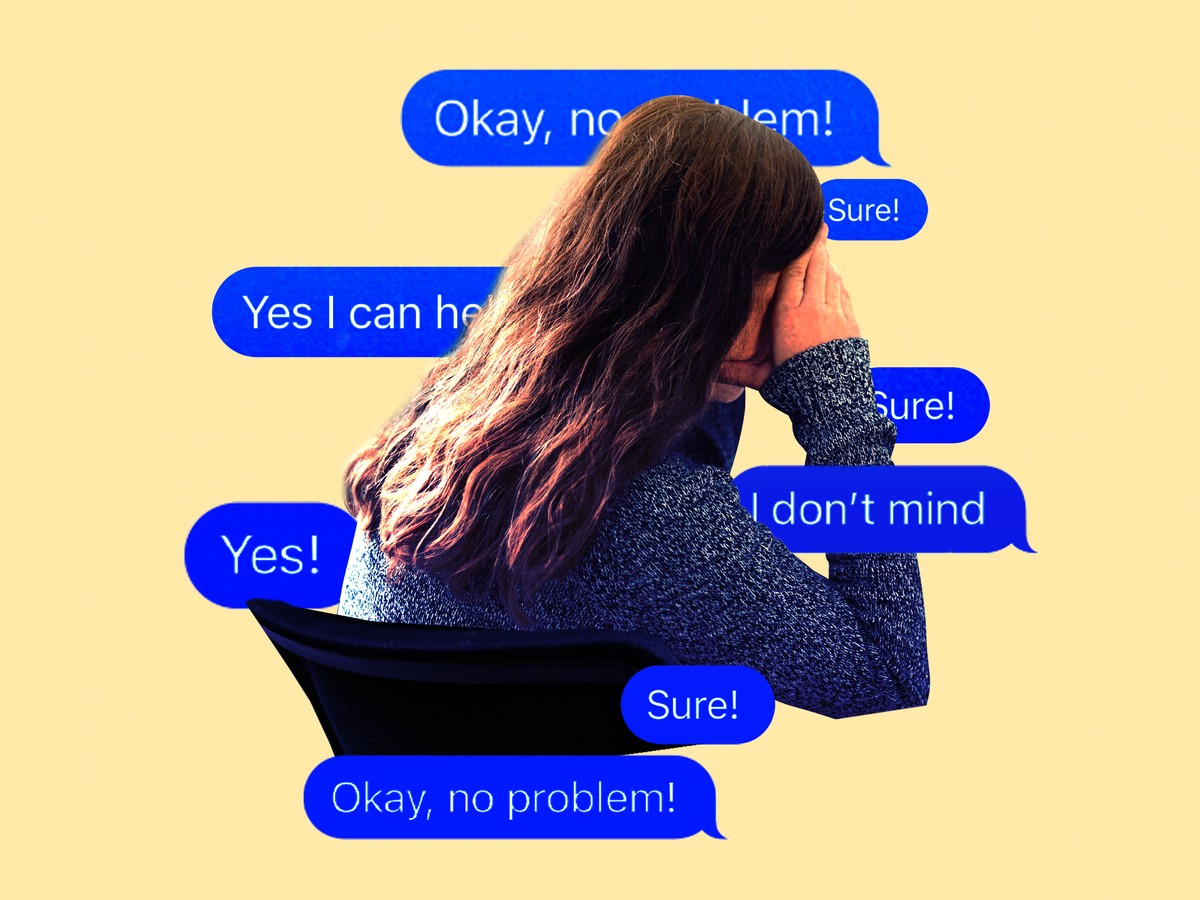
People who are constantly trying to satisfy others may fall into a common trap: a constant search for assurances. It may look like sending an SMS “Are you angry with me?” to a friend or a question of a partner, is he still in a relationship.
Searching for confirmation can become a cycle because “We get this relief for a split second” Josephson said. But if it is used in excess, it can strain the relationship – she added.
Disorders such as obsessive-compulsive relational disorder can be manifested by a constant need for positive feedback from a partner-which is ultimately an unstable dynamics.
Some ask group chats participants to assess their dates on hinge, publish posts about friends in anonymous forums, and even consult with chatgpt. Josephson claims, however, that too frequently ordering external tasks is a bad idea. Artificial intelligence is in particular a dangerous support.
Chatgpt “has intelligence that allows you to verify, but because this is not a real relationship with a real person, there is some limitation,” said Josephson. Chatbot can empathically answer, giving all the reasons why your friend is probably not bad for you, but he probably won't tell you that you are asking this question too often.
How to get rid of the label of a person who satisfies others
There are over 140 million posts on how to make others happy. Although social media posts can help identify the problem and make contact with it, they can also encourage people to perceive this reaction as a permanent personality trait.
Josephson said that she was working with clients to get rid of labels that can immobilize them. “This is not an identity, but rather a self -defense pattern” She said.
This is the younger part of you who has learned to be in a state of high vigilance to control the mood of others to protect itself, but that does not mean that you always need protection now.
One of the best starting points is stopping – putting off the phone or stopping in the middle of a lively conversation.
A moment of mindfulness, “even if it lasts only 10 seconds”, it can help you recognize fear without immediate reactionsaid Josephson.
“If you share too many things, because you want to feel understood, stop. What do you really want to say, and what results from the reaction of please?”
The consistently used practice becomes a milestone for other habits, such as tolerating discomfort in conflict or setting boundaries.
You can continue to stop silence at the same time – worried that you unconsciously made someone angry. The difference is what you will do next
The above text is a translation with American Business Insider edition