“Hitler was not a winner. Putin is not either.” Russia will divide the “fatal destiny” of the Third Reich [OPINIA]

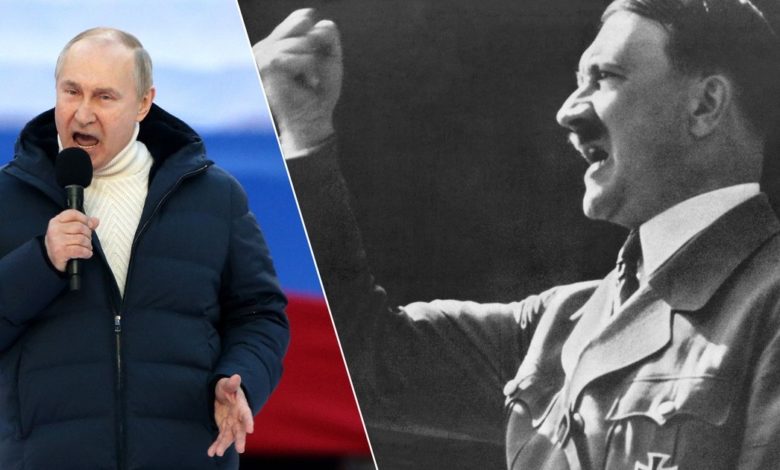
“Both Hitler and Putin were clever politicians who were widely underestimated”
According to a reputable American Think Tank Freedom House, democracy is getting worse in the world – this trend has been visible since 2005.
Unfortunately, the present times more resemble the 1930s, which prompts many to think about why it went so bad then. Then Adolf Hitler was the greatest advocate of dictatorship. Today it is Vladimir Putin. What can Hitler's study tell us about Putin and today's Russia?
The key book about German politics in 1933-1945 is Der Fuhrerstat (Fuhrera) from 1987 by the German Professor of History Norbert Frei. It can be noted that over time, the regimes of Hitler and Putin are becoming more and more similar.
Both Hitler and Putin were clever politicians who were widely underestimated. They began their governments with broad appeals and consolidated power in stages. They both made sure that the legal system and parliament became dysfunctional at an early stage. They acted hard and quickly and used three sources of power – the popularity that “street”, hard propaganda and state repression gave them.
“In his speech motivating the war with Poland, Hitler sounded apologetic”
The economic strategies of both dictators are also quite similar.
Politically, Hitler referred to small firn, but like Putin, he quickly turned to great businessmen (if they were not Jews). They both co -fined oligarchs and did not care about small entrepreneurs. They gained popularity thanks to early economic successes, but they did not really care about the economy and did not lose social support due to later economic failures.
The 1930s were a time of great regulations and protectionism, so early rationing and price control were natural in Germany. Interestingly, neither Russia nor Ukraine have been forced to introduce rationing or price control, because the free market and modern logistics work so well. This makes the war more bearable.
Great businessmen did well under Hitler's rule, so they didn't object to him. The same applies to great business under Putin. These people have too much to lose. Despite all the Allied bombing of Germany and their weapons factories during World War II, German weapon production reached the peak in July 1944 and vice versa, Western sanctions probably will not stop the Russian weapon production, although they can reduce its quality and size.
In his speech motivating the war with Poland, Hitler sounded apologetic: Poles were so terrible that they forced him to this war (Gliwice provocation). Similarly, Putin claimed that he did not want an invasion of Ukraine, but bad Ukrainians forced him to do so. Frei explains Hitler's rhetoric that the war in Germany in 1939 was unpopular, unlike 1914. Presumably the Kremlin had a similar understanding of the Russian attitude to the war in 2022.
“In both cases, the idea of genocide as a final goal developed gradually”
After the start of the wars, the character of Hitler and Putin's regimes seems to be convergent. For Hitler, ideology and propaganda have always been crucial. For Putin, they are becoming more and more important. Hitler was delighted with the mythological thousand -year -old Reich, although the German Reich only existed from 1871.
Hitler has always been an anti -Semite, but only in January 1942 did he announce at a conference in Wannsee that the goal is to eliminate the Jewish people. Similarly, Putin stated that Ukraine is not a nation at the NATO summit in Bucharest in April 2008, but recently called for elimination, i.e. genocide, the Ukrainian nation. In both cases, the idea of genocide as a final goal developed gradually.
“Don't we observe the same phenomenon today?”
Hitler and Putin always had a similar dismissive attitude towards their troops. Hitler announced the commander -in -chief in 1938 before the war, and Putin did it in practice. They both considered their generals to be cowards and managed more bold operations. They used their wars to take over the ownership of enemies and increase repression. War has become an important part of their and more shaky ID. Putin claims that his war is of an existential nature. Yes, probably for him, but for Russia his war is harmful.
When World War II turned against the Germans since 1942, those who failed in the war, such as Hermann Goering, the head of the Air Force, lost their influence.
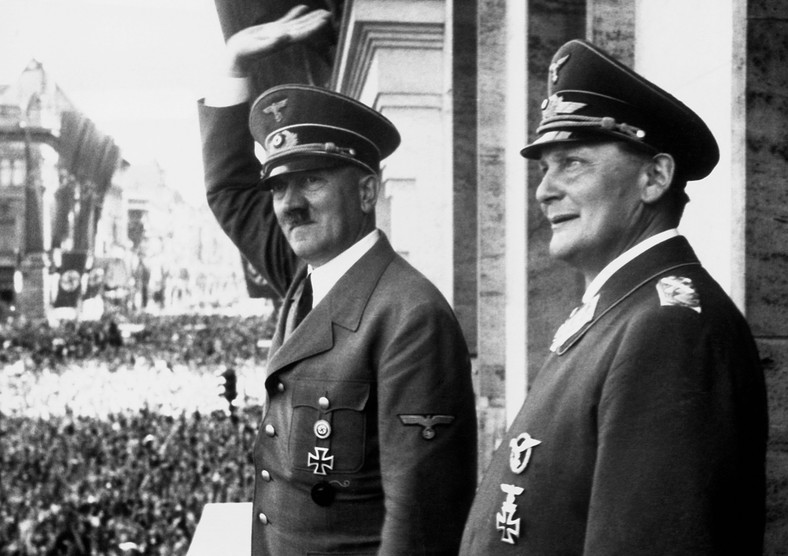
The leader of the German Nazi party Adolf Hitler and chairman of the Reichstag Hermann Goering
The great winner was the main propagandist Joseph Goebbels, who could not be embarrassed by any defeat from Stalingrad to Kursk.
Do we not observe the same phenomenon today when the Russian media exalts Pieskow, Sołowiów, Simonian, Kisielów and other genocidal propagandists – the more outrageous, the better?
“Hitler was not a winner. Putin does not look like him either,”
German historians are wondering why there was no turmoil against Hitler. Instead, there was an empty resignation. Frei offers a credible explanation: “silence was not only an expression of boundless disappointment and bitterness; sometimes it was also a sign of shame.”
Germany under Hitlerlike most Russians under Putin, they went to many personal compromises with the regime, so they felt their personal guilt.
The strange source of Hitler's legitimacy, which probably also applies to Putin, was that many thought that only Hitler had power to end the war. In Washington, I hear too many foreign policy experts who think the same about Putin.
This simple comparison offers useful conclusions. Putin did not think that the war would be popular, so he presented Russia as a victim, not an aggressor. He realizes that the war is going poorly, so it is more about propagandists than on generals. He does not care much about the economy, but trusts the oligarchs that they will keep the production of weapons to the very end.
Hitler was not the winner. Putin doesn't look like him either.