Gaza dies of hunger in front of the world. This is what life looks like in the extermination zone

International pressures on Israel had no effect. The inhabitants of the Gaza Zone die of hunger or die every day, trying to get food for their families – we hear from Magdalena Foremska from the Polish humanitarian campaign, a coordinator of immediate PAH.
Michał Misiura, Bankier.pl: What is the situation in the Gaza Strip?
Magdalena Foremska, PAH: Gaza is de facto almost completely cut off from the world from March. When it comes to food assistance, only trucks related to gauze humanitarian foundation or other few transports enter. To change this catastrophic situation and defeat of hunger, which prevails throughout the Gaza, you need permission to enter at least 600 trucks a day. What we witness is absolutely insufficient help. Those trucks that enter Gaza do not reach distribution points, because just after crossing the border they are besieged by desperate people who want to get any food for their families.
There is also a lack of drinking water in gas. Fuel is recessed into its area in very small amounts, de facto only to ensure the basic functioning of hospitals. There are no water exploring machines without fuel. People do not have enough drinking water. Adults often drink dirty water because they save pure for their children. On -site doctors inform about a significant increase in the number of patients seeking help due to diseases caused by drinking strongly contaminated water. That is why, as PAH, we are now dealing with the preparation of barrels that will provide safe for consumption, clean water in the Gaza Strip.
We will also deliver water and repair sanitary facilities in places where the civilian population forced to resettle is protected. In the current situation, the inhabitants of Gaza could not wash or even wash their clothes for many weeks. Remember that there is the middle of summer, gas temperature exceeds 30 degrees Celsius every day, so the need to access water, hygiene is incredibly urgent. This is a help that we can provide now, without waiting for permission to enter humanitarian transports that are waiting at the border with gauze.

You mentioned that to resolve the defeat of hunger in the Gaza Zone, 600 humanitarian aid trucks per day.
That's exactly how experts of the United Nations estimate.
How many of them enter at the moment?
On July 27, Israel announced the so -called tactical pause and opening humanitarian corridors for 10 hours a day. Since then, about a few dozen trucks come. This is absolutely insufficient. And we know that thousands of trucks with food help, ready for distribution, still stand on the border of Jordan and Gaza and Egypt and these trucks do not have an entry permit.
From last week, food screens from planes on gauze have also been carried out. We, as PAH, as well as all humanitarian organizations and the United Nations Agenda, we are absolutely agreed that it is a very bad idea.
Why?
It is distraction from the problem, because it looks very impressive, but it is a very inefficient way to provide help. First of all, because all these drops from the last several days are an equivalent of maybe six, seven trucks, no more. In addition, the screenshots are very imprecise. On the first day, the palette hit a tent with displaced people and 11 of them were injured. On Monday, a nurse hit by such a package. So it is inefficient, very dangerous and very expensive. The only way to reverse the disaster in Gaza is the permission to enter humanitarian transports.
For what reason, Israel does not let them in?
Israel does not want help to be coordinated by the UN and UN Agenda. For this reason, a gauze of Humanitarian Foundation, an Israeli-American creation, was created. It is really a commercial activity, outside the humanitarian system. It is an attempt to force the UN to cooperate with this foundation. The UN, in turn, does not want to agree, because it is not a “non-profit” organization, and its activity has nothing to do with the United Nations card. The UN calls for the opening of borders and permission to humanitarian employees to coordinate the supplies of help again.
Recall when international organizations dealt with this, there were over 400 distribution points, and the distributions took place every day without interference – no one was injured, no one was lost. Gaza Humanitarian Foundation has opened four distribution points to over 2 million people. Of which three distribution points are located in the south of Gaza, at a distance of several hundred meters side by side. The fourth is in the central part of Gaza. People who live, e.g. in the north, have very limited access and have to go 8, sometimes 12 km one way.
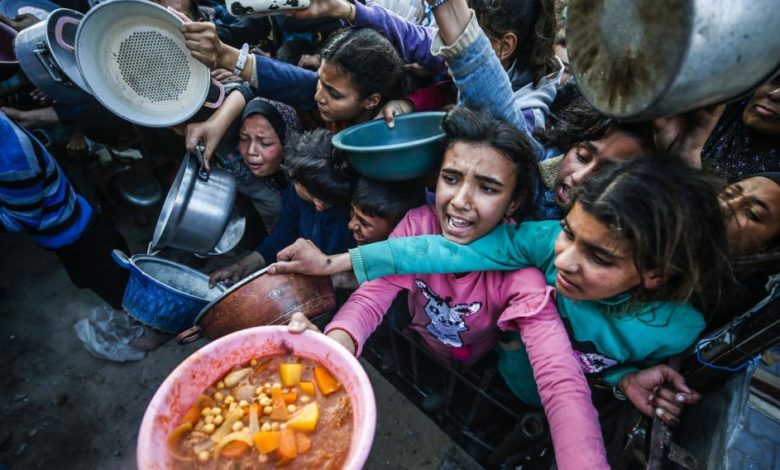
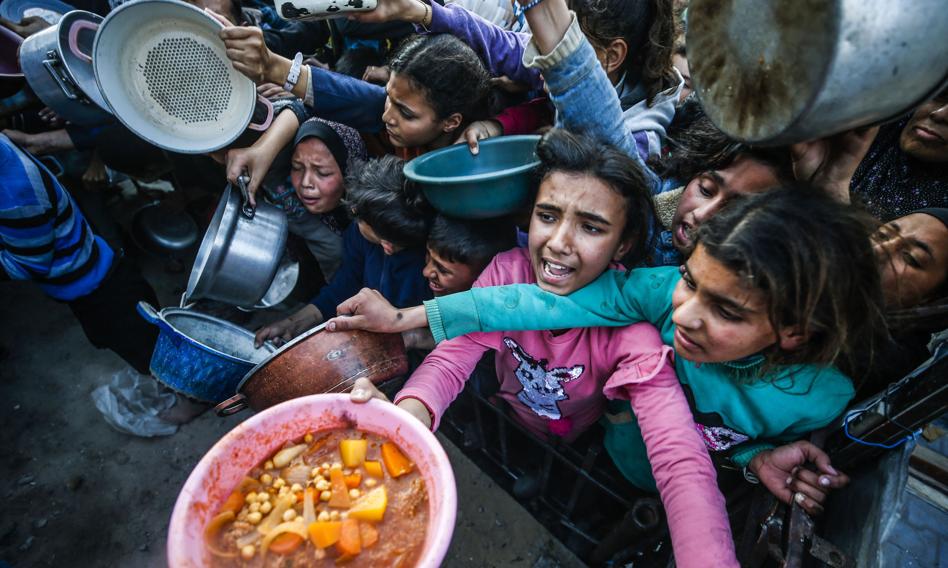
From the second half of May, when this foundation began to work, gaining food has become extremely dangerous. Distributions are prepared in an amateur way and take place “under rifles”. We are dealing with a huge number of people who are hungry, eat a meal once every few days, and are extremely desperate to get anything to eat for their families. Since the distribution points are poorly coordinated and unmarked, it usually looks like that when the gate opens, the crowd of hungry people runs towards the packages to grab anything. It then reaches chaos. Soldiers use weapons to control the crowd, shooting either over their heads or under their feet.
The effect is that a dozen or several dozen people try to get such a food package for their family every day. From the second half of May, when the Foundation began distribution, in this way over 1,400 Palestinians were killed. So we see that it does not work, it is inefficient, it has no connection with respect for human dignity and help in accordance with humanitarian standards. We know from people on the spot who are desperate to make this attempt, reach the center and get a package that they say goodbye to their children and family, as if they had never to see them anymore, because there is a high probability that this will be the case.
Even if security were assured and these distribution places would not be “death fields”, as they are called, the number of packages issued is highly insufficient. It is not difficult to guess, because four places in Gaza are to provide food for 2 million people. Mathematics is inexorable here. We are dealing with people who have been eating very little or almost nothing for many, many weeks. Their organisms are destroyed. Only the strongest and almost every day, the more people die of hunger, mostly children, because they feel the effects of extreme malnutrition, are now reaching distribution points.
And this is the situation when it comes to food distribution, has been in the Gaza Strip for many months?
Yes, on March 3, Gaza was cut off from the world. It was forbidden to enter any trucks with the help of the UN anxiety, which meant a ban on the entry of food, water, medicines, vaccines – everything. At that time, there were supplies accumulated during a weapon suspension of several weeks. They began to shrink very quickly around May, and it was already known that gas was threatened with hunger. At that time, it was decided to bypass the UN system by employing the foundation – Gaza Humanitarian Fontation, which was to take over responsibility for providing food.
However, this took place in such a way that four from 400 distribution points were created. These distributions are completely unorganized and threaten the health or life of people waiting for help, as I have already mentioned. For this, the products are quite accidental. If we are dealing with a population, which is almost entirely malnourished, these people must receive diverse products to strengthen the body and provide everything they need. It doesn't happen here.
Even if someone wins such a package, they will not die along the way, and manage to return home, these are things that you need to cook. And there is no water or electricity in gas. Provisional fuel remains. We know from people on the spot that they smoke everything: any plastic, pallets, whatever they find to light fire and prepare food. We also know from doctors that due to the fact that this food is not tailored to the needs of the hunger, these people often land in the hospital. Their digestive system is not able to absorb it and people are sick.
So people will continue to die in hunger, if nothing changes?
And we, the whole world, are witnessing it.
Benjamin Netanyahu announced a plan for the total occupation of the Gaza Strip. How do you think the Palestinian situation will change?
It is very difficult to imagine an even worse humanitarian situation in gas, because, as I said, we are dealing with an absolute catastrophe, unprecedented. We must also remind you that for almost two years of war, the inhabitants of Gaza, or over 2 million people, were pushed to about 14% of its territory. These areas designated as “safe” humanitarian zones. Imagine what the population density is 2 million 100,000 people have been pushed from the area, which corresponded to the size of Krakow, to the zone covering 14% of its area.
Sanitary conditions are a huge challenge because the entire water and sanitary infrastructure has been bombed. It is extremely hot, so epidemics can spread extremely easily. Certainly, what you are talking about would mean even greater suffering of Gaza residents, although it is difficult to imagine. The only solution to this catastrophe is the opening of a safe journey for humanitarian transports and of course the suspension of weapons.
International pressure on Israel will be able to change this situation in any way?
They have not changed anything so far. There is a tactical pause, a few discharges from the aircraft and a humanitarian corridor, which without proper protection is unable to provide food. People in gas die of hunger every day, die every day, trying to get food for their families to survive. Nothing has changed so far.
Can the international community, the governments of individual countries and their inhabitants improve the fate of Palestinians from Gaza in any way?
I think that we must first of all look for ways to help now. Therefore, PAH now runs a collection and will provide safe for consumption, clean water. This is something we can do immediately. We also need to push and call for boundaries to open, to make humanitarian transports enter.
I am convinced that we have to talk about it. We can't forget about gas. There is a lot of disinformation in this matter, so let's use proven sources, but also educate ourselves, be interested in what is happening there. This is an unprecedented situation in which there are more than 2 million defenseless civilians: women, children, elderly people, people with disabilities, men. Under fire on all sides. There is no safe place in gas. The hospital was bombed this morning. We all watch it on our phones or on TV screens every day. Let's not be indifferent because silence is a consent – so let's not forget about gas.
–
Magdalena Foremska – immediate assistance coordinator in the Polish Humanitarian Action (PAH), worked on creating mobile clinics on the west shore and a project to provide food assistance in the Gaza Zone in 2024.
The Polish humanitarian campaign conducts a collection, from which all funds will be allocated to the aid of civilians in the Gaza Strip. Including it to the inhabitants of drinking water. It can be supported at: https://www.pah.org.pl/wplac/