Article by Alexandru Tomuțiu – published Tuesday, 05 August 2025 19:43 / Updated Tuesday, August 5, 2025:39
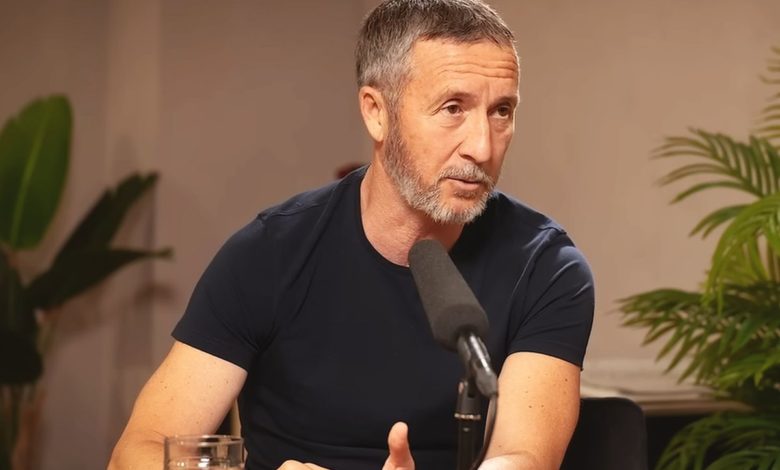
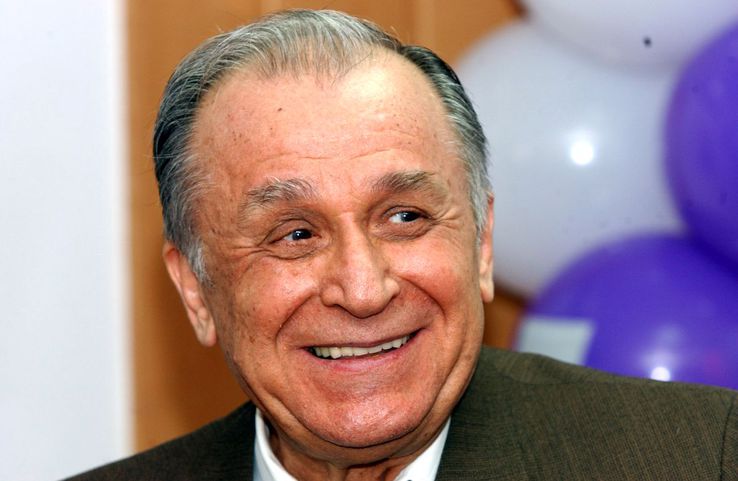
Mihai Stoica (60 years old), the president of the FCSB Administrative Council, spoke about Ion Iliescu, after the former president of Romania died at the age of 95.
Mihai Stoica was declared the fan of Ion Iliescu. He said he met the former president and was fascinated by the way he knew Romanian football in detail.
Mihai Stoica, about Ion Iliescu: “I did not think he could know the Romanian football in detail”
“You know how it is, Unpopular Opinion. He was not very sympathetic, he was good to smell Ion Iliescu. Only I met him. I met 3 great personalities who impressed me. I met a lot of personalities, but 3 people impressed me extraordinarily. Corneliu Vadim Tudor, Adrian Păunescu and Ion Iliescu. They are all contestable and challenged. But I do not think there can be an authentic character, a man with aura, who is not challenged.
I met him in the beginning of January, by St. Ion. I was with Gigi in the early 2000s and I was impressed. I didn't think he could know Romanian football in detail, as he knew it. This thing conquered me.
I do not make politics, I really have a very bad opinion about the political class. Ion Iliescu was a landmark of Romanian democracy regardless of his belonging. And I was a party member, these were the times then.
I have a problem for mine, but here I have information that it was not how it appeared. It affected me. I had a earned scholarship. There were 30 scholarships and I managed to be the first. There were 130 participants on 30 scholarships, one year in Germany. And I was the first, I was used to entering the first, I had entered the first and college. No interview was held, I lost the scholarship.
Now I don't know if it was ok or not. Of course I was no longer working in football, and the results obtained by the teams I worked on were much more than what I would have expected. I think I was sitting in Germany. A very smart man. A man who until the last moments of life consistent, sail, on the Internet, ”said Mihai Stoica, at the first sport.
Who was Ion Iliescu
- Ion Iliescu was born on March 3, 1930, in the municipality of Oltenita, Călăraşi county
- He entered the PCR in 1953 and became a member of the Central Committee of the PCR in 1965. Since 1971, he was marginalized by Nicolae Ceausescu; Ion Iliescu was from December 1989 the leader of the FSN, later transformed into PDSR and PSD;
- He led the Romanian state as president of the CFSN and CPUN until the elections from May 1990, when he was elected president of Romania;
- He was the president of the Kaiac-Canoe Federation;
- Subsequently, Iliescu also had two mandates of president of the country, between 1992-1996 and 2000-2004. Between 1996-2000 and 2004-2008 he was a senator from PDSR/PSD;
- Ion Iliescu was accused, on December 21, 2018, in the file of the Revolution.
https://www.youtube.com/watch?v=irb-u5ta9pk
Accused for crimes against humanity
Ion Iliescu was charged in the mining file of June 13-15, 1990, respectively in the Revolution file.
In the first file, recently sent to court, Ion Iliescu, Petre Roman and 6 other defendants are accused of crimes against humanity. Specifically, that “they launched a policy of repression against the civilian population in the Capital, after which 4 people were killed, 2 people were raped, the physical and/or mental integrity of over 1,300 people were injured and over 1,200 people were persecuted.”
The file of the Revolution, with Ion Iliescu among the defendants, was sent by the JCCJ back to the Military Prosecutor's Office in September 2024, 35 years after the facts. And in that file to Iliescu is brought the accusation of crimes against humanity.
Specifically, it would have supported a systematic operation of misleading public opinion between December 22-30, 1989, a manipulation that had “as consequences the generation and amplification of the generalized psychosis of terrorism, psychosis causing numerous generalized fratricidal fires”.
“Thus, 857 deaths occurred, 2,382 injuries of persons, 585 serious freedom deprivations, in violation of the general rules of international law and 409 cases of large suffering,” according to the indictment of military prosecutors.