“Detainee 29222”. The first Iliescu educated in Moscow. The biography and the links with the communists of Alexandru Iliescu, the father of the former president of Romania

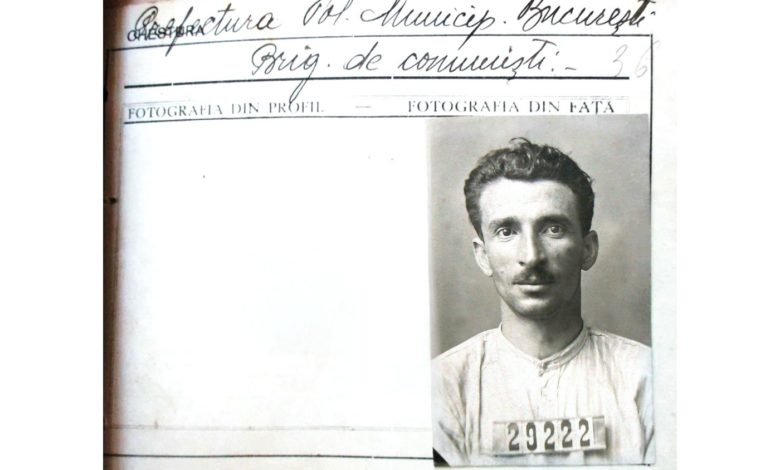
The father of former President Ion Iliescu was one of those who contributed significantly to the actions of the first communists in Romania. He studied in Moscow and was sent to prison several times by the interwar authorities, who had removed the Communist Party from Romania outside the law. This is his biography, according to the information kept in the National Archives, the testimonies of the former comrades and the analysis of historians.
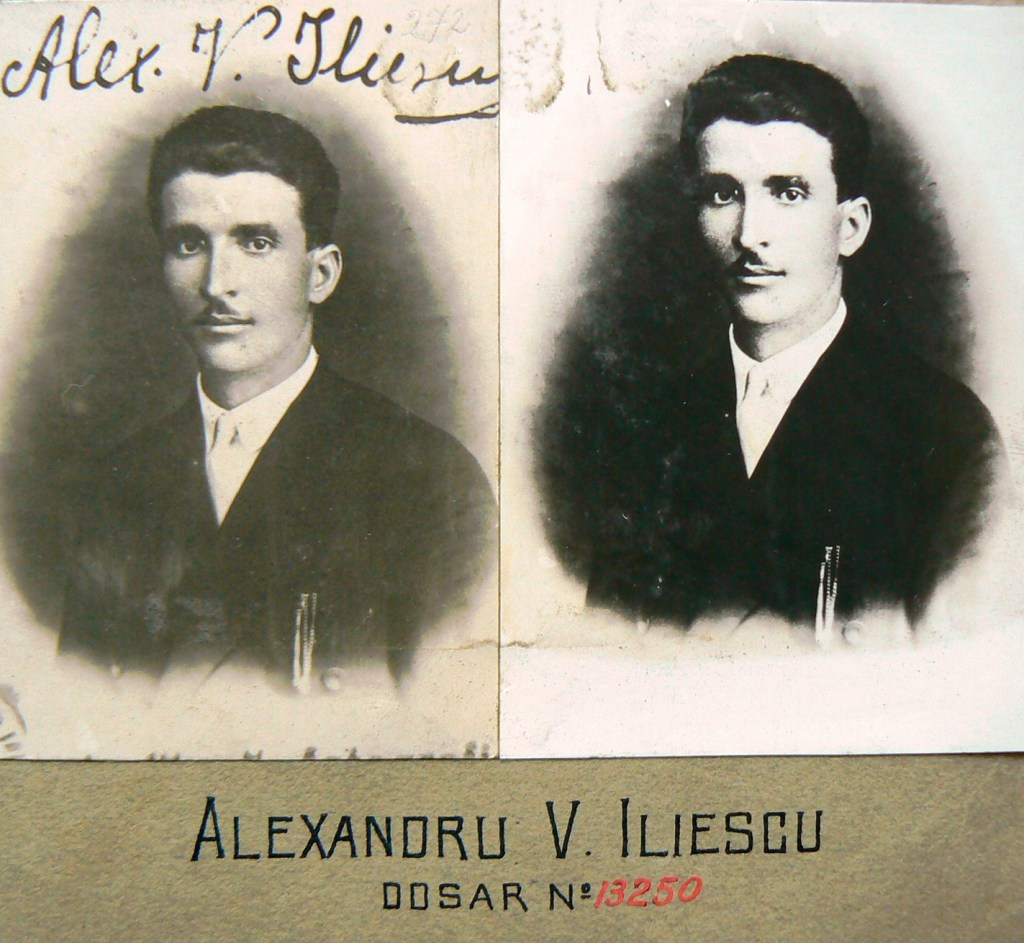
Alexandru Iliescu, the father of the future post-December president, was one of the communist leaders from the time when the movement was illegal, before the Second World War, or was under Soviet coordination.
It was followed by safety (state safety, the secret intelligence service from 1924-1940) and convicted for its communist propaganda activity and played an important role in the party in illegality before August 23, 1944.
Alexandru Iliescu was born on September 28, 1901, in the city of Oltenita, according to the data from a file file located in the National Archives (fund 95, file 9430, no.) At school he made only a few classes, and then he was mechanically employed-first at the Brasov aircraft factory, then at the Metallurgical Factory “Freiser”.
The first conviction, for false in documents, in January 1927, sent for three months in the Văcăreşti Penitentiary, where the delinquency who represented a threat to the national security, especially the members of the Communist Party were imprisoned. It was released on April 10, 1927 and, probably after contact with the communists in prison, he began to work for the party in illegality.
A note of the Security of Brasov on November 2, 1928 stated that Iliescu was fired from the Brasov aircraft factory because he was doing communist propaganda. From that moment, Alexandru Iliescu goes to Bucharest and dedicates himself to the struggle of the communists in clandestinity.
How did Alexandru Iliescu come to the Leninist school in Moscow
His son, Ion Iliescu, sees the light of day on March 3, 1930, but Alexandru Iliescu leaves the little one to his parents. On October 3, 1931, he left the country to participate in the 5th Congress of the Communist Party of Romania (PCDR), the most important of the interwar period, which was held in the town of Gorcovo, near Moscow.
In the resolution of the Congress it was stated that Romania “conquered” Bessarabia, Bucovina and Dobrogea and subjected to a national and semi -colonial exploitation to all those who are not Romanian. Thus, it was required to respect the principle of self -determination of the three regions and the state separation. This congress was attended by communists with weight in Romania such as Lucreţiu Pătrăşcanu, Petre Borilă, Ecaterina Arbore and Elena Filipovici, but Marcel Pauker, Stefan Foriş and Vasile Luca missing, shows Marin C. Stănescu in the volume “Moscow, the Comintern, the Balkan Communist Failure and Romania”.
Alexandru Iliescu remains in Moscow then to attend the Leninist school courses, an institution that theoretically and practically prepared the communists.
The return to the country takes place in February 1937, six months after the beginning of the Great Terror in the Soviet Union, after which communist leaders such as Elena Filipovici, Marcel Pauker, Cristian Racovski or Alexandru Dobrogeanu, the son of Constantin Dobrogeanu-Gherea were executed.
Iliescu escapes from the red hell, like Lucreţiu Pătrăşcanu. The mention regarding the return to the country of Iliescu is found in the file from the National Archives.
“Dad's return.” Iliescu about Iliescu
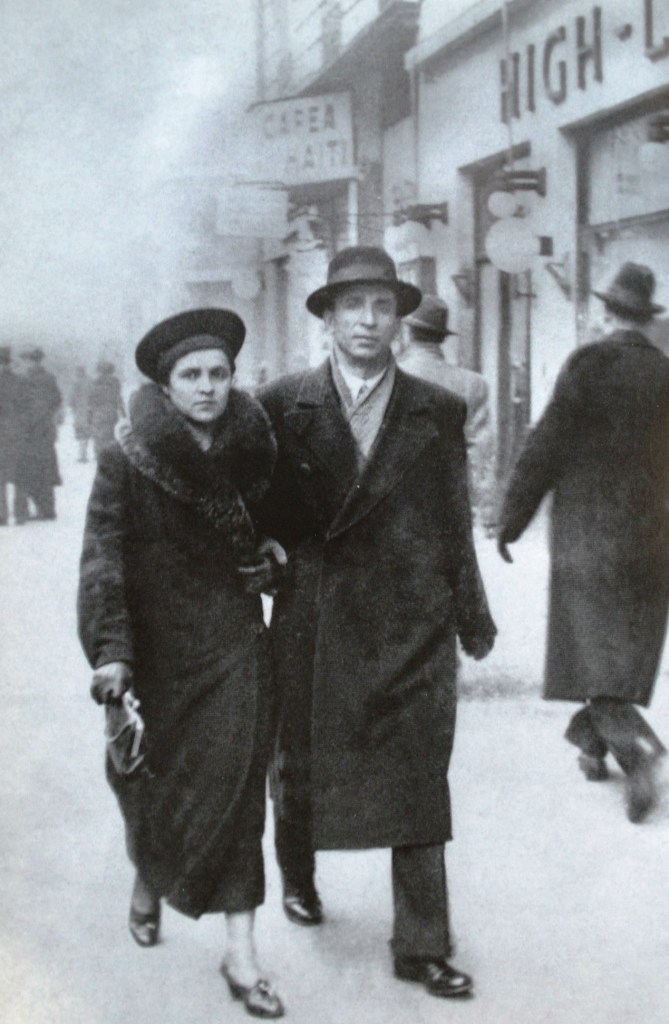
Ion Iliescu, however, supports in his volume of memoirs “the fate of a man on the left”, that his father returned to the country in the winter of 1936: “The most important event for me and for the whole family was the return of my father. He was a well -made man, with a pleasant appearance, even high (probably 1.80 m) But he was not present.
Back in Romania, he became responsible for the guild of the metal workers in Bucharest, and to win his bread he engaged in the “Leonida” garage. In 1938, Alexandru Iliescu was a member of the PCDR management committee of the blue sector and in the party's trade union commission. As a craftsman, metallurgist at the “Vulcan” factory in Bucharest had been hired, the historian Mihai Burcea shows.
In December 1938, the secretariat of the Central Committee of the PCDR suspended for a short time on Iliescu in the party, says the historian Mihai Burcea.
Complotist with Nicolae Ceausescu and Teohari Georgescu
In the spring of the following year, Alexandru Iliescu was co-opted into a clandestine group that had the role of mobilizing and organizing the party asset for the Carlist demonstration on May 1, 1939 (from this structure, among others, Ilie Pintilie, Nicolae Ceausescu and Teohari Georgescu.
At the beginning of July of the same, Iliescu was arrested again with other Communists, “on the occasion of a ray, being surprised by writing more protests in the communist spirit, which they intended to hand over to the parliamentarians that they feed the left ideas”, shows a note of the September 3, 1939. executed in Jilava. Lawyer had been Ion Gheorghe Maurer, he remembers Ion Iliescu in the autobiography “the fate of a man on the left”.
What a role in the appointment of Elena Ceausescu as “Queen of Labor”
However, the second arrest shows a connection with the Ceausescu couple. On August 13, 1939, the textile Lenuţa Petrescu (future Elena Ceausescu) from the “Jacquard” factory in Bucharest was chosen “Queen of Labor” at a Campene celebration in the Fear of Ferentari Park, based on postcards collected from the participants. On these postcards, the voters of the Communists also written statements for the release of Alexandru Iliescu, shows Lavinia Betea in the volume “The Life of Ceausescu. The son of the people”. The one who paid the postcards was the current Eftimie Iliescu, Alexandru's brother, who had been Elena Petrescu's partner (Eftimie Iliescu will become a lieutenant-colonel in the 1950s-'60s, the historian Mihai Burcea).
Alexandru Iliescu was released at the beginning of 1940 only to be arrested again. It happened on July 18, 1940, at 18.00, from Ploiesti, on Isvoare Street, no. 90. There was the boot Constantin P. Nicolae, a communist friend. The safety agents were looking for Iliescu, according to the official accusation, because “he agitated the masses of Ceferişti, urging them to strike.” The next four years will spend them in the camp in Caracal and the one in Târgu-Jiu, along with other communists of the time. It was the “prisoner 29222”, according to the data from the National Archives.
“If” animal protection “asks to have pity on animals, my husband was beaten faster”
Just three days after the hospitalization in the camp, at the cabinet of the Minister of the Interior at that time, a letter from a grieving wife arrives: my husband Alexandru Iliescu, while going to the family, was arrested and taken to the safety in Ploiesti, where for no reason and without a bit of human mercy, he was beaten to the blood. Although common sense and “animal protection” demands that we have mercy on animals, my husband has been beaten more than an animal. Today it is found in the “concentration camp” in Caracal, and I with 2 children and parents, we are left on the roads without any help. Please, Minister, please order him to release the family food, “said in the letter written on July 26, 1940 by Maria Iliescu, the wife of Alexandru Iliescu and the step mother of the young Ionel.
In the Târgu-Jiu camp, where many of the communist “illegalists” of the time are arrested, Alexandru Iliescu is involved in the battles between the two camps that disputed their authority and formal power in the party. On the one hand was Ovidiu Şandor, whose authority came from the PCDR secretary at that time, Ştefan Foriş, and on the other – Lucreţiu Pătrăşcanu, also supported by Alexandru Iliescu, shows Stelian Tanase in the volume “Lu” Tanti Varvara “. The dispute will be cut with the reach of Gheorghe Gheorghiu-Dej, a leader over all the communists in prisons and camps, who restore him as a “cell chief”, marginalizing the other camp.
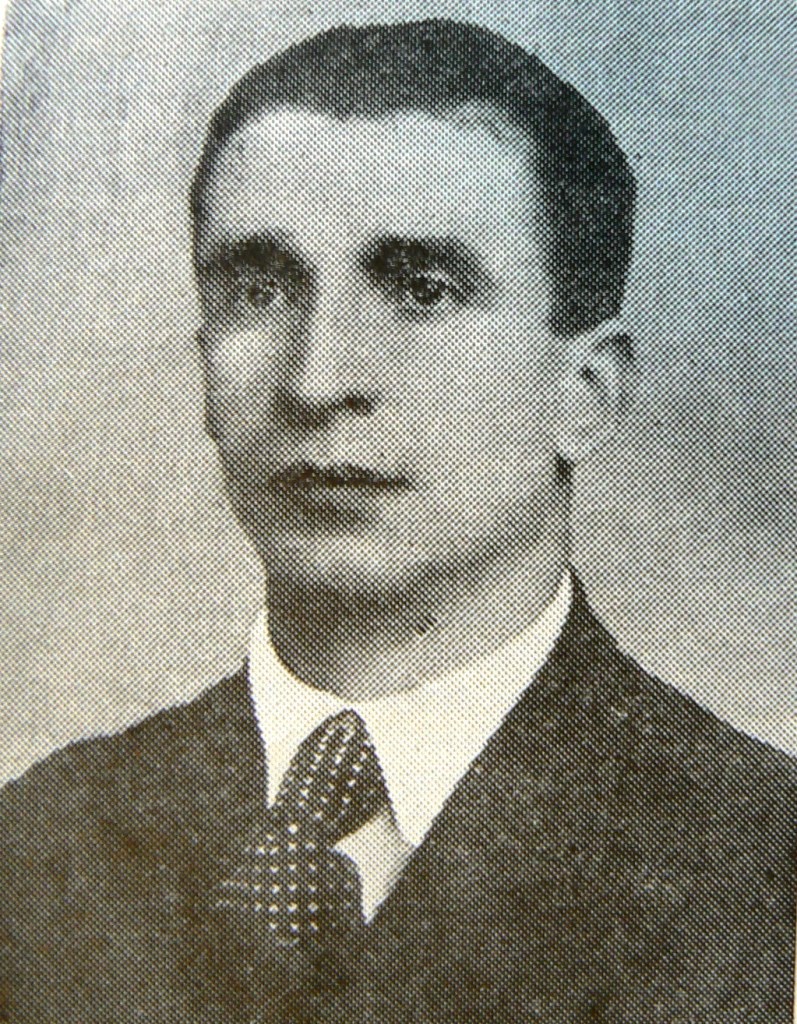
Alexandru Iliescu's facts in prison
In a report of the Political Politics camp dated August 30, 1943, it is shown that Iliescu was not in agreement with the prison management: “The boarding school Alex. It is a turbulent element that does not comply with the orders for the smooth running of the camp.
Also from the documents kept from the detention, other problems of Alexandru Iliescu also appear: “From the doctor's report it is found that the boarding school suffers from very narrow urethral strictures, which make it very cumbersome, and for the definitive solving of this condition, it must be admitted to a specialized service” Urology “, in the 1944, in the 1944. Health was current among the detainees. Even the Rival Gheorghiu-Dej had been operated on in the autumn of 1943 hemorrhoids, a disease “contracted during the detention”, as confessed in a letter to the commander of the Târgu-Jiu camp on December 19, 1943.
He also had a “heart disease”, as evoked by Evocation published under the signature of Titu Georgescu in the magazine “Anale of History”, of the Institute of Historical and Social-Political Studies near the CC of the PCR, obtained with the help of historian Mihai Burcea. “In the spring of 1943, desperate for the very serious condition in which he was, he makes a new request to the commander of the camp for medical treatment, which he finishes as follows:” I feel very bad, that please intervene to save my life. ”
At the beginning of 1944, Iliescu stays more through hospitals because of these diseases. “It could no longer be kept in the camp, it was on the verge of death,” the evocation of the communist magazine shows.
But the true blow will be given by the party in the spring of the same year. “In Târgu-Jiu, it is excluded from the PCDR, at the request of Gheorghiu-Dej”, says the historian Stelian Tanase in “Lu 'Tantvara clients”, the reason for exclusion being his alliance during the fractional struggles. Coming out of prison after August 23, 1944, Iliescu will not start to play a role in the Communist Party. He had become a bet for his former comrades. Employed as a railway worker, at the TC-Filaret draw, Iliescu senior died in August 1945. He was 44 years old. “Speaking in front of the workers and officials of the Directorate of CFR telecommunications, has a heart attack and falls under the eyes of his comrades,” shows the evocation text from “Anale of History”.
“On his funeral stone they are inlaid, by his comrades, the words:” fallen to the debt “, the evocation is concluded.
A significant part of the information presented in this text were printed in the volume “Apostles of the Golden Age”, published at the Adevărul Holding Publishing House, by Laurenciiu Ungureanu and Radu Eremia.