Once everything was simpler. It seemed so. There was a democratically ruled the West and the dictatorial Eastern Bloc. The economy flourished in the free part of the world, in the Soviet space there was scarcity and stagnation. Democracy brings prosperity – that was the conclusion.
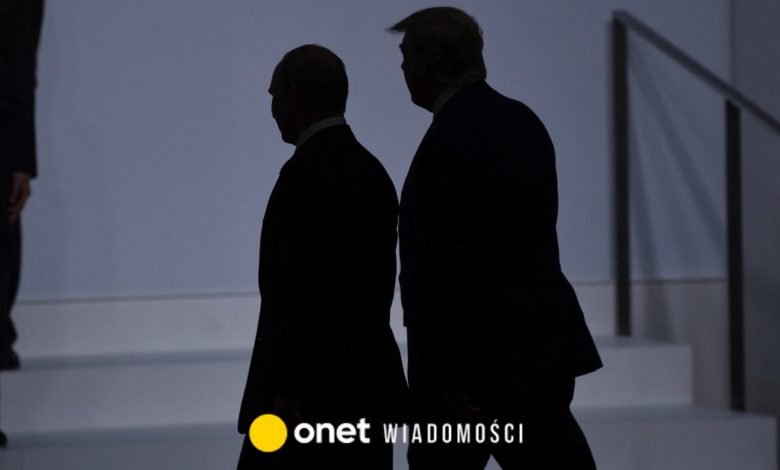
First of all, it was never that simple. Secondly, it has increased significantly in recent years The variety of forms of government in the world. There are intermediate forms that some euphemistically call “controlled democracy”, and “strong leaders” appear more and more often, who focus in their hands all or a significant part of power. This last phenomenon is probably the most important and most pregnant event of recent times, especially since Donald Trump has trends in this direction.
That is why Christopher Blattman and Scott Gehlbach from the University of Chicago and Zeyang Yu from the University of Princeton examined how the forms of rule in the past developed, in which The authorities are focused in the hands of one person – On the one hand, unlike democracy, and on the other hand compared to the autocrams that are characterized by collective leadership. To this end, they compared 176 countries and forms of government in 1961–2010, as well as their economic development.
The results are unambiguous.
First of all, three economists state that it is not that economic development can only take place in democracy. “Some of the most known stages of development in history took place under the rule of undemocratic governments – from the industrial revolution in Great Britain to the” wonderful decades “of economic growth in China, Singapore and Thailand,” they write.
However, the forms of government in these examples were not democracies, but they were not celebrated by absolute dictators or monarchs. “A common feature of these examples is certain institutionalization of powerwhether it is through the ruling party, a military corporate structure, or the legislative control of the monarchy, “says economists.
Continued article under video material
Dictatorship uneven dictatorship
That is why, when it comes to economic development, there are no differences between institutionalized autocrams and democracies. In the years 1961–2010 democracy reached an average increase of 2.4 percent. annually, and institutionalized autocals – 2.31 percent The situation is completely different in the case of forms of government adapted to one person.
Scientists emphasize that personalized governments do not have to be synonymous with a “hard” dictatorship. “Personalist governments are characterized by the concentration of power and making decisions in a small group of elite decision -makers, often organized around one person” – they say.
However, this does not have to take place in all dictatorships. For example, in the USSR after Stalin or China, there were no omnipotent leaders after Mao, but undemocratic, but institutionalized governments based on a wider basis.
Other examples are Iran under the rule of Mulłów or Mexico, where from 1929 to the turn of the millennium the party ruled even the name of the Revolutionary and Institutional Party (PRI). These examples at the same time show a whole range of possible forms of government, because Mexico even in the 1970s, when Pri ruled, was not a dictatorship.
In the economic so much
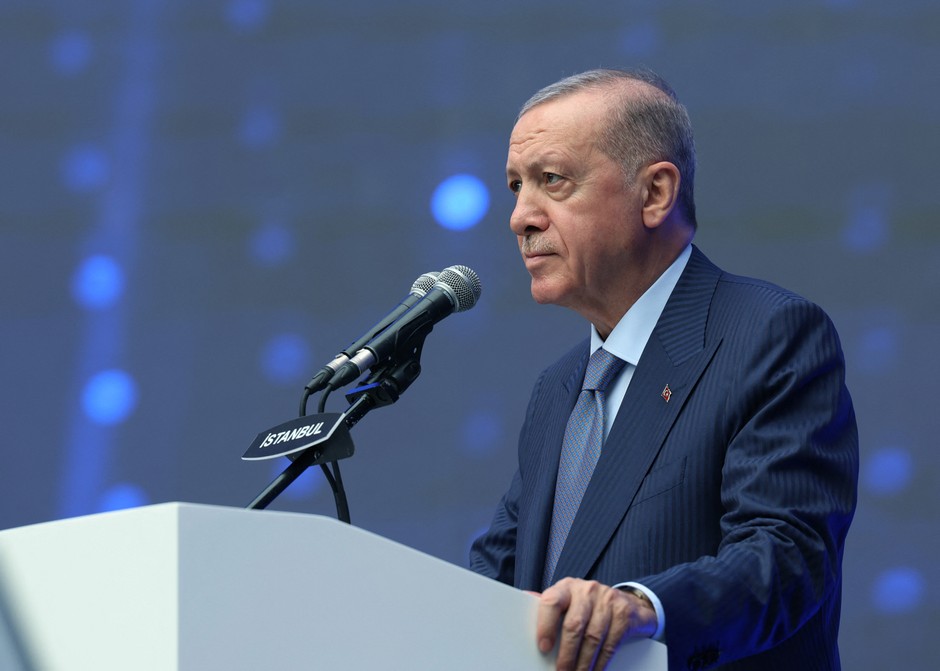
“On the other hand, some” mixed “regives are characterized by a strong concentration of power, including Turkey under the Recep of Tayyip Erdogan (especially after the unsuccessful coup in 2016) and Venezuela under Hugo Chavez and Nicolas Maduro,” says economists. Türkiye is a good example: There are elections, parliament and at least partially free press. At the same time, however, Erdogan practically manages the country and arbitrarily interferes with institutions.
However, all countries ruled by one leader, regardless of whether they are brutal dictatorships or have a democratic facade, have one common feature: they remain clearly back in terms of economic development. The average growth rate set by economists for these personalized forms of government is only 1.37 percent, i.e. about 1 pp less than in democracy or institutionalized dictatorships. The difference may seem small, but in 50 years it gives two -thirds more prosperity for the latter.
Turkish President Recep Tayyip Erdogan, August 1, 2025Mustafa Kamaci / Anadol Agency / AFP
Economists also managed to determine the reasons for this state of affairs and identify Three factors. First of all, private investments are lower in countries ruled by one ruler. Secondly, these countries are struggling with more internal conflicts. Thirdly, the quality of public institutions, from schools, through healthcare, to classical economic policy, decreases, which is reflected, e.g. in inflationary crises.
Fatal mistake
Why is it all important? “In recent years, the two most powerful coaches in the world – Vladimir Putin from Russia and XI Jinping from China – systematically limited institutional controls and mechanisms that balance to rule with the help personal influence and decrees” – argue three economists.” The economic effects of such concentration of power are crucial for global stability and development. “
Perhaps an even more important example is the autocratic president of Turkey Erdogan. Despite the high inflation for years, the central bank forced the policy of low interest rates, contrary to the recommendations of virtually all economists. Instead, he developed his own theory, according to which the central bank can fight inflation by lowering interest rates. Ultimately, this turned out to be a terrible mistake – three years ago inflation reached a level of over 100 percent, which caused the actual expropriation of a significant part of society. It was A lonely decision of the autocratic ruler, for which people had to pay a high price.
And now it seems that American President Donald Trump wants to follow in the footsteps of Erdogan. He also wants to force the central bank to lower interest rates, despite the significant risk of inflation. Added to this is his customs policy – once threatens the duties, then he puts them off, then doubles, and then he again contains some contracts that no one knows the details. Apparently there is no economic concept behind it. Trump works completely arbitrarily, apparently According to your own whimwithout any democratic control.
The consequences of his lonely decisions are already visible in the form of a decline in private investments and the growing risk of inflation – exactly what three economists state in the historic comparison of typical features of personalized forms of government. Even another feature, an increase in internal conflicts, seems to be met if you look at the clashes and protests in Los Angeles at the beginning of June.
The next months and years will show whether all this according to textbooks will affect economic development and will lead to a decrease in growth.
I’m Ashley Davis as an editor, I’m committed to upholding the highest standards of integrity and accuracy in every piece we publish. My work is driven by curiosity, a passion for truth, and a belief that journalism plays a crucial role in shaping public discourse. I strive to tell stories that not only inform but also inspire action and conversation.