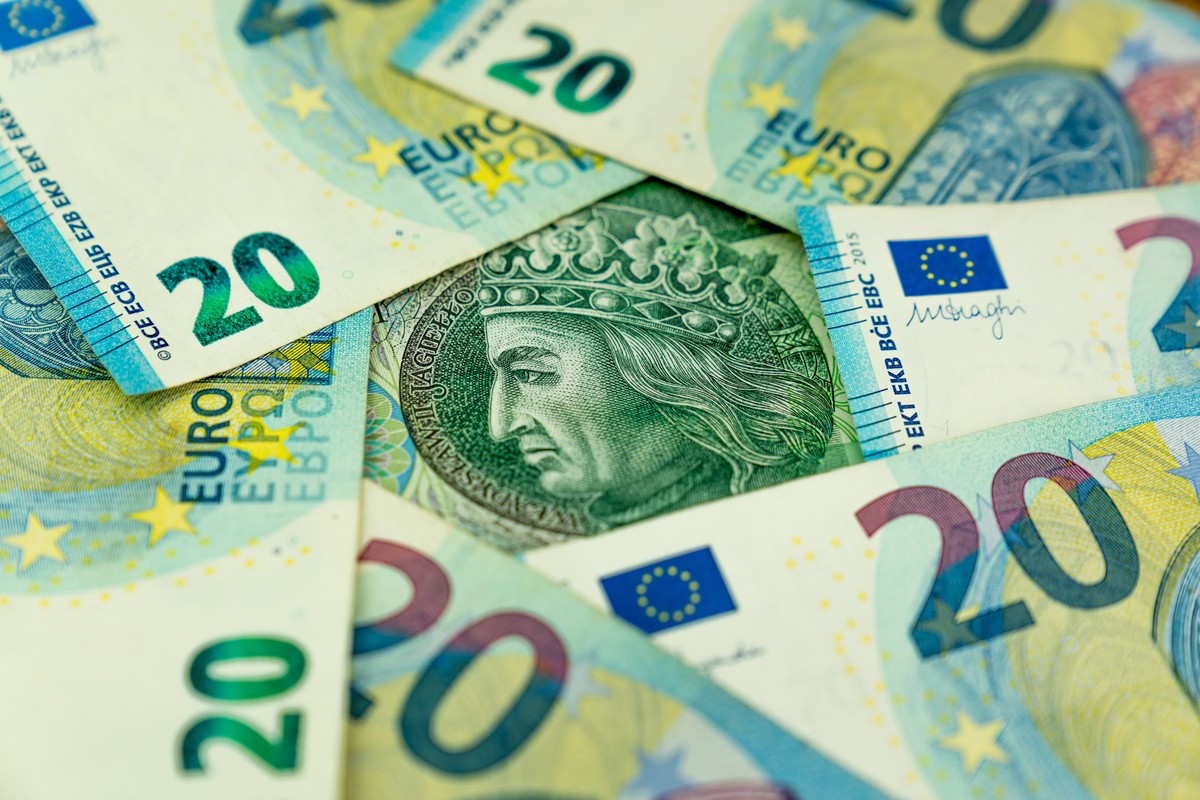
However, this does not prevent experts, economists and politicians to discuss the entry of our country to the Monetary Union and switch with possible risks and benefits. The main arguments for adopting the euro by Poland are the elimination of exchange rate risk, facilitating international settlements for companies, and greater economic stability. Opponents are afraid of increasing prices and loss of national identity related to the golden.
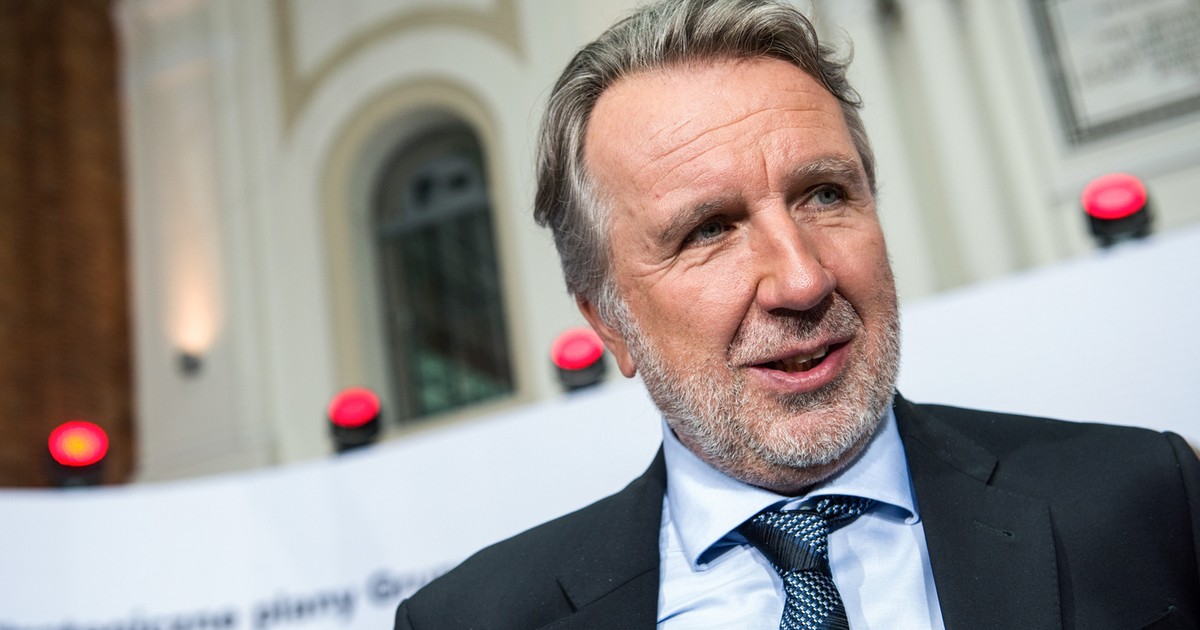
However, apart from these fears and beliefs, in the opinion of prof. Marek Belka – the decision to enter the euro area goes beyond the economic account – This is a strategic choice that requires both institutional maturity and political courage. The truth is, however, that – despite periods of compliance with Maastricht criteria – Poland has never taken consistent actions to adopt the euro. – current economic situation – high inflation, growing deficit and possible exceeding the threshold of 60 percent. Public debt in relation to GDP – they dismiss this goal even more – argued during a recent debate dedicated to euro economist Witold Orłowski. – Not only the fulfillment of formal requirements is of key importance, but above all political and social readiness to such a serious change. Meanwhile, the latter is clearly lacking.
Adam Glapiński about the admission of the euro
President of the National Bank of Poland prof. Adam Glapiński says directly: – Theoretical considerations regarding optimal currency areas, as well as the current functioning of the euro area clearly indicate that The euro area is not an optimal currency area. First of all, the mobility of production factors (especially work) and the flexibility of prices and wages are limited in this currency area, “wrote Glapiński in the magazine” Bank and Kredyt “issued by the Central Bank.
Argues that By adopting the EU currency of Poland, it would be threatened with the loss of the possibility of adapting interest rates to the needs of the national economy. As a result, interest rates would often not be suitable for the phase of the business cycle in which Poland is located. – At the same time, they would be long -lasting at a level lower than the natural interest rate. As a result, the adoption of the euro would involve a significant risk of the Boom-Bust cycle, and thus the transitional acceleration of economic activity driven by an increase in the loan, followed by the collapse of activity and an increase in unemployment – warns the head of the central bank. – Restoring balance in the economy – in the conditions of the inability to depreciate the course – it would be long -lasting, socially expensive and would involve a strong increase in unemployment and emigration – he adds.
What's more We would lose the benefits of a liquid gold rate, And this one remains an important channel absorbing economic shocks. We would be threatened with greater volatility of GDP and unemployment in the business cycle, and the risk of loss of competitiveness, weakening of exports and many years of recession in industry.
Euro in Poland. What does Donald Tusk and Andrzej Domański say?
Not only Adam Glapiński is currently against the zloty conversion to the euro, also Prime Minister Donald Tusk and the Minister of Finance Andrzej Domański have repeatedly declared that there are no plans to accept the EU currency by our country. – In my opinion, the current state is optimal. Poland does not meet the convergence criteria at the moment, so this discussion is really a substitute discussion – said Andrzej Domański, commenting on the EC's consent to admission to the euro area of Bulgaria. – We have one of the highest economic growth temperature in the European Union, the lowest unemployment, growing investments – he pointed out.
Let us remind you that the European Commission announced on June 4 that Bulgaria met the so -called convergence criteria and may join the euro area on January 1, 2026. It will then become the 21st Member State of the European Union, in which the common currency applies. Outside the euro area will remain: Poland, Sweden, the Czech Republic, Hungary, Romania and Denmark.
Adoption of the euro. There are conditions to be met
If these countries would like to enter the euro area, then – except for Denmark, where citizens in the referendum rejected this option – They would have to meet the so -called convergence criteria. It's about:
- price stability – Inflation of a country aspiring to the euro area may be higher by a maximum of 1.5 percentage points than inflation in the three most stable Member States in this respect,
- long -term balance of public finances – A country aspiring to the euro area cannot be covered by the excessive deficit procedure
- stable exchange rate – A country aspiring to the euro area must have been participating in the exchange rate mechanism (ERM II) for at least 2 years. At that time, the currency of this country may not show strong fluctuations against the central exchange rate of the ERM II (15 percent), and the two -sided central exchange rate of this currency cannot be reduced compared to the euro
- Stable long -term interest rates – The interest rates of the country aspiring to the euro area may be higher by a maximum of 2 percentage points than the interest rates in the three member states most stable in this respect.
What do Poles think about the admission of the euro?
In Poland – apart from the fact that we do not meet the criteria from Maastricht – as indicated by the nationwide research panel Ariadna, the majority of Poles are against the change of the Polish currency to the euro – 74 percent. respondents, there is only 26 percent respondents. They are against most women (80 percent). In terms of age, they were usually people aged 55+ (32 percent) and up to 34 years of age (24 %).