
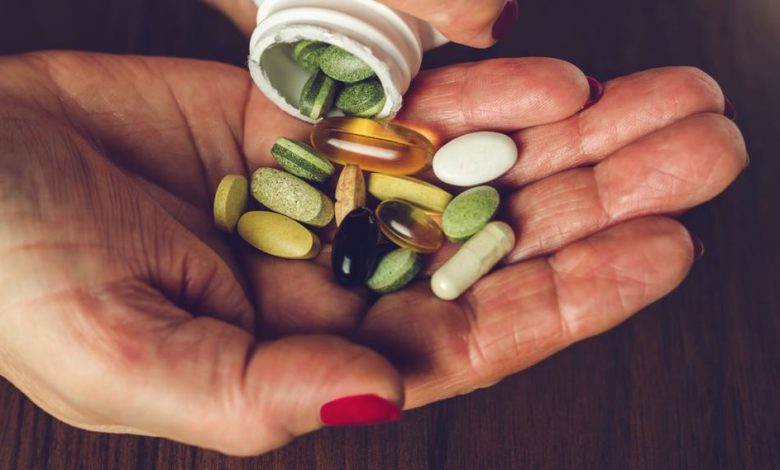
Influencers' recommendations are important in many purchasing categories. The report prepared by Wavemaker “Influencers under the magnifying glass: ethics in social media” shows that 30 percent Internet users take them into account when making purchasing decisions regarding medicines and dietary supplements. Advertisements of dietary supplements in Poland are subject to certain restrictions. For example, you cannot assign them healing properties, because they are not drugs or supporting properties that are not supported by research. GIS checks these issues. UOKiK, in turn, can check the correct designation of the advertising message in social media.

– Advertising dietary supplements has some restrictions, although they are food. He cannot assign dietary supplements features that they do not have. That is, for example It is not allowed, according to the regulations, to talk about the fact that dietary supplements have any healing propertiesbecause if they had them, they would simply be medicine – says Newseria agency dr Anna Banaszewska, legal councilor and master's pharmacy.
– Another restriction concerns information on supporting properties. If there is information on the label, label, in writing or in any radio, television advertising that a given dietary supplement supports treatment, has a supporting effect, has a reduced or increased amount of sugar or the amount of energy, such information is a health or nutritional statement.
Health statements can only be used if a given supplement contains an ingredient, e.g. vitamin C, in the appropriate amount and only in the wording indicated in the EU register of statements. The notification of a health declaration in the register must be preceded by research confirming the properties of this component. The use of unappropriated health declarations is prohibited.
– in the scope of the content of the messages themselves – e.g. assigning the healing properties to supplements or the use of unapproved health declarations – the competent authority is the main sanitary inspectorate. This also GIS supervises the compliance of messages with food law – indicates Bartosz Klimczuk from the UOKiK press department.
As GIS indicates in its summary of 2024, providing information on food, which also includes dietary supplements, serves to protect consumer health and allows them to make informed choices from a wide range of products on the market. Hence, market control (verification of marking, presentation and food advertising) is extremely important to make the consumer properly informed – in particular in relation to issues that have a direct impact on its safety (including information on allergenic components, nutritional value, composition and recommended daily consumption of dietary supplements or food for specific groups).
– The Office of Competition and Consumer Protection looks at the activities of influencers in terms of commercial content marking. The crucial from the point of view of UOKiK are the cases of surreptitious and practices that can mislead consumers. In recent years, the President of the Office has issued decisions regarding cryptoreklak. In addition, he issued recommendations regarding the designation of advertising content on social media – says Bartosz Klimczuk.
Advertising dietary supplements on influencer accounts is allowed in Poland, but under certain conditions. One of them is to place information that the published content is advertising – as in the case of promoting other products. Information about the sponsoler cannot be overlooked.
– They must be posted in such a way that the consumer can find out about it, i.e. there must be the right size of the print. If it is a sound advertising, it must be a proper recording, sufficiently slowly said. Not in such a way that it was information too small or read too quickly – emphasizes Dr. Anna Banaszewska.
In the absence of information required, the Office of Competition and Consumer Protection may impose a penalty on the influencer. In 2025 there was already such a case and it concerned three famous artists.
– Such a punishment was imposed on Doda Rabczewska, Filip Chajzer and Małgorzata Rozenek-Majdan. All three people received a penalty because they advertised goods – I do not know if dietary supplements, but this principle applies to all goods – without indicating that these are advertising and without indicating the person of the sponsor – says legal adviser. – In addition to the financial penalty, UOKiK also imposed an obligation to publish information in which each of these people was to indicate that it used advertising contrary to the rules and misleaded consumers. Such advertising was to be disclosed on the Instagram account, also on Facebook. In the event of a change in the account, this advertisement had to be connected with a changed account.
As he emphasizes, UOKiK conducts inspections in this respect not only after the report of irregularities, but also ex officio.
– First, he calls for an explanation, and then decides on the basis of the collected material whether there was a violation. If so, he imposes a penalty and orders remedial activities – explains Dr. Anna Banaszewska.
The EY Future Consumer Index survey shows that 57 percent consumers are looking for advice in online communities when making purchasing decisions. 61 percent She admitted that it bought a product thanks to the recommendation or promotion of the influencer. 74 percent respondents believe that the content of internet creators can be trusted.
In turn, the Wavemaker study “Influencers under the magnifying glass: ethics in social media” indicates that 72 percent Internet users 15+ got to know a new brand thanks to influencers. Their recommendations are most important when buying food and food, clothes and shoes or cosmetics (44-45 percent). 30 percent surveyed Internet users indicate that they are also suggested in choosing drugs and dietary supplements. This percentage increases to 36 percent. in the age group 25-34 years.
Wavemaker test also indicates that Incorrect designation of content and advertising is considered to be problematic influencers' behavior by 34 percent. surveyed Internet users. At the same time, 59 percent It also recognized as such undertaking and publishing too many advertising cooperation and this is the most commonly mentioned by the respondents the problematic behavior of influencers. Fears about the incorrect marking of advertising in social media by influencers are also expressed by the brands using this form of promotion – 28 percent. The examined by Wavemaker indicated such a risk.
Responsibility for advertising a dietary supplement, e.g. by assigning him features that they do not have, can only be incurred by influencer if it does not disclose the sponsor's data or conceals that this is an advertisement. When the sponsor's data is made public, both influencer and the sponsor are responsible.


