A prehistoric puzzle approaches the resolution: who really raised the Stonehenge archaeological miracle?

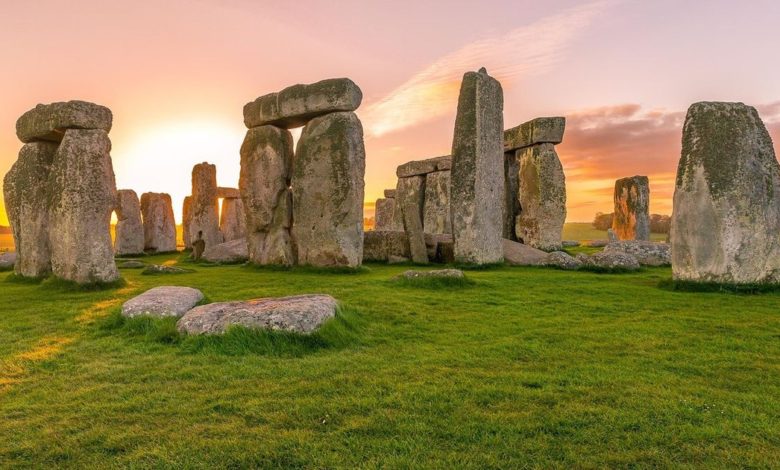
One of the most emblematic monuments of humanity continues to offer reasons for astonishment. Stonehenge, the huge stone circle 6000 years ago, remains a real mystery today, and the new discoveries come to bring even more shocking hypotheses.
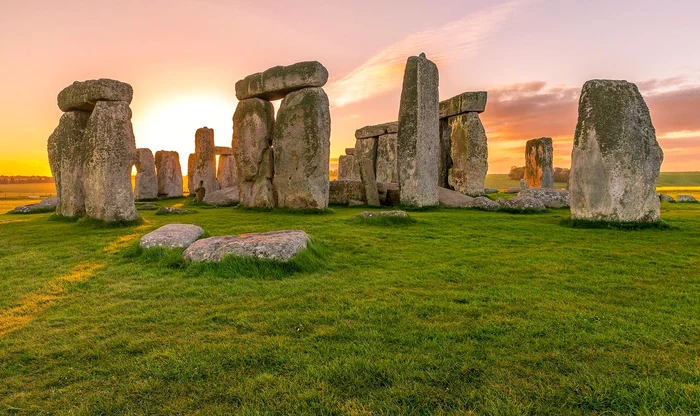
Stonehenge the huge megalithic monument in England Photo Pixabay
Stonehenge, an ensemble consisting of three rows of gigantic stones located in southern England, is the most famous megalithic monument in the history of humanity.
About 6000 years old, Stonehenge is one of the archaeological miracles of the world and is visited, annually, by at least one million tourists. Every year, on the occasion of the summer solstice, Stonehenge attracts a huge number of mysticism amateurs and enthusiasts of witchcraft, duidism, spiritual development and many modern practical.
Although it is an extremely famous monument and visited by many people, researched by entire teams by specialists, Stonehenge remains a mystery. Recent research is revealed and more interesting, but also more disturbing about this unique arrangement.
The stones used to lift it, with an individual weight of six tonnes, were made precisely from Scotland, ie 700 kilometers away. They would have been carried by a population that had not domesticated burden and did not know the wheel. For the movement of stones, thousands of people were needed, in an era in which a typical settlement in the UK did not exceed 300 inhabitants.
Stone rings in Salisbury Plain
Stonehenge is an iconic stone monument located in the Salisbury Plain, southern England. Experts say it was built 5000-6000 years ago. It is a circular construction made of huge pieces of partially polished stone. The first circle, the outer circle, has a diameter of 33 meters and is composed of 30 stone-like stone structures (two pieces of vertical stone over which the third stone is placed, resembling an entrance). Following is a second circle of stones placed in a vertical position, but smaller than the outer ones.
The third ring, the inner, has the shape of a horseshoe and is made of smaller stones. In the area were also discovered numerous tombs and a large tile plate located right in the center of the complex. The largest stones at Stonehenge, known as “Sarsens”, weigh around 25 tons. The smallest, from the inner semicircle, weigh around 6 tons each.
Stonehenge was built in several stages. Around 3000 BC, a circular groove was built around what would be Stonehenge, along with a series of 56 holes – sometimes called “Aubrey holes”, after their 18th century discoverer John Aubrey. These holes could have contained wooden pillars or blue stones, according to English Heritage. It is possible that the first huge stone, located today outside the Stonehenge circles, has been placed around 3000 BC, but it is not known.
It seems that the first stones were the smallest size, blue, horseshoe -shaped. Around 2500 BC, the large stones were raised, with polished stone blocks seated vertically above them giving the impression of a link, an uninterrupted circle. Finally, a row of stones tied between them, at the top by horizontal blocks, was added between the outer circle. It resulted in two large circles of interconnected stones, with an interior semicircle made of smaller stones. Inside the semicircle, that is, right in the middle of the complex there is a massive stone of about six tons, called “stone-altar”. Interestingly, Stonehenge stones have been rearranged several times, the last time probably around 2300 BC. Stonehenge.
The mystery of blue stones
The first archaeological research in Stonehenge dates back to 1660, when this prehistoric complex was discovered and investigated by British antique antichn Aubrey. Since then, the Stonehenge megalithic complex has probably been one of the most studied archaeological sites in history. Even under this conditions, Stonnge remains a mystery. Numerous hypotheses have been developed, important steps were taken in the knowledge of the monument, but there were many essential questions unanswered. For example, why they used “blue stones” brought from an incredible distance for those times. This “blue stones” are actually several types of rocks, including stained, riolite and volcanic ash. They are not blue itself but have a blue hue when they are freshly broken or wet.
People who raised Stonehenge had a preference for these types of rocks, which cannot be found in the south of England. They can only be found in Wales. Some were brought from Marlborough Downs, located 32 kilometers north of Salisbury, others from 200 kilometers away. In other words, they carried them for a distance of at least 32 kilometers and no more than 200 kilometers.
The blue stones had a special significance for the tribes of that time and that area. This is proven by a team of British archaeologists, who, in 2021, stated in an article in the magazine “Antiquity” that at least part of the blue stones were arranged in a circle of stones on the hills before being moved to Stonehenge. This suggests that blue stones already had a symbolic significance before being moved, the authors of the article said. Why blue stones? What did they mean to those people and why so much effort? Here are some questions that do not have an answer yet.
A shocking discovery: huge stone brought from 700 kilometers away
And the new discoveries only deepen the mystery of Stonehenge. A team of researchers discovered that the “stone altar”, a huge rock that weighs over 6 tons, was brought from Scotland. That is, from over 700 kilometers away, without oxen, horses, donkeys or.
“The most remarkable is the fact that previous research has shown that the” altar stone “of six tonnes from Stonehenge originates in northeast Scotland, requiring transportation almost incomprehensible for Neolithic peoples that did not have wheels or domesticated horses.”say the specialists from “Ancient Origins”.
The results of chemical analyzes and research underlying this discovery were published in the “Journal of Archaeological Science: Reports”. How did the people from the Neolithic succeed, with the technical features existing at that time, which such pieces of stone from Wales and Scotland to the Salisbury Plain? Scientists do not have a certain answer, but have developed several assumptions.
In 2016, specialists at University College of London performed a series of tests and showed that a 1 ton could be moved by 10 people on a tread made by wood. I mean, for six tons it took 60 people. But it is not known if this technique was used by prehistoric builders. In addition, the students involved have barely managed to follow the stone over a relatively short distance.
So one of the hypotheses is the arrangement of a “path” in logs on which the stones can be pushed. At the same time, they were linked to be directed. It is not excluded the use of wooden sleds that slide on logs, and the pork lard for slipping. When they arrived at the destination, the stones were reversed in already dug pits and so they could stand straight.
How were horizontal stone blocks raised above the huge menhire? Here is another unanswered question. Some say that a number of pulley systems have been used, although this technology was probably unknown to the populations of that time. The most plausible variant is the construction of a ramp on which the stone was actually drawn, from the opposite side, with the help of ropes.
Who were the people who built Stonehenge?
Another question that was repeatedly asked about this huge megalithic complex was the one related to its builders. Who raised Stonehenge? For some they were aliens, for the first researchers of the complex were the Celts. Experts say that some and others are wrong. The studies of the DNA extracted from the neolithic human remains found in the UK, including those who lived in the settlements near Stonehenge, indicate that the great complex was raised by people from modern Turkey. They migrated to the present Spain and then headed north, reaching the British islands about 6000 years ago.
It is not known what urged him to make such a long journey. Maybe natural disasters, can plagues or hunger. It is certain that they arrived in the Salisbury area and in about 1000 years they managed to finish one of the most emblematic constructions in the world. The study that talks about the origin of the Neolithic tribes that raised Stonehenge was published in the magazine “Nature”. “Genetic affinities with Iberian Neolithic individuals indicate that British Neolithic people were largely descendants of the Aegean farmers who followed the Mediterranean dispersion route. We also deduce a considerable variation of pigmentation levels in Europe until around 6000 BC.”states the authors of the study “Ancient Genomes Indicate Population Replacement in Early Neolithic Britain”.
These Aegean farmers mixed with the hunters of the stone era in Britain, says the same study, and gave birth to populations that dominated the history of the island for several millennia. In the light of these discoveries, it is understanding the lifting of the Megalithic monument from Stonehenge. The Neolithic populations in Anatolia were famous for the huge proto-orașs in clay buildings (such as Catal Huyuk) but also for sacred monuments such as Gobekli Tepe. Near Stonehenge, several neolithic settlements and an important fortified area were discovered.
It is assumed that thousands of people were needed for the path of stones. The specialists suspect that there was an impressive union of villages and settlements, whole tribal unions that participated in the erection of the complex. “Stonehenge itself was a massive enterprise, which required the work of thousands of people to move stones from the west of Wales, to model them and to raise them. Even the work itself, which required everyone to work together, would have been an act of unification.”said Mike Pearson, a reputed British archaeologist, for “Live Science”.
A mysterious sacred place, venerated over 10,000 years
Another question without a certain answer is: What did Stonehenge use? Why has so much workforce wasted, so many centuries, to lift these stone circles?
Timothy Darvill, a British professor and archaeologist at the University of Burnemouth, said in Antiquity magazine that Stonehenge was a calendar. This hypothesis has been contradicted or rather nuanced by the numerous archaeological discoveries and studies. Stonehenge was, say most studies, a sacred area. Ever since 10,000 years ago, paleolithic hunters have lifted a circle of tree trunks in the area. Then the Aegean tribes and huge stones appeared. In addition, as Mike Pearson shows, Stonehenge was part of a larger ceremonial landscape, with a clear connection with the nearby Neolithic settlement from Durrington Walls. At the same time, a stone “alley” was discovered that connects Stonehenge to the Avon River say the “English Heritage”. Mike Pearson, in his work “Stonehenge: A New Understanding”, indicates that this complex was primarily a cemetery and a place of veneration of the ancestors, which is highlighted by the numerous incineration tombs in the area.