The abandoned skyscrapers of the communist industry. The story of the highest chimneys in Romania

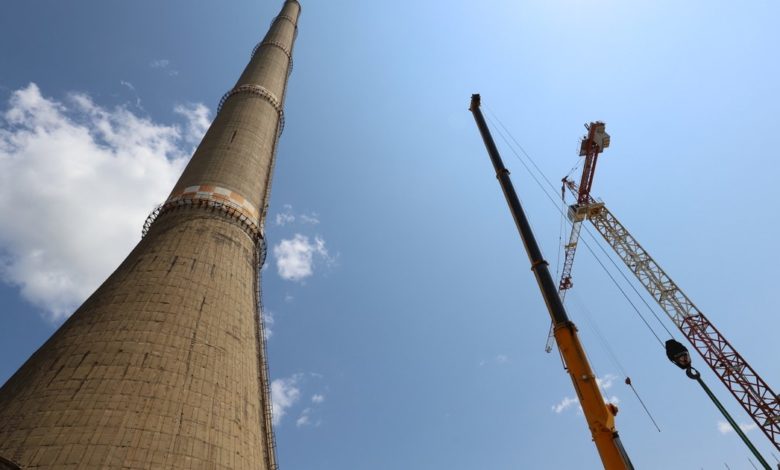
The highest industrial constructions in Romania remained undisturbed in the middle of the Virane lands, which took the place of the former large factories, today decommissioned. The structures, with heights over 200 meters, are spectacular, but remind the locals and the unbearable pollution of the past.
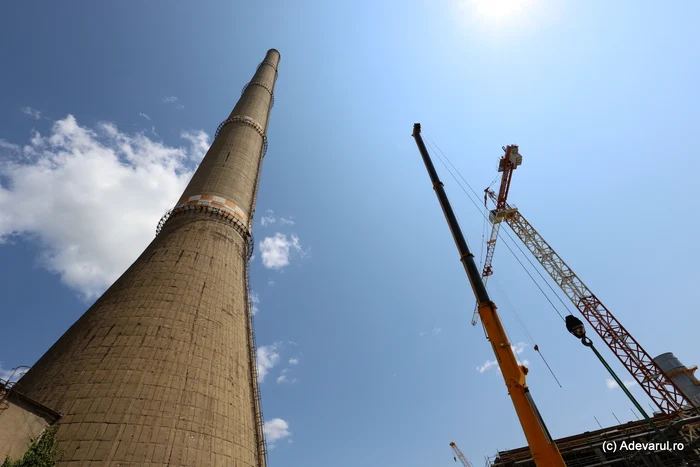
One of the baskets of the former Mintia thermal power plant. Photo: Daniel Guță Adevărul
Several chimneys, over 200 meters high, remained the emblem of industrial cities in Romania. They were built to reduce the pollution produced by local plants, power plants and combinations, but some of them were used for a short or almost no period.
Chimneys built in the 1970s and '80s
In the 1970s and 80s, in almost every county in Romania, imposing chimneys were built, considered by the communist regime as true monuments of the industry, even though the usefulness of some was later questioned.
By the end of the 1980s, over 300 baskets were erected in Romania, most used in the industry to reduce pollution. The record was then held by the basket in Zlatna, an extremely polluted city. In the 1990s, the chimney of the Baia Mare Combinat became the highest in Romania.
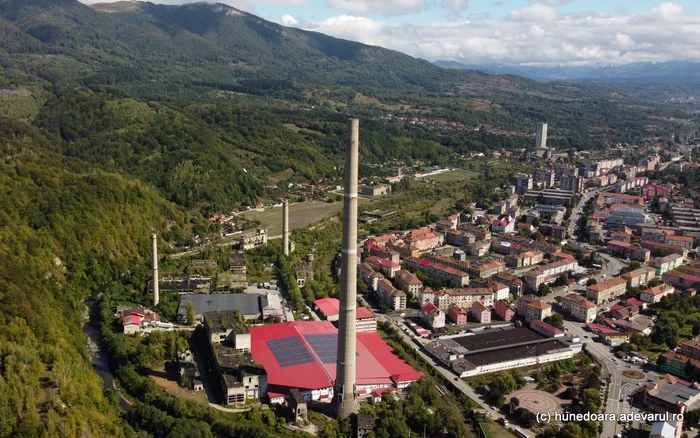
Cart of smoke from Lupeni. Photo: Daniel Guță
“The towers have become contemporary blazons. There are cities that have ten such industrial baskets. It could be said at any time that Bucharest, Brașov or Hunedoara are” cities between towers “. And in each of the counties of the country, in the harmony of their economic development, in these years impressive towers were raised, marking not only the increase of their dimensions in height, but also the industrial growth of the country ”, Inform the contemporary magazine in 1988.
While the former industrial centers have come to ruin, their great chimneys remained unwavering, watching from dizzying heights on the transformations through which the area around them passed.
The cities polluted from communism, equipped with “skyscraper” baskets
Three decades ago, the cities of Copșa Mică, Baia Mare, Zlatna and Lupeni were among the most polluted in Europe, due to the heavy industry during the communist period.
In the 1990s, Copșa Mică (Sibiu County) was known as the most polluted city in Europe. The black dust from the Carbosin Fum of Smoke plant covered the locality, and the locals were exposed to a severe pollution, to which was added the toxicity from the Sometra metal plant, where non -ferrous metals were processed.
In Baia Mare, the Romplumb plant, on the outskirts of the city, and the Phoenix metallurgical combination, surrounded by the city's neighborhoods, were responsible for atmospheric pollution, but also soil and water. In the 1990s, due to their harmful effects, the locality in Maramureș had become marked on some European tourist maps with the symbol of the “dead head”.
The metallurgical plant in Zlatna had almost 10,000 employees in the 1980s and produced 15,000 tons of copper annually, but also a series of extremely dangerous chemicals, such as aluminum powder or sulfuric acid. The city of Apuseni was famous for acidic rains that affected the area, while numerous locals suffered from pulmonary and airway disorders due to gases containing lead and cadmium.
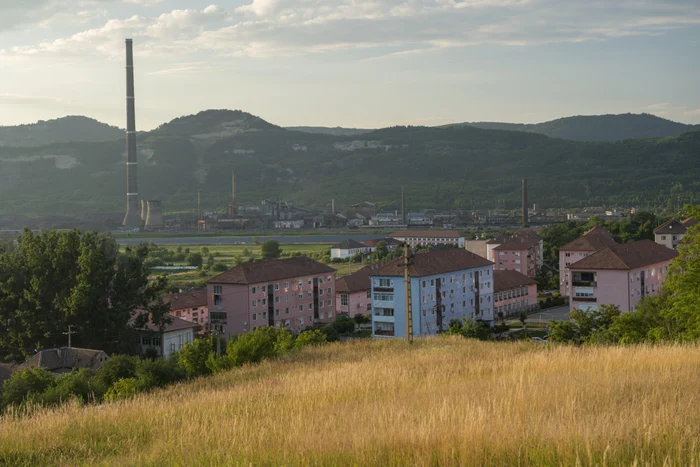
The little child. Photo: Copșa Mică City Hall.
The silk factory in Lupeni (Hunedoara County) was transformed by the communist regime into one of the largest, but also textile plants in Romania, aimed to provide jobs for several thousand women in the Jiu Valley, to bring a demographic balance in an area dominated by men, workers. The chemicals used and the noxis produced made this plant one of the most polluting in the country, both the workers and the other inhabitants of Lupeni being affected.
In order to diminish the pollution, in each of these cities, in the 1980s and 90s, huge size baskets were built, the largest of them reaching the height of 350 meters. The investments were praised by the press of the time, but the baskets had a short duration of use, as the great factories around them have ceased their activity in the coming years. The chimneys have remained “emblems” of the local industry, and some locals believe that they could become tourist landmarks.
The chimney in Baia Mare, raised to 350 meters
In the 1980s, the factories in Baia Mare produced copper, selenium, lead, gold, zinc and numerous chemicals, such as various sulfur and sulfuric acid, inorganic salts, discolorative, reactive and liquefied oxygen. They had over 10,000 employees, but they were experiencing serious pollution problems.
In the early 1990s, the toxicity in the city once nicknamed the “Culture Capră” had become an international problem.
“The human cost is awful. For the 150,000 residents in Baia Mare, the life expectancy is 50 years, with almost 20 years below the Romanian average”, Note then The New York Times.
The solution found by the authorities was the construction, within the Phoenix Combined, a 350 -meter high chimney, meant to disperse the gases emanating from the combination. The tower was planned in the late 1980s, and the construction began in 1992.
“The 350 -meter basket has a foundation with a diameter of 59 meters. Over the truncated socket, 45 meters high, the outer structure with a diameter of 20 meters, and inside there is a structure in the form of wheels – a kind of” basket in the basket ” – which provides protection against the corrosion of the” aggressive “and at 35 m. The basket in Baia Mare has the possibility to withhold the noxes by condensation on the walls of the gas exhaust tube and the gas mixing chamber ”said the representatives of the Phoenix Combined in 1992.
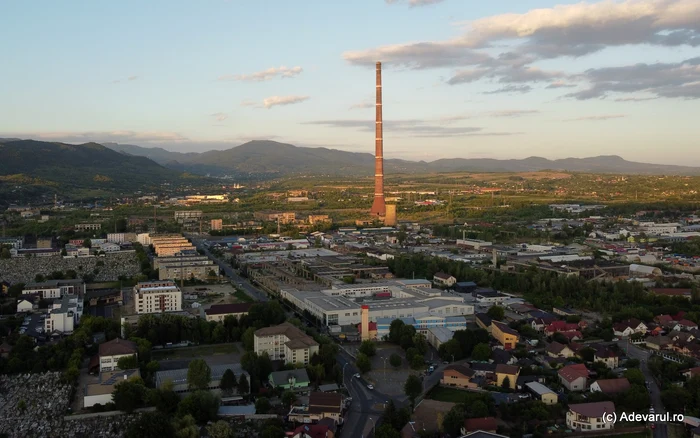
Baia Mare. Photo: Daniel Guță. TRUTH
The tower, built in six months, but inaugurated only three years later, in 1995, in the presence of the then president, Ion Iliescu, represented an investment of $ 11 million. However, the proposed solution did not reach its purpose, as foreign journalists noted. “It has the role of transporting emissions from Phoenix to a higher height in the atmosphere, but this has only transformed a local problem into a regional one,” the New York Times note.
In the 2000s, the big factories in Baia Mare were closed, like most mines in the vicinity of the city. The industrial platform around the chimney was gradually demolished, and it remained solitary, in the midst of viran stretches.
The chimney in Copșa Mic
In the 1990s, the city of Copșa Mică aroused the curiosity of the international press, due to serious environmental problems, but also its appearance.
“On a stretch of almost 15 miles around, every place in this delicate valley looks as if they were soaked in ink. The trees and bushes are black. The houses and streets look like they were in a fireplace. Even the sheep on the flocks are of dirty gray.”, The note, in 1990, The New York Times.
Carbosin blackened the city in the more than six decades of existence, until 1993, when the plant was closed, but the level of pollution in Copșa Mică was doubled by Sometra, the only factory producing zinc and lead in Romania those years. Several chimneys were meant to reduce the pollution produced by the plant, dispersing the toxic substances at high heights. Built in the 1980s, the highest of them would not have reached their goal, according to the specialists, but would have contributed to the extension of pollution.
The tower, almost 200 meters high, remained standing after stopping the furnace from Sometra, in 2008, and decommissioning the old factories.
The basket in Zlatna, used a decade
The highest construction in Zlatna remained the former gas exhaust tower, erected for the city's metallurgical combination. The basket, over 200 meters high, was built in a record time, in just two months, in 1986, for the new copper plant in Zlatna.
“Mount Măgura Dudașului from the entrance to the city of Zlatna raised this autumn by 200 meters. The fact happened in record time, in only 67 days, by raising the flue gas basket from the new copper plant that we build.inform the engineer Adrian Covaciu, in 1986.
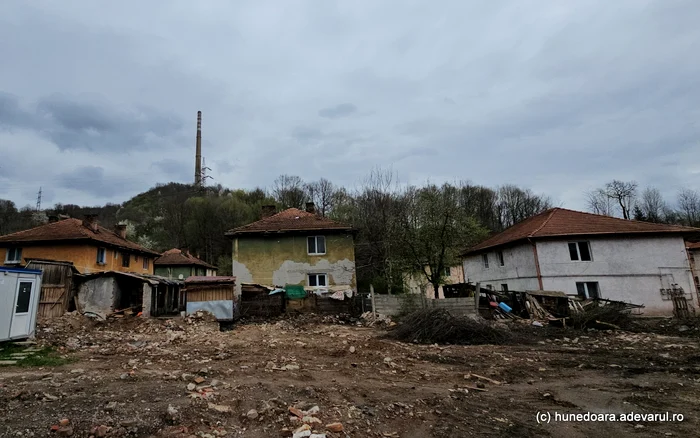
Zlatna. Photo: Daniel Guță. TRUTH
The dispersion basket was used for a decade, being decommissioned with the closing of the plant in 1997. At the foot of the hill, the neighborhoods with buildings from different eras of the city, as well as the ruins of the Combined and some, crossed by the Alba Iulia – Zlatna railway, followed by the Amoi Valley.
The basket in Lupeni has not been used anymore
Built in the early 1980s, the Tower of the former Textile Factory Vassocza in Lupeni dominates, by its height over 200 meters, the entire valley of the Western Jiu, where the cities of Aninoasa, Vulcan, Lupeni and Uricani are located. However, he did not get used, say some locals who climbed it during the time he was equipped with stairs.
“The basket was necessary for the evacuation of the toxic gases from the Vascza plant. It was working with sulfur, but this tower was not used. Once, in the 1983s-85s, at the artificial fiber plant they worked 3,000, almost 4,000 women, and in the lupeni mines there were about 5,000 employees,” Bruno recalls.
After 1990, the Vascza Plant in Lupeni, stretched on almost 20 hectares, was privatized, and the number of employees decreased to about 100. In the coming years, most of his constructions were decommissioned.
The basket in Lupeni. Photo: Daniel Guță. TRUTH
Some halls of the former factory are also used by some companies, but most of the land on which the viscose operated remained covered by ruins. Above them, but also the mining exploitation in Lupeni, in the process of closing, watches the huge concrete, which some locals proposed to be classified as a historical monument.