F-16 aircraft, harder to hit. What solution did the Ukrainians find? Russian drones and invisible eyes inside Ukraine

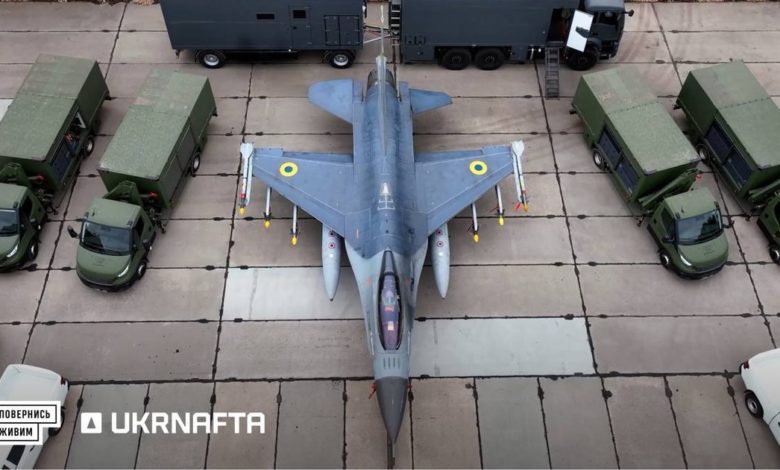
Ukraine has taken an important step in strengthening the air defense: F-16 hunting aircraft, received from Western allies, are now better protected in front of Russian ballistic missiles, thanks to an innovative mobile modules for maintenance and operations.
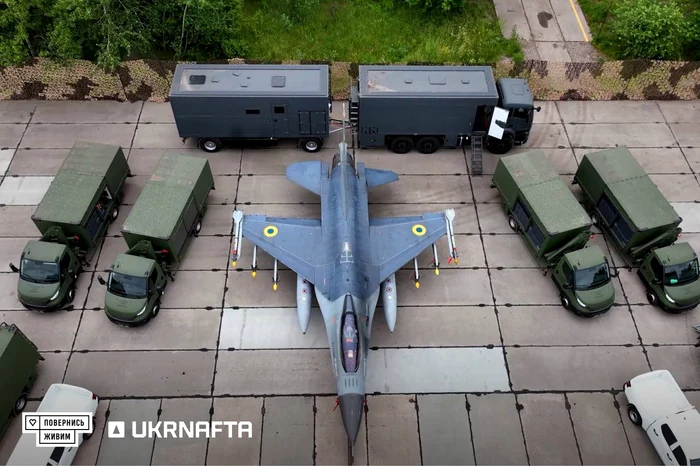
Mobile Modules for Maintenance F-16/Photo: X
The solution, developed in collaboration by the Come Back Alive Foundation and the Ministry of Defense in Ukraine, consists of movable equipment that can be moved quickly and include everything needed for maintenance, equipping and coordination of F-16 aircraft missions.
In the context of the war of wear of Russia, in which the military infrastructure of Ukraine is constantly targeted, these modules allow to disperse the flight devices and reduce their exposure to rocket blows.
“The time between identifying a F-16 and launching a ballistic missile is very short”, warns Peter Layton, former Australian Air Force officer, quoted by Kyiv Independent. “The secret of surviving these ground aircraft is just not found.”
Hard to watch, more supple teams
The F-16 play an essential role in the air defense of Ukraine, being able to intercept Russian drones and rockets, but also to perform attack missions. So far, however, the complexity of maintaining these devices required the use of large and equipped military bases, which made them vulnerable.
The new mobile modules completely change the logic of development. They can be located on improvised aerodromes, including civil bands or isolated areas of large military bases, which considerably reduces the risk of mass losses in the event of an attack.
“It's a game of hiding your“Explains Layton. “If one of the F-16 is discovered, the others will not be affected because they are dispersed.“
What do they contain mobile modules
The system includes two modules for maintenance and one for mission planning. The first set has an armament training room, two vehicles for loading ammunition on the plane and a truck for transporting the technical team.
Another essential advantage: efficiency. If before 10-12 people were needed to load a ammunition, now only three are sufficient.
The second set contains a mobile control center, where briefings are carried out before flight and coordination of devices, as well as a residential module for staff.
Taras Cimut, the director of Come Back Alive, emphasizes that the whole concept was adapted to the reality of the total war carried by Russia: “The planes received from the West worked in closed systems, in peace time. To us, they are in the air almost permanently and are constantly hunted by the enemy.”
Although the idea of “Combat Agile Employment” (flexible struggle) has been developed in recent years in tense areas such as Indo-Pacific, the Ukrainian system is unique, says Anastasiia Yurchshyna, the spokesman of the Foundation. “Western examples were not directly useful to us. None was designed for the conditions of a war as ours.”
How many F-16 has Ukraine?
In 2023, Ukraine and its partners launched an “aviation coalition”, meant to deliver F-16 to Ukrainian air forces. The first devices were delivered in 2024 by the Netherlands and Denmark.
In total, Ukraine has promises for:
-19 aircraft from Denmark;
-30 from Belgium;
-a little 6 from Norway;
-plus Dutch planes already transferred.
Belgium has announced that it will detach the delivery time initially set for 2028, and Norway will conclude the transfer until the end of 2025.
In addition to deliveries, the United States and the United Kingdom provide training for pilots and Ukrainian technical staff.
Ukraine has confirmed the loss of three F-16 so far.
“Once dispersed on the ground, these planes can take off and they can regroup in the air to fight as a concentrated band,” explains Layton. “The tactic of dispersion is the key to long -term survival. ”
Russian drones and invisible eyes inside Ukraine
While Ukraine develops increasingly sophisticated methods to protect its fighters, Russia seems to have gone to another level of electronic and informational war, using possible infrastructure directly on the Ukrainian territory to guide their attack drones.
According to Serhii Beskrestnov, Ukrainian expert in radioelectronic systems known under the pseudonym “Serhii Flash”, Russian drones of type “Herber” – a variant used in recognition missions – are equipped with high power Chinese modems. These allow them to maintain the connection with operators at great distances, increasing their efficiency in identifying targets for Kamikaze Shahed drones.
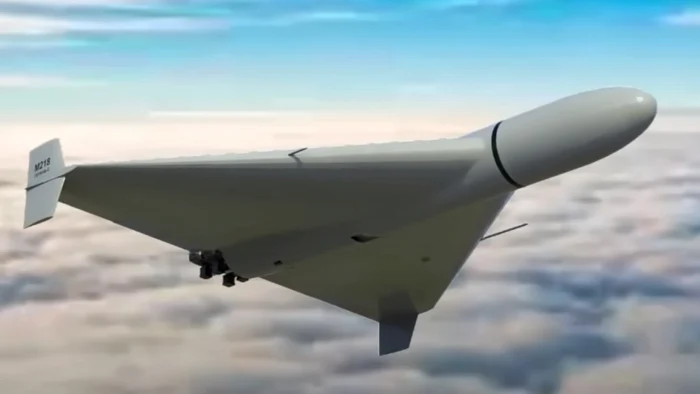
Shahed/photo drone: Archive
The information, published on his Telegram channel, draws attention to a worrying detail: the signals of these drones do not always come directly from the soil operators in Russia, but seem to be relayed from points right inside Ukraine.
“Look for signals that differ as azimuth from those of the drones itself. We are looking for possible retranslators”, warns Beskrestnov, who urges Ukrainian specialists in radio detection to monitor 1300–1500 MHz frequencies, especially during air alerts.
The hypothesis is that Russia would have been able to infiltrate retransmission equipment – mobile or fixed stations – which multiply the range of recognition drones and allow them to “guide” the attacks on high value targets, including fighter jets, radars or Ukrainian air command.
This possibility is not just theoretical. Following the massive attack on the Kiev on July 4, Ukrainian experts suggested that one of the retranslators used by the Russians could have been located near the capital. His presence would have allowed the exact coordination of drone flights in dense urban terrain, where the signal directly from hundreds of kilometers would have been insufficient.
If the existence of these clandestine communication nodes is confirmed, the reality on the front becomes even more complicated: Russia not only attacks from the outside, but does it with an invisible network, potentially located behind the Ukrainian lines.
In a conflict in which technological superiority is decisive, Ukraine and Russia constantly adapt their strategies. The new mobile maintenance modules for F-16 allow Kiev to respond more effectively to threatening ballistic missiles, providing flexibility and protection to the devices received from the West. In parallel, Russia's use of the radio-electronic infrastructure hidden in the field takes shape as another major threat, difficult to counteract, but vital to detect.
In this war, not only rockets or drones decide the fate of air battles – but also the ability of each part to see and remain unseen.