According to the researcher, you should focus on the system challenges: legalization of stay, the condition of the National Labor Inspectorate or the quality of employment of foreigners.
Quoted fragment of the program:
“Did Poland lose control over migration? In my opinion,” the professor begins, reminding that participation in the Schengen zone meant voluntary alleviation of internal borders. “If we operate in an open and democratic society, and in addition we are in the Schengen zone, the concept of control seems illusory,” he adds.
A powerful problem of legalization
According to the expert, the administration should, above all, “know in detail who enters us from outside the Schengen zone, when he ends with a work permit or stay and control on what terms he finds here.” The legislative activities of recent years – as he assesses – actually head in this direction: Employers are required to inform the offices about the foreigner's employment, the termination of the contract or about its failure to do.
The key change – Kaczmarczyk – is “a far -reaching digitization of processes, aimed at making the least documents to flow on paper.” This is to speed up the procedures and limit the field to abuse. “Unfortunately, at the level of human resources, little has changed over the past decade, and the scale of migration has increased several times” – he points out.
According to the professor, the legalization of the stay of foreigners is “a powerful problem for many years.” As the government seals the system, there are more people who remain “months in the sphere of suspension”, which often “are not able to perform their work” and ultimately they can decide to go.
Labor Inspectorate “On a hunger diet”
The second sensitive point is the state of the State Labor Inspectorate. “It is usually talked about in one simple context: how underfunded she is” – notes Kaczmarczyk, reminding that it is the inspectors” should be of fundamental importance in the situation in which Poland is today “.
Where is the problem really?
Contrary to popular belief, the main threat does not apply to mass illegal work. This phenomenon occurs, but more often takes the form of “quasi-relievable”-says the researcher. Key challenges are:
- “very large participation of atypical forms of employment”, especially civil law contracts,
- “undefined principles of subcontracting”,
- The growing role of recruitment agencies and digital platforms,
- No effective tools for enforcing employee rights.
The scale that dies in the information noise
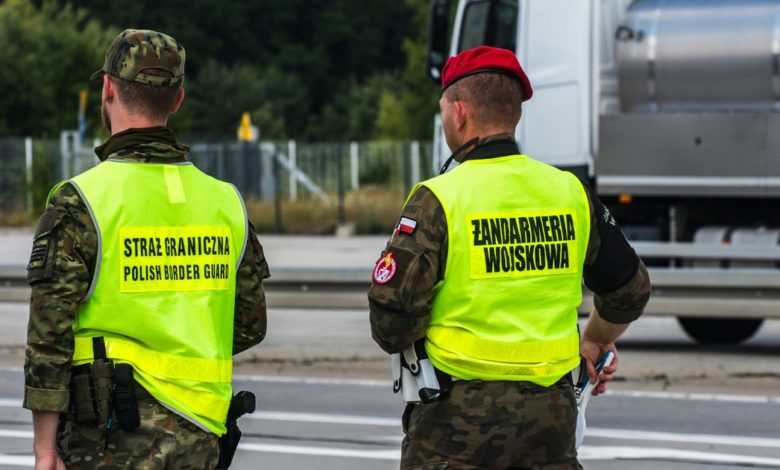
According to prof. Kaczmarczyk, a public dispute of recent months, focused on the “very small scale of the phenomenon” of turning on the western border – several thousand people a year. Meanwhile, “the annual border traffic in Poland is 250-300 million crossings, of which about 60 percent are made by foreigners.” “Why do I emanate with these numbers?” – Kaczmarczyk asks rhetorically. “At the same time in Poland we have from 2 to 2.5 million migrants. A large part is refugees from Ukraine, but over a million are active people on the labor market,” he adds.
“We are unable to secure their rights”
Research – reminds the professor – clearly show that in many sectors the economy “is strongly dependent on a foreign labor force.” Despite this, the state “does not properly protect employee rights and work standards”.
Kaczmarczyk concludes that the future of Polish migration policy depends not on disputes about closed borders, but on whether “whether the state will keep up with changes in the social structure”. If not, the country risks the loss of the necessary workforce and the intensification of “gray” areas on the labor market.
Change horizon
The professor sees a chance in accelerated digitization, increasing full -time jobs in the legalization offices and in strengthening the Labor Inspectorate. “They are to affect the tightness of the system in relation to people who are already here,” he emphasizes. Without these activities, Poland will only react to crises, instead of shaping the thoughtful, long -term migration policy.
“In public discussion, we deal with a marginal problem of several thousand exceeds, and we forget about two million people who live, work and wonder whether to tie life with Poland” – says prof. Paweł Kaczmarczyk.
The whole conversation is available here.
Onet in the morning. Financially
“Onet in the morning”. Financially is a weekly program in which Business Insider journalists talk to invited experts of the business world and politics about current events and issues related to the Polish economy, public finances and the impact of politics on the wallets of every Pole.
The program can be watched every Wednesday at 10 on the main page of the Onet portal, and from 11 as a podcast at Onet Audio.