Concepts such as “Nostalgista” or “Remixer of Culture” appeared in the “100 Jobs of the Future” report prepared by the University of Deakin and the CSiRO consulting company. The document, developed by Australian researchers and futurologists, presents possible scenarios for the development of the labor market in the perspective of several years.
The list does not describe existing positions, but speculative roles that can emerge in response to megatrendy (AI, climate change, automation, aging society or polarization).
Who could the nostalgist and cultural remixer be?
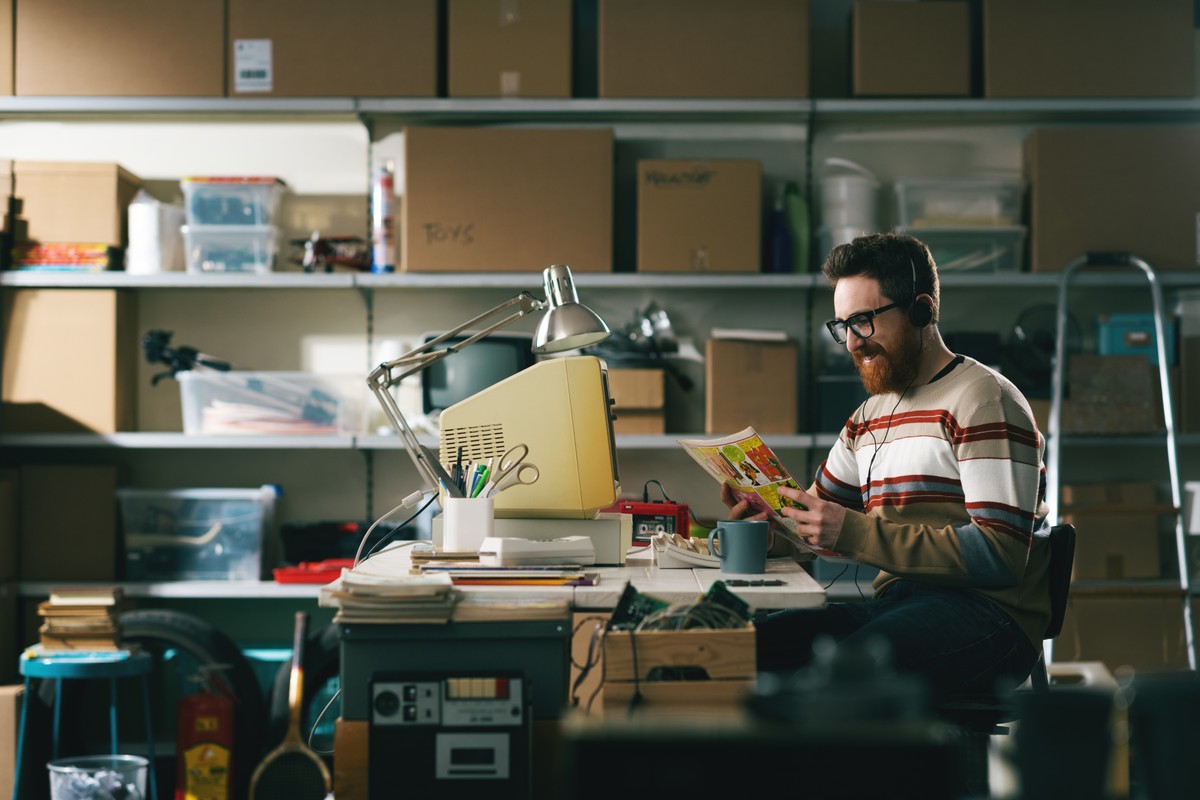
Nostalgist He is a person who professionally recalls memories – aesthetics, sounds, rituals and moods of past decades. He must understand how collective memory works and what specific generational groups move the most. He can work as a cultural strategist, Marek advisor, a consultant for creative teams, but also design immersion exhibitions or campaigns based on joint experiences.
On the other hand Culture remixer He specializes in combining existing content and cultural codes, consciously creating new configurations of meanings, aesthetics and emotions.
Read also: Profession of the future: “Purchase”, i.e. a specialist in the reconstruction of ecosystems
What makes a nostalgic frenzy?
In an era, when technology allows us to create almost everything, we are increasingly reaching for what was already. – Nostalgia is not a temporary trend. This is Megatrend, which spilled into many areas, from fashion and design to social emotions – says Monika Borycka, trend observer and founder Trendradar. He accelerated after a pandemic when we were looking for security, and today it is one of the key phenomena describing our relationship with the world.
– It is also a crisis of imagination – adds Joanna “Frota” Kurkowska, Head of Strategic Research at ZAiKS Lab, who with Monika Borycka co -creates the podcast “Future clippings”. – We are immersed in remixes, continuations and reboots. Mark Fisher called this “slow cancellation of the future.” We can no longer imagine a radically different world.
Emotional security in times of crisis
Why is the past so attractive now? – We live in the times of permacrysis. The future does not give a sense of security, so we return to the aesthetics we already know – explains Monika Borycka. – This is not a simple fashion return. This is the answer to fundamental problems of our time.
As explained by Marta Truś-Buchajska, who deals with culture anthropology and design research strategy, younger generations enter adulthood with a sense of “looted future”. They have been deprived of many resources: economic stability, ecological safety, and predictability of the labor market. The uncertainty of tomorrow makes the future cease to be promising. – Young people are Aware that they only have here and now. Nostalgia can be a form of resistance to this reality. An attempt to root in something that seems known and safe – he explains.
In addition, we live in crisis of authenticity. Everything was unified. Cafe around the world look the same, influencers, thanks to filters and treatments, have identical faces, and applications use similar interfaces. – When everything looks the same, what to follow? Price? -Marta Truś-Buchajska asks rhetorically.
Old and new spaces to discover
Marta Truś-Buchaiska emphasizes that nostalgia, which originally meant longing for the house, ceased to be only a individual feeling. – Today we are dealing with secondary, inherited and collective nostalgia. We reach for images of the past, which we have not experienced ourselves, but which are present in cultureaesthetics, stories – he says. – Memories can be inherited and emotions associated with smells, sounds and colors – designed. This is a huge field for action for designers of experience and emotion strategists.
This phenomenon is also known as “anemoia ” – longing for a time that has not survived. The term popularized by John Koenig in the “Dictionary of non -obvious sorrows”.
– For us it is something we have grown with, for young people it is a completely new area of exploration. The past is for them Terra Incognita – explains Monika Borycka.
This is why nostalgia does not end with vintage or retro design fashion. It appears in marketing campaigns, digital products (e.g. games stylized as 16-bit), music, films, series and even in the user interfaces. In 2025, nostalgia is no longer a “country of childhood” but part of the creative industry – professionalized, implemented, scaled.
Business built on memories
Companies discover the business potential of nostalgia. – nostalgia can be an element of emotional attachment -explains Marta Truś-Buchajska. – We are more likely to go back to a place that reminds us of something good.
The cafes depart from the unified aesthetics “Third Wave Coffee” and return to colorful chairs and homemade cakes. Music companies release albums on cassettes. Sony resumed the production of Walkman. Even in the technology you can see nostalgic trends-interfaces referring to systems from the 80s, retro-styled games, re-release 8- and 16-bit game and computers consoles, such as Atari or Commodore.
-Today a lot of brands have a problem with distinction-diagnoses Truś-Buchaiska. If everything looks the same, economics decides about the choice. However, when something has a nostalgic dimension, you are more likely to come back to it.
This does not mean that it is enough to pass the logo through a retro filter. Nostalgia requires subtlety and authenticity. Young consumers quickly detect artificiality and “corporate nostalgia”. You need a real knowledge of eras that aesthetics are used.
Competences necessary to become a nostalgist
To design the past, you need to understand what it was – and what it could be today. The nostalgist needs knowledge on the border of anthropology, culture history, art and marketing. You also need sensitivity to aesthetics, senses, rituals and symbols.
This is a profession that requires three layers of competence:
Cultural decoding – Recognizing aesthetics, understanding of the context of eras, the ability to eliminate meanings from the past and regional nuances is the basis for working with nostalgia.
Emotional curation. – Nostalgic is not an object itself or design, it is nostalgic what emotions we pack in it -explains Marta Truś-Buchaiska. This means that a nostalgia specialist must know the basics of psychology, know which smells, colors or textures cause positive memories.
Knowledge of technology. Paradoxically, to create good analog experiences, digital technologies need to be understood.
Read also: Biohaker – your personal health trainer
A trap of continuous remixing of culture
Continuous duration in a safe cocoon of nostalgia can threaten innovation.
– It's a real threat. If everything becomes a remix remix, culture can get stuck in an infinite loop of references to the past. We stopped believing that some other future would be possible – diagnoses Monika Borycka.
– Culture is slowly eating its own tail – adds Joanna Kurkowska citing the criticism of culture Marek Fisher. – You can't create anything new, still drawing on the same source. Modernity has died. We hang around the same ideas, processing them forever. This may give relief, but he does not necessarily lead us further.
For some, nostalgia becomes a life attitude, giving up faith that anything better can come.
According to Marta Truś-Buchaiska, Antidote is Creating values through experience. It's not about playing the past, but re -designing it.
– Nostalgist is someone who understands the relationship between memory and identity – sums up the expert. – This is a profession that requires great responsibility.
Specialists in the past who shape the future
In a world where the future ceased to be promising, and the present is overwhelming, nostalgia offers shelter. But the real art is to get out of this shelter enhanced and ready to create new narratives.
The profession of a nostalgist may seem absurd. Can you go forward when looking back? It turns out that in a world without a direction it is Context creators can become new guides. This may be a profession of the future, but only if we understand that nostalgia is to be a trampoline, not an emergency exit.