The austerity closes the gates of a zoo garden, after five decades: “The costs were over one million lei/year”

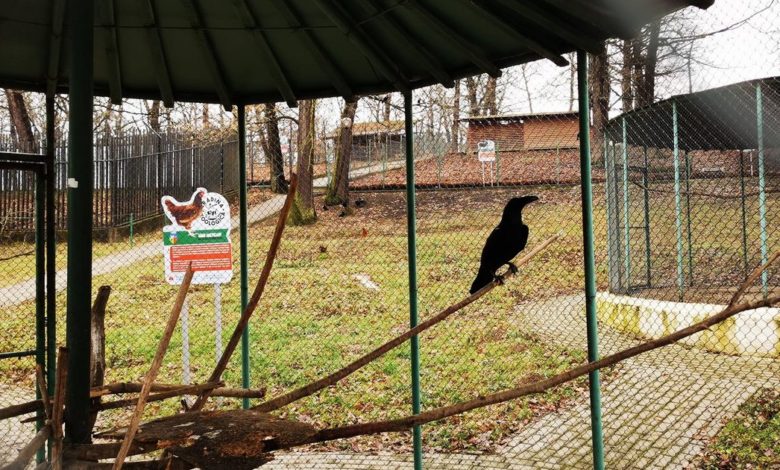
The Zoological Garden in Hunedoara will be permanently closed, in the next few days, after more than five decades since its establishment. The maintenance expenses contributed to the decision taken by the authorities.
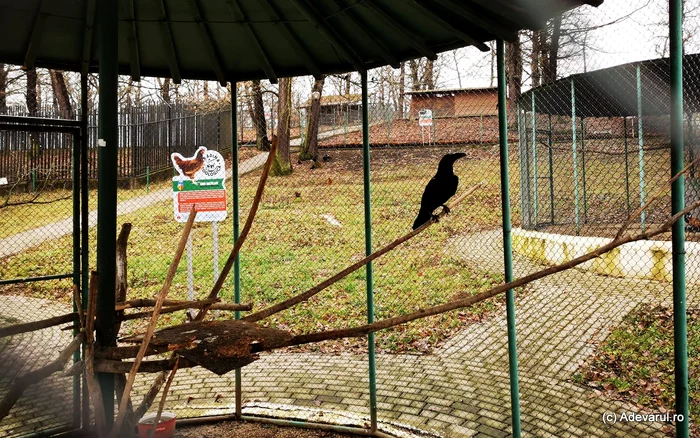
The Corbul from the Hunedoara Zoo. Photo: Daniel Guță. TRUTH
Established in 1971, the Zoo in Hunedoara was, for a long time, a tourist objective of the municipality.
In recent years, despite investments in her rehabilitation and bringing here animals appreciated by visitors, the Zoo Park has sparked more and more dissatisfaction. Many locals have requested the abolition of the zoo, claiming the conditions under which the living things are kept here.
The iron and concrete speakers remaining from communism, the reduced spaces in which the wild animals lived, the large carnivores held in loneliness and their unnatural environment were the main aspects claimed.
Other locals, nostalgic, remembered that the garden was often visited in their childhood, and the Chizid Forest, on the edge of which they were there was a place of relaxation, which they explored walking on the paths or by the tramp.
Zoo garden, hit by austerity
The municipality has recently come to the conclusion that “the place of animals is not in the cages” and informed that the old zoo will be closed to the definitive public since the beginning of August 2025. The austerity also mattered in the decision taken by the authorities.
“The garden no longer corresponds to the standards in the field. Another argument is financial: in recent years, the maintenance and operation costs of the Zoo garden were over 1 million lei/year, and the receipts from the sale of tickets almost 8 times lower. Last year, the total value of the expenses generated by the zoo was about 1.1 million lei,”transmits Hunedoara City Hall.
The surface now occupied by the Zoo garden will be arranged as a fun and recreation park whose main target public will be, but will also include facilities for parents and grandparents.
“If it had been like now, we would have continued to receive criticism from animal lovers who claim that they cannot have satisfactory conditions in the current spaces. The Zoo garden was inaugurated in 1971, when there was not much price on the living conditions of the animals. Not to mention the operating expenses that, in their turn, have increased even more. says Mayor Dan Bobouțanu.
Some of the animals have already been transferred to other zoos in the country, and the actions of continuous relocation in the next period. The exact date, starting from which the visit of the Zoo will no longer be possible, will be established and announced after the completion of the relocation of all animals, the Hunedoara City Hall informed.
The news of the closing of the zoos, after five decades, has aroused numerous reactions. Some locals have remembered that the zoo would have been the place of fun in their childhood.
“It is a pity that the zoo is abolished. I often took my children there. In a year we were going almost weekly-especially to see the baboon chicken. We were sitting in a row and wondering how my mother cared for it. says a local.
Many Romanians believe that the decision had to be made much faster. “I never understand why we have to torment the animals in the cages for the delight of some ”, writes someone else.
Animals cannot be released, simply
After years in a row spent in the Hunedoara Zoo cages, several animals here were sent to the Zoo in Reșița or other gardens in the country. Some locals have requested their release in nature, which is not possible. The release of the crow, for example, after years in a row spent in his cage in Hunedoara could mean his conviction, but his move to another place could create problems, the specialists show.
“Once the raven has decided what its territory is, any change in this space will stress. Corbi that suffers natural behavioral disorders caused by living with people cannot be reintroduced into the wild. They are condemned to live in captivity for the rest of their lives.” informs the specialists of the Zoo del Pirineu Foundation in Spain.
In the natural environment, the crowns would be attacked by other crows. Nature is built to seek balance and eliminate anomalies that do not fit naturally in the ecosystem, notes specialists. At the same time, it would be a danger to people.
“The raven would tend to approach people and could hurt them, which a raised raven would never do,” shows the Zoo del Pirineu Foundation.