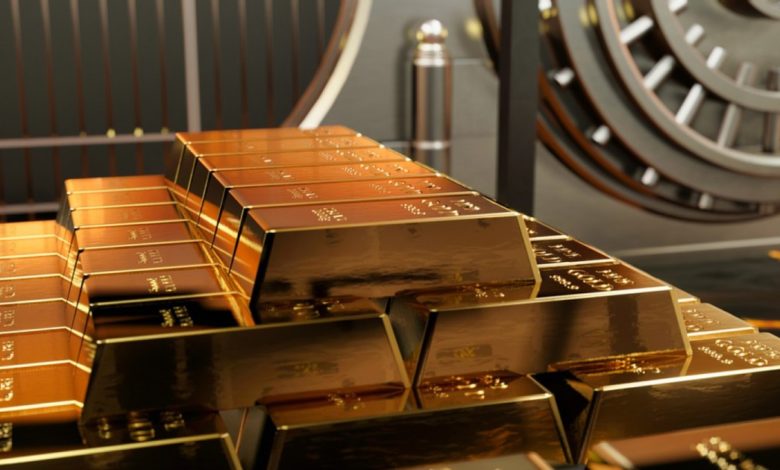
The central bank of a European state intends to bring back the entire gold reserve on the national territory, which has a value of about six billion dollars. The reason: ensuring the security of the reserve in periods of crisis.
A European state wants to repatriate its gold reserve. Photo shutterstock
This will make Serbia the first country in Eastern Europe to keep any of its gold bullion in traditional hubs such as Switzerland, UK and USA, writes Bloomberg.
“By returning gold to the country, the National Bank of Serbia aimed to increase the availability and security of gold reserves in periods of crisis and uncertainty.”said the central bank in response to questions, adding that repatriation efforts began in 2021 on the merits “To an environment of increased global uncertainty.”
The pace of the golden accumulation by the global central banks doubled after freezing the Russia's foreign exchange reserves in 2022, highlighting the political risk of holding assets in dollars and euros. The storage of gold bullion internally protects them from this type of external interference.
Serbia bought 17 tons from abroad between 2019 and last year, in addition to at least 19 tons of the local unit of Zijin Mining Group Co.This brought the total reserves to 50.5 tonnes, all stored in Belgrade, except for five tons bought in 2024 and still stored in Switzerland. This amount of gold is worth approximately $ 6 billion at current spot prices. The remaining five tons will be brought home “asap”declared the governor Jorgovanka Tabakovic last week. The share of the region in the gold reserves held internally varies from 86% in neighboring Hungary to about 25% in Poland, according to data compiled by Bloomberg.
Serbia has weighed the pros and cons before deciding the repatriation, the central bank said, mentioning that the presence of gold in the market centers facilitates the sale or granting of loans.
A significant part of the World gold reserves, worth about $ 550 billion at current prices, is owned in the Self of the Bank of England in London, the Global Center for the Trading of Precious Metals.
The federal reserve in New York deposits gold for other countries, including Germany and the Netherlands. This has become a major political problem in Germany more than a decade ago, causing an extremely publicized repatriation to increase the share of the gold held in the country. The metal was held in the US partially due to Germany's approach to the Soviet forces and the fear of invasion during the Cold War and remained there after the fall of the Berlin Wall.
Similar operations were undertaken by Poland and the Netherlands, and the requests to bring gold in bullion in internal warehouses had echo in Slovakia and Romania.
The storage of gold in their own borders resonates well with populist parties in full rebirth, such as the alternative for Germany, which considers it an insurance against political threats abroad.
According to official figures, on July 16, 2025, the golden bank of the National Bank of Serbia were at 50.05 tonnes, with a market value of about 4.7 billion euros. The precious metal represents now 17.2% of the total foreign exchange reserves.
In recent years, Serbia has been one of the most active gold buyers in Europe. In 2024, the National Bank of Serbia added 3.2 tons of gold to its reserve, and from the beginning of this year it bought over 2.3 tonnes of gold.
The US has the largest gold reserves in the world, of 8,133 tons, followed by Germany, Italy, France, Russia and China. Among the recent buyers, Poland was a leader in terms of gold purchases of central banks in 2024, with 89.5 tonnes, followed by Turkey and India.