Romanians and the myth of “good” communism. What this nostalgia tells us about this analysis

Nostalgia after communism reflected in the data of a recent survey arouses concern. Experts warn that, in the current geopolitical context, the Romanian state is exposed to the hybrid war, and the effects can go to the erosion of trust in public institutions and the key ascents of political forces with antidemocratic and anti-European agenda.
The Romanians positively evaluate the communist phototeca communist regime of Romanian communism
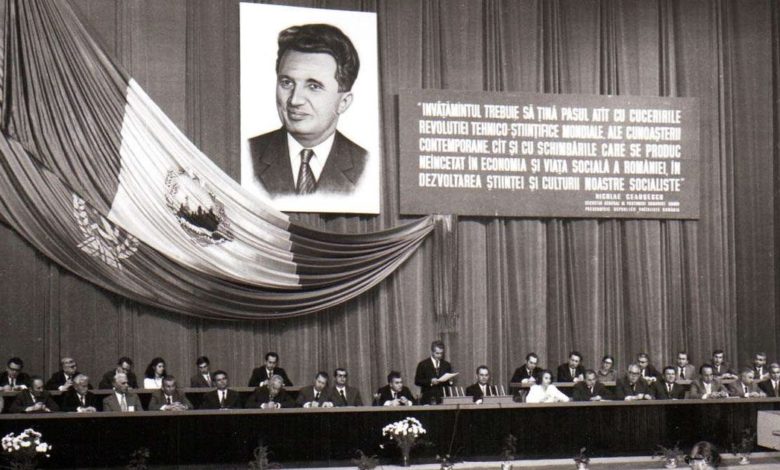
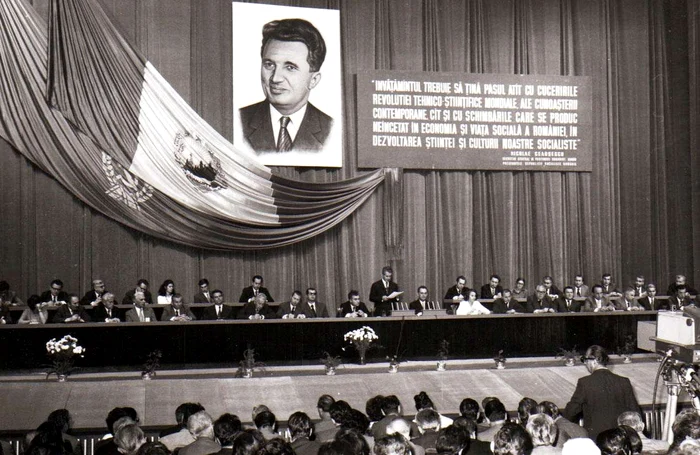
Both Nicolae Ceausescu and the communist regime are evaluated positively by Romanians from all age and social categories, a phenomenon that the specialists consider worrying.
“In these 35 years, nothing was done to educate the young generations and correctly inform people about what happened in the communist regime. Probably this part of education was missing in the education process in Romania, the idea was abandoned and the new generations have not found anything, and the education was replaced, in fact, of what is of the social. The history of Romania, the communist regime, in fact the history of the totalitarian regime in Romania, this page was deleted from the consciousness of an important part of the population of Romania and has been replaced with myths.emphasizes the editor-in-chief of Historia Ion M. Ioniță.
“The most disturbing aspect”
The aspect that is “The most disturbing“It is the one related to freedom, Remus Stefureac said in a press conference:”My problem is that I do not know if much of Romanians still appreciate freedom. It means that freedom is no longer a deep value appreciated by Romanians. Of course, we may have become accustomed, obviously we have become accustomed to freedoms, we find it natural in this type of regime, but we certainly do not explain enough what the lack of freedom means. ”
Although 80.9% agree that before 1989 there was less freedom and only 9% of the respondents claim that there was more freedom then, this aspect “It does not seem to draw the perception of the communist regime ”shows Remus Stefureac
At the same time, 57.8% of the respondents indicate that at this moment in Romania there are parties with pro-communism messages, 26.7% say no, the rest, that I do not know.
Romania, vulnerable to the hybrid war
What actually happens? On the one hand, in the case of those who caught communism remains nostalgia, because, for them, it represented the period of youth and development, and for those who came after, the perception has nothing to do with reality, explains Ion M. Ioniță.
“We are facing an extremely dangerous problem, because a society with such deeply erroneous perceptions about the not very distant past is a vulnerable society. We are vulnerable to misinformation, we have no resilience, and practically now no one talks about resilience. We are practically a society in the wind.
Is it very worrying from the point of view of the geopolitical situation, from the point of view of what is called hybrid war, because the hybrid war what does it actually mean? It means weakening the morale of the population, the collapse of trust in institutions, means manipulating people's perceptions, so that society forgets and becomes very vulnerable to the outside influences and, practically, surrender without fighting. This is the purpose of the hybrid war, to gain a victory without having to trigger military actions ”, Ion M. Ioniță also explains for “Adevărul”.
At the same time, the editor-in-chief Historia shows that in the hybrid war they are used “Methods of misinformation and collapse of the population morale, spread of distrust, hatred and social divisions ”.
What are the consequences
And all this was successful in the Romanian society, which is very well observed in the last elections, the expert shows.
“So it is a success, indeed, of the propaganda and the hybrid war in Romania, which does not come from outside the country, it is also promoted from within the country.”indicates Ion M. Ioniță, and the darkest scenario is “The collapse of confidence in the institutions of the democratic state and to reach the decision -making positions of antidemocratic, anti -European political forces. So, promoting completely and completely other directions of evolution of Romania ”.
In turn, Prof. Ph.Dr. Daniel Șandru, executive president of IICCMER, points out that, at this moment, it is no longer a matter of opinion or a cultural vulnerability, but of “A national security issue”and Romania is at just “a step of a catastrophic scenario ”.
Explanation of Nicușor Dan
“The fact that two -thirds of Romanians consider Nicolae Ceausescu a good leader shows how fragile our collective memory is and how easily perceptions can be handled when the state does not invest in historical, civic education and honest communication with citizens.”is the opinion of President Nicușor Dan.
Thus he emphasizes that “Romania cannot build a solid future regarding back with illusions. We have the duty to learn from the past, not to revive”and for this it is necessary a firm control of misinformation, rendering the confidence of Romanians towards institutions, through correct public policies and the construction of a society in which justice, equity and real development are felt by all citizens.
The head of state also states that “The main reason why more and more Romanians idealize communism is the deep disappointment of the political class of the last three decades. Corruption, lack of transparency, unresponsive promises and the feeling of injustice have weakened people's confidence in the present and future.
Romanians, nostalgic after communism
Over 55% of the respondents of the most recent Inscop survey believe that the communist regime meant a good thing for Romania, and 44.8% claim that “before it was better”. The respondents of the survey “The perception of the population regarding the communist regime. The landmarks of the nostalgia”, made by Inscop Research, at the command of the Institute for the Crimes of Communism and the memory of the Romanian exile (IICCMER), believe in a proportion of 70% that Romania was a richer country than at present. At the same time, over 50% of Romanians consider the communist regime a good thing.
According to the results, 48.4% of those questioned are of the opinion that they lived better before 1989, compared to the present situation. 34.7% I think was living worse, and 13.2% was living the same. 8% of the respondents believe that there was more corruption before 1989, compared to the present situation, and 65.1% think it was less corruption, while 20.2% was as much corruption.
Nicolae Ceausescu, “A good leader for Romania”
The question that drew attention in particular is the evaluation of former leader Nicolae Ceausescu: 66.2% indicated that Nicolae Ceausescu was a good leader for Romania, while 24.1% indicated that he was a bad leader, and another 7.8 refused to answer.
The percentages are high for all age categories, but the largest, 71%, is registered for people over 60 years. The smallest is for people between 18 and 29, 56%. The other age categories register over 60%.
The appreciation decreases according to the environment, in the urban the lowest percentage, as well as according to income and studies. Those with higher education and higher revenues record lower numbers.
Also, the former dictator is more appreciated by employees in private – 57% and equally by women and men – 66%. The highest percentage is associated with Tiktok users – 71%, followed by Facebook – 65%and Instagram – 60%.
The research data was collected in July 2025, on a sample of 1500 respondents, with an error of +/- 2.5%.