How will the trade war end? The surest scenario is “regrettable”

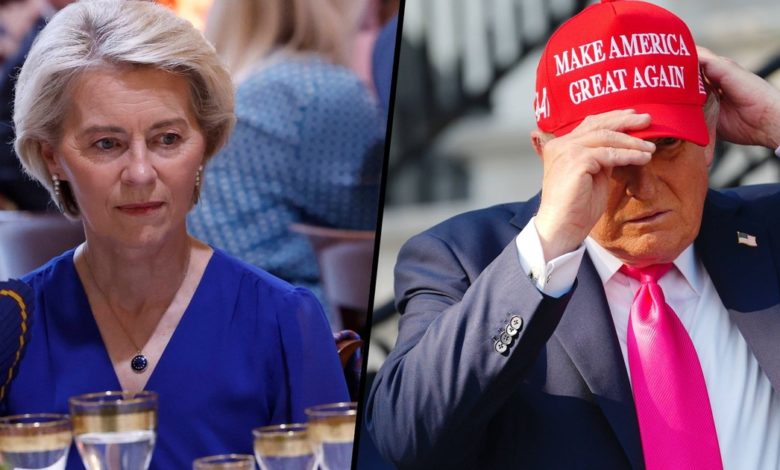
Along with the escalation of global commercial tensions between the United States and the main economies of the world, Europe faces serious challenges related to the protection of its economic interests. A recent proposal of US President Donald Trump regarding the imposition of 50 % duties on imports from the European Union emphasizes the urgent need to develop an effective strategy by the alliance.
This report presents three potential scenarios for Europe in the context of the trade war and the assessment of strategic options, including strengthening of multilateral institutions, diversification of trade partnerships, withdrawal of their own protectiveistic means and strengthening internal resistance.
International trade is the foundation of the post -war prosperity of Europe. It allows countries to specialize in sectors in which they have a competence advantage, increases competition, reduces consumer prices and stimulates innovation. Trade accounts for about 35 percent. Gross domestic product (GDP), and millions of jobs are directly related to export and import. Access to global markets was driven by EU economic growth, raised the standard of living and stimulated industrial development.
Trade increases the benefits of scale, enabling enterprises to reduce unit production costs and invest in new technologies. Promotes efficiency through allocation of resources to the most productive applications and encourages the national industry to improve results by exposure to international competition. For consumers, trade means lower prices, higher quality and a larger selection, which directly translates into their purchasing power and general prosperity.
Export is a key engine of economic growth. In the EU, export -oriented sectors, such as automotive, machine and pharmaceutical, have a significant share in employment and expenses for research and development. Open trade also attracts direct foreign investment, promoting the creation of capital and increase in efficiency throughout the continent. In this way, trade contributes to the increase in real salaries in the long term and improves the economic conditions of the working class, although short -term losses may occur in some sectors.
From a macroeconomic point of view, trade supports fiscal stability by expanding the tax base due to economic growth. It also strengthens economic immunity, because diverse commercial relations may alleviate the effects of regional or sectoral economic slowdown.
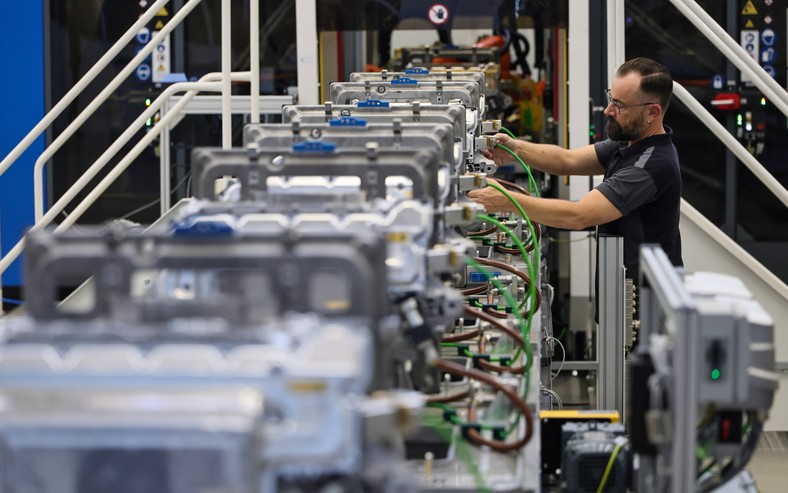
Part of the production unit production process of CLA Mercedes electric cars at the factory in Untertuerkheim in Stuttgart, Germany, June 30, 2025, the German automotive industry, which largely exports its products to the USA, is particularly vulnerable to the effects of duties imposed by Donald Trump
Price of protectionism: conclusions from history and the present day
Although the protection of national industry may seem attractive from a political point of view, History shows that protectionism often leads to inefficient, increase in consumer prices and retaliation. A noteworthy example is the Smoot-Hawley Customs Act from 1930 in the United States, which raised duties to over 20,000. imported goods. This resulted in the collapse of world trade and deepening the great crisis.
A more current example is the trade war between the United States and China (2018-2020). Clinics imposed by Trump's first administration on Chinese goods worth hundreds of billions of dollars – and Chinese retaliation duties – led to serious interference in global supply chains. The fire of the fight included European companies: German car manufacturers had to bear higher costs of components produced in the United States, and the export of agricultural products from the EU to China suffered due to a change in the structure of demand in China. According to the estimates of the German IFO Institute, the current commercial conflict may cause a decrease in German GDP by 0.3 pp this year
European dilemma
Although the EU has long been as an advocate of free trade and multilateralism [koordynowania polityki zagranicznej przez więcej niż dwa państwa]is increasingly adopting a patronist policy. For example The EU joint agricultural policy provides significant subsidies with European farmers, which often disturbs competition and limits access to the market for exporters of agricultural products from developing countries. In addition, the alliance maintains high external duties on some food products, textiles and footwear – areas in which developing economies often have a comparative advantage.
In recent years, the EU has also introduced regulations, which, although they are presented as funds for sustainable development or security, often function as actual trade barriers. For example The mechanism for adjusting prices on the border of carbon dioxide emissions imposes fees on imported goods depending on their carbon content, arousing concerns among emerging economies that it could be a form of green protectionism. Similarly, initiatives for strategic autonomy, including efforts in favor of the location of semiconductor production, pharmaceuticals and critical raw materials, can even reduce openness to global markets.
In addition The EU is increasingly using trade protection instruments, such as anti -dumping and protective measures. These funds are often used in response to the presumed unfair commercial practices, but can also serve the goals of internal policy.
Changing trade landscape
Liberal trade order is under pressure from growing protectionism and economic coercion. Europe, deeply integrated with the global economy, is particularly vulnerable to these changes. This has already affected EU economic growth, and the European Commission reduced the GDP growth forecast to 2025 to 0.9 percent, indicating the American duties as an important factor. There are several strategic answers that Europe has at its disposal to prepare and react to commercial tensions.
Europe undergoes a period of increased trade variability. Although the full trade war remains unlikely, the risk of regional fragmentation is relatively high. It is necessary to take proactive actions, including strengthening multilateral institutions, diversification of trade partnerships and strengthen internal immunity. The most effective path for Europe is flexible, but a decisive trade strategy based on multilateralism and strategic autonomy. Although the restriction of protectionism could improve long -term economic perspectives, ongoing diplomatic tensions with the United States may complicate this approach.
Scenarios
Most likely: regional fragmentation and selective retaliation activities
In the future, world trade can divide into competing blocks. The EU faces American duties, such as the proposed 50 % tariff for imports from the EU, and corresponds to protective measures. Generally, retaliation duties, industrial subsidies and investment restrictions are growing. Trade between the USA and Europe is significantly falling. Patisfaction tendencies intensify, and the EU strengthens its defensive commercial attitude. Strategic autonomy projects are expanding, and multilateral cooperation remains in an impasse. Economic growth decreases in the face of increased uncertainty, and sectors depending on export and imported components suffer losses.
Probability [realizacji tego scenariusza]: 50 percent Given the current diplomatic climate and economic pressure, this is the most likely scenario. The collapse of transatlantic dialogue and fears of strategic dependence are pushed by the EU towards deep protectionism. This scenario would be regrettable from the point of view of free trade, but this is not the worst scenario.
Unlikely: limited commercial tension
Commercial tensions are intensified, but are limited to symbolic duties and diplomatic rhetoric. The EU avoids serious disruptions due to strategic caution and defensive trade policy. Avoiding full escalation, Europe refrains from significant liberalization due to political climate. The EU maintains current trade barriers and defense mechanisms, focusing instead on managing the exhibition on unstable trading partners.
Probability: 30 percent This scenario assumes that the EU will be able to alleviate the conflict with diplomatic channels, but the growing tensions with the second administration of Trump limit the return to proactive leadership in the field of free trade. It seems unlikely that the EU is criticized by the White House at European protectionism. Therefore, from the free trade point of view, limited commercial tensions are the best scenario whose probability of occurrence is not negligible.
The least likely: full trade war with the EU
The EU becomes the main goal of the global trade war. Customs, sanctions and regulatory restrictions are spreading. The EU takes decisive retaliation, and commercial and investment flows are shrinking rapidly. A full trade war destroys transnational supply chains and consumer markets. Europe takes on a hard position, isolating its economy with the help of extensive trade barriers and strengthening the uniform market. Geopolitical polarization deepens.
Probability: 20 percent This scenario remains unlikely, but the risk is real – especially if diplomatic errors or external shocks cause a spiral of escalation. Economic costs in the form of a decrease in GDP and wage increase would be significant and constitute a decisive factor that stops the EU from taking such actions.