How to resurrect the mammoth and earn billions. “Jurassic Park” is slowly becoming a reality

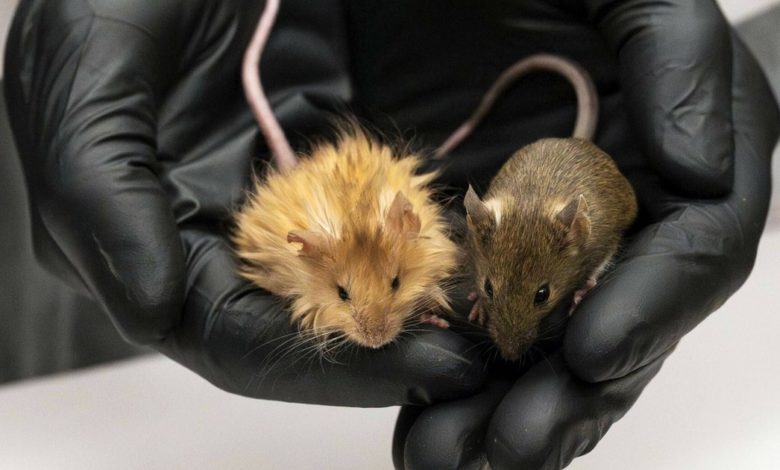
The vision of restoring the megafauna sounds like a sequel to the “Jurassic Park”, but Colossal has already shown that it can materialize its announcements. IN April this year He announced the birth of three puppies of “terrible wolves” – Romulus, Remus and Khaleesi – created after 20 precise editions of the Genland of the Gray Wolfto recreate the key features of an extinct species.
Critics point out that they are more radically modified wolves than real animals from an extinct species Aenocyon Dirusbut the very fact of the multi -ogen modification of the live mammal shows that The company can transfer CRISPR theory from a pipette to real breeding. But what is all this for?
Check also: AI is a test for the management. The average cost reduction will be the average
Colossal Biosciences has huge ambitions
In the minimum plan, Colossal wants to give birth to a hybrid until 2028, and Dodo or the Tasmanian tiger – it is possible that earlier. However, the business core lies deeper. The company is developing mass technology of mass designing genome, artificial uterus and analytics based on AIand these solutions can be licensed to pharmacists, the AGTech sector (agricultural technologies) or IVF centers (infertility treatment clinics).
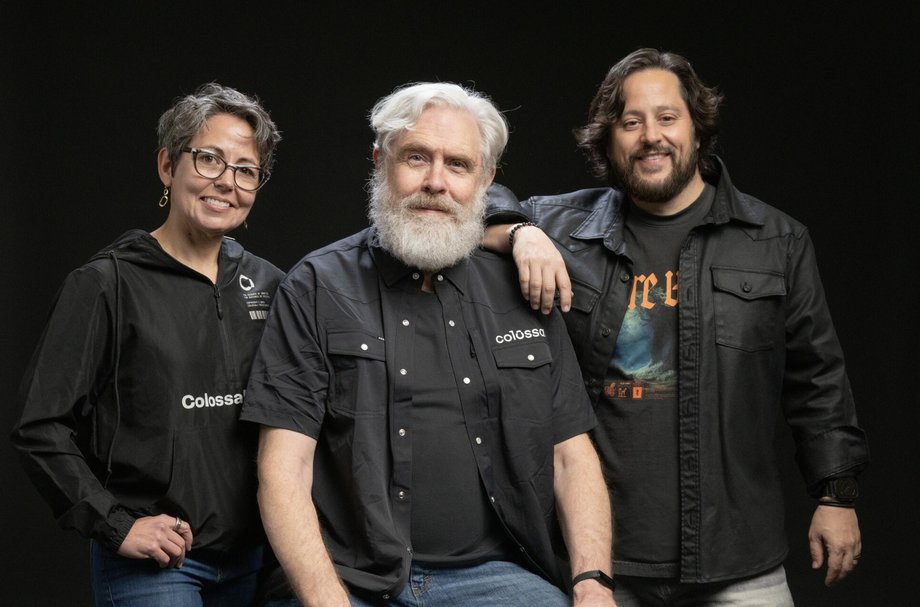
From the left: Beth Shapiro, CSO, George Church, Co-Founder and billionaire Ben Lamm, Co-Founder and CEO at Colossal
|
Colossal Biosciences / Ferrari Press / East News
Read also at Business Insider
Ben Lamm, a co -founder and billionaire standing behind Colossal, has already announced the separation of subsequent targeted companies. There are also earlier spin-offs-Bioinformatic platform forms BIO and Breaking Start-up, which uses modified enzymes for plastic biodegradation. All of them have already acquired their own financing and the first customers, which allowed Colossal to start monetizing know-how before the first mammoth calves appeared.
The magnet for capital is also the perspectives of the “Biological diversity loans” market. Unlike mature carbon loans, the global turnover of biodiversity is today only a few million dollars, but the World Economic Forum forecasts speak of $ 7 billion. annually in 2030, and even $ 180 billion. in the middle of a century.
Colossal hopes that the countries that will order the so -called The reintroduction of key species for their ecosystems will emit such loans, sharing with the company's influence, e.g. from tourism.
Check also: Artificial intelligence incomparably better than a doctor. Surprising research results in the USA
What does it mean for the climate
Does the resurrection of animals make atmospheric sense? Research published in Scientific Reports shows that the dense herds of large herbivores – the equivalent of mammoth steppe – They can beat the snow enough to lower the soil temperature and reduce the tarpaulin of eternal frost by up to 80 percent. until 2100 At the RCP 8.5 scenario (the most pessimistic climate scenario, assuming an uncontrolled increase in greenhouse gas emissions, which leads to an additional radiation forced 8.5 W/m2 and global warming of 4 degrees Celsius or more until the end of the 21st century). This translates into a lower release of methane and CO2 from Siberian soils, that is, for a real slowdown in the feedback of insulation.
From the point of view of biodiversity, the rate is high. International Union for Conservation of Nature (International Union of Nature Conservation) estimates that over 47 thousand species are threatened today by extinction, which is 28 percent. all examined. Supplementing the gaps in ecosystems by “functionally reproduced” species can, at least in theory, restore the trophic balance, which showed the revival of the wolves in Yellowstone. Trophic balance is The state of the ecosystem, in which the number and mutual relations of the organisms at subsequent levels of the food chain remain so stable that they ensure sustainable flow of energy and matter.
Artificial uterus technology developed by Colossal can be equally important in medicine. The company's foundation donated $ 1.5 million in January. for research conducted at the WSS Institute at Harvard over embryonic breeding outside the mother's body. If a platform that is to help report 22-month-old mummy pregnancy will undergo tests on animal models, may shorten and reduce the price of in vitro procedure in humans, limiting the need for hormonal stimulation and risk of multiple pregnancy.
See also: Hundreds of employees from India pretended to be AI. The shocking fall of the star
A lot of promises to fulfill
However, the company's income model is still largely based on promises. Colossal does not earn yet on restoring species, and the total capital of $ 435 million. He spends on research with a difficult -to -predict return. Critics – from paleoecologists to ethics – they ask if megafauna engineering will not distract funds from the protection of endangered species here and now and about it, whether the introduction of modified animals will not create new ecological problems. The company counter that fresh money, new investors and unconventional ideas introduces into a field that is doomed to underfunding without them.
Colossal has sold a vision, but it also begins to provide the first prototypes. If the hybrid mammoth really is born in the coming years, and artificial uterus will go to the fertility clinics, the company's value may prove to be as fantastic as its projects. However, if the biological “Jurassic Park” gets stuck at the PR stage of successes, investors will stay with a mountain of DNA sequences and advanced, but niche bioinform tools.
In terms of risk and potential, it is a typical DEEP tech plant: high entry cost, distant horizon, but as a reward – a technology that can redefine both nature protection and health services market.
Author: Grzegorz Kubera, Business Insider Polska journalist